Pharmaceuticals, between research and innovation increasingly green strategies
The companies in the sector on the Sole 24Ore-Statista list, with Angelini and Chiesi in the lead, have made the leap on EGF factors

In pharma, sustainability is no longer just a chapter in the ESG reports, but a lever that, between research, industrial innovation, corporate governance and international development, represents a useful tool for creating value, as emerges from the 2026 Sole 24 Ore-Statista Sustainability Leaders list.
Angelini Pharma's projects and objectives
Among the companies that are investing the most are Angelini Pharma and Chiesi, which integrate sustainability and industrial transformation into their growth models. For Angelini Pharma, a pharmaceutical company part of Angelini Industries, a multi-industrial group also active in the industrial technology, consumer goods and venture capital sectors, the path of sustainability is also intertwined with a phase of international expansion. A few weeks ago, the group announced the acquisition of the biopharmaceutical Catalyst Pharmaceuticals for USD 4.1 billion (EUR 3.5 billion). The deal strengthens its positioning in the US market and in the fields of Brain Health and rare diseases. "In line with the group's ESG Plan, Angelini Pharma has defined a strategy whose priorities range from personnel development, health awareness and stigma fighting, responsible supply chain and decarbonisation. From an environmental perspective, the goal is to reduce direct and indirect (Scope 1 and Scope 2) emissions by 42% by 2030,' explains Enrico Giaquinto, chief technical operations officer of Angelini Pharma. "For this ambitious goal, the company has several solutions, from the use of more efficient technologies to the installation of photovoltaic panels in the main Italian plants. In addition, from 2025, all of the group's Italian sites and locations will purchase 100 per cent electricity from renewable sources." Angelini Pharma has developed Life Greenapi, a project co-financed 60 per cent by the EU Life Programme at the historic Angelini Fine Chemicals plant, in Aprilia since 1967, and developed with the Institute of Environmental Sciences of Leiden University, worth approximately EUR 2.5 million.
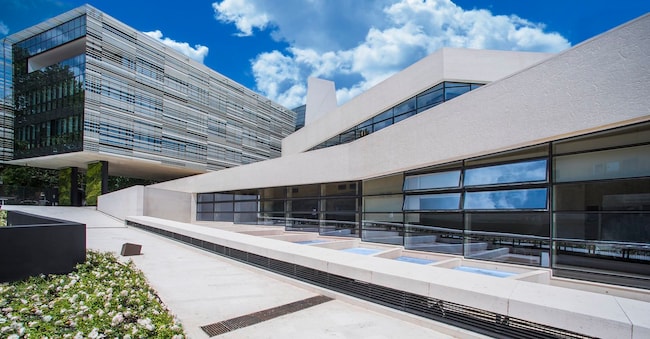
Innovative technology integrates flow and batch chemistry and develops a Flow-Batch model: it generates environmental and economic results superior to single technologies. And it has already reduced the use of chemical reagents and solvents (-37 per cent), electricity consumption (-23 per cent), methane gas (-59 per cent), water requirements (-48 per cent) and waste generation (-60 per cent), with a reduction in production costs of 10 per cent. "The project is a wonderful example of how environmental sustainability and economic savings can be combined," Giaquinto emphasises. "It tackles this challenge by intervening at the origin of the production chain, where the active pharmaceutical ingredients are synthesised and where the environmental impact is most marked". In the area, there is also a concrete example of sustainable redevelopment: Casa Angelini in Rome, the headquarters of Angelini Industries and the Pharma offices, a Leed Platinum and Leed Eb:Om certified project, designed to restore social value, green spaces, quality of indoor areas, and services for people, such as a company restaurant and health facilities.
"Today, talking about urban regeneration means going beyond the concept of an efficient building," observes Isabella Falautano, Group chief sustainability & communication officer at Angelini Industries. "The most concrete sustainability is that which manages to hold together environmental performance, human wellbeing and a sense of belonging. And it is in workplaces like Casa Angelini that this integration can become daily and tangible".
Chiesi Farmaceutici also increasingly links sustainability and industrial strategy. According to the latest data from the new Sustainability Report 2025, the group closed 2025 with revenues of 3.6 billion Euro, up 8.2%, investing 885 million Euro in R&D, equal to 24.4% of revenues, the highest level in the company's history. On the sustainability front, the Chiesi benefit company achieved B Corp certification for the third time with a score of 117.5 and reduced Scope 1 and 2 emissions by 56% compared to 2019, reinforcing the path to net zero at 2035.