Natality

Families with children increasingly rare in Europe

Only 23.6% of EU families have at least one child. In Italy fertility is at an all-time low with 1.18 children per woman

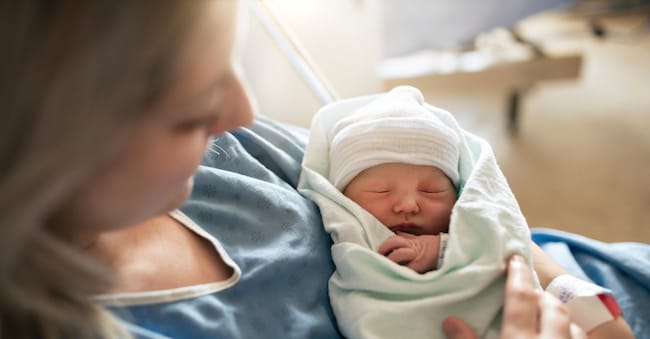
by Davide Madeddu

3' min read

3' min read

In 2024, just 23.6 per cent of European households included at least one child. The figure, contained in the latest Eurostat report, highlights a profound transformation in the social structure of the Union: more childless families, more single parent households, more people living alone.

Families with children in decline: the European case

Out of almost 202 million households surveyed in Europe, less than a quarter have children living with them. The highest share is in Slovakia (35.6%), followed by Ireland (31.0%) and Cyprus (28.6%). At the bottom of the ranking are Finland (18.0%), Lithuania (19.6%) and Germany (20.1%).

Loading...

As for the number of children: in 49.8% of cases, households have only one child, 37.6% have two, and just 12.6% have three or more. Large families (with three or more children) are more common in Ireland (20.6%) and the Nordic countries, while they are less common in Portugal (6.2%), Bulgaria (6.4%) and Italy (7.6%).

Italy: historic low in fertility

In our country, fertility reached an all-time low in 2024: 1.18 children per woman, below even the negative record of 1995 (1.19). The number of children born in 2024 was around 370,000, compared to 526,000 in 1995. The birth rate fell to 6.3 per thousand, with 50 thousand foreign births (13.5 per cent of the total), slightly down on 2023.

The contraction particularly affected the North and the South, while the Centre remained stable. Fertility dropped to 1.19 in the North (from 1.21), to 1.20 in the South (from 1.24), while it remains at 1.12 in the Centre. The number of women of childbearing age has also dropped dramatically: from 14.3 million in 1995 to 11.4 million in 2025.

The average age at childbirth is also rising: 32.6 years in 2024. In the North and the Centre, it is over 33 years, while in the South it remains at 32.3. Marriages, which are now increasingly unrelated to childbearing, are also decreasing.

Ireland: high birth rate, but also high costs

In contrast, Ireland shows the second highest share of families with children (31%). Despite a decrease from 2012 (when they were 37.9 per cent), Irish families have on average more children than the EU average: more than 20 per cent have three or more children. However, the pressure of high living costs is also felt here.

Population growth and high housing costs coexist: according to a study by the Economic and Social Research Institute, the average size of Irish families is the highest in Western Europe, but the cost of supporting a child has risen by 39 per cent in ten years to EUR 15,000 per year.

The welfare system offers 26 weeks of paid maternity leave, two weeks for fathers, childcare subsidies, and from the end of 2024 also a one-off bonus of EUR 280 for new babies. But according to the trade unions, the system is still not sustainable for single-income families. The housing emergency problem is also serious: as of May 2025, more than 15,700 people were living in emergency accommodation, including 4,844 children.

Poland: negative birth rate record and social crisis

In 2024, Poland recorded a fertility rate of 1.099, the lowest in its history. Only 250 thousand children were born, compared to 331 thousand in 2021. The number of women who do not plan to have children is growing: 42% between the ages of 18 and 45, compared to 22% in 2017.

At the root, in addition to economic and employment difficulties, are political choices: restrictive anti-abortion laws, poor maternity care and weak family policies. Young women cite a lack of economic security, difficult access to housing and welfare shortcomings as the main reasons for renouncing motherhood.

Czech Republic: families resist, but with fewer and fewer children

The Czech Republic still has an above-average number of families with children (28 per cent), but the absolute number of births reached an all-time low in 2024: 84,311. The reason? Smaller families, lower fertility, and progressive ageing.

The ideal family model remains that with two children, chosen by 77% of women and 71% of men. But the reality is influenced by economic unaffordability, lack of affordable housing and personal ambitions.

Despite public support (28 weeks of paid maternity leave, allowances for parents up to EUR 12,000 per child), policies are insufficient: fathers rarely take leave, and there is a lack of flexible working arrangements. Kindergartens are often overcrowded, especially in big cities.

*This article is part of the European collaborative journalism project "Pulse" and was contributed by Maria Delaney (The Journal Investigates, Ireland), Ivana Míšková (Deník Referendum, Czech Republic) and Paulina Nodzyńska (Gazeta Wyborcza, Poland)

Copyright reserved ©

Brand connect

Loading...

Newsletter

Notizie e approfondimenti sugli avvenimenti politici, economici e finanziari.

Iscriviti