
Families, the ‘Carta Dedicata a te’ is back: first top-up in October
The interministerial decree allocates one billion over two years to vulnerable households

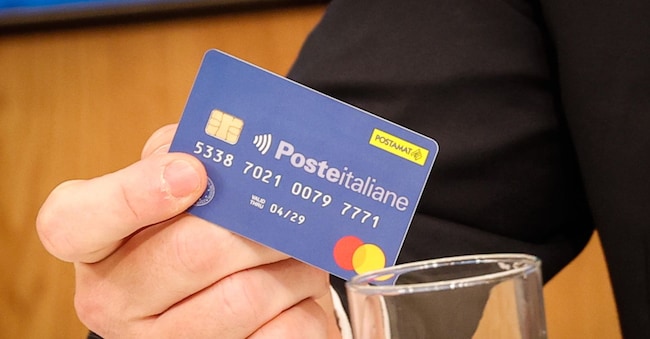
One billion euros over two years to help the most vulnerable families with their grocery shopping. With the signing of the interministerial decree between the Ministries of Agriculture, Labour and the Economy, the ‘Food Fund 2026 and 2027’ provided for in the latest Budget Law (Article 1, paragraphs 5 and 6) comes into effect. This amounts to 500 million for each year, earmarked for households with an ISEE not exceeding 15,000 euros. This implementation thus brings the total resources allocated in the Budget Bill to just under 90 per cent.
The first election in October
The scheme – which will come into effect in 2023 – operates via the “Carta dedicata a te”, a Postepay prepaid card issued by Poste Italiane. Each household will receive €500, paid in two instalments (in 2027, however, the amount may be revised based on the remaining funds from the previous year). The first payment will be made from October 2026, and the second from April 2027. All funds must be spent by 10 October 2027.
The procedure
The procedure is automatic. INPS compiles the lists of beneficiaries and sends them to the local councils, which verify residence and check for any incompatibility with other local schemes. The lists are then returned to INPS, where they are finalised and forwarded to Poste Italiane for the cards to be issued. The timetable is strictly defined: thirty days for the delegated ministerial decree of the Ministry of Agriculture from its publication in the Official Gazette, a further thirty days for INPS, twenty for the local authorities, and ten for the lists to become final. Anyone who does not use the card by 16 December 2026 will forfeit the first year’s benefit, but may reclaim the 2027 allocation by activating it between 1 April and 31 August 2027.
Requirements
There are two eligibility criteria: all members of the household must be registered on the municipal register, and the household must have a valid standard ISEE of less than 15,000 euros. Households already receiving the inclusion allowance, the old shopping voucher or any other form of poverty support – whether national, regional or municipal – are excluded. It only takes one member of the household to be in receipt of such a benefit to render the household ineligible for wage-supplement schemes as well: this excludes NASPI, DIS-Coll, the redundancy fund and any other form of support in the event of involuntary unemployment.
Geographical distribution
The geographical allocation of funds follows a two-pronged approach. Half of the resources are allocated to local authorities in proportion to their population; the other half is based on the difference between local per capita income and the national average, weighted by population — a criterion that explicitly favours the poorest areas. The precise allocation, municipality by municipality, will be set out in the delegated ministerial decree. Within each municipality, priority is given first to households with at least three members and a child born on or before 31 December 2012, then to those with children born up to 2008, and finally to large families in the broadest sense.

