
Family businesses: Luiss launches the Manifesto for Longevity – the key issue is generational succession
Eight out of ten companies with at least three employees are family-run. The “Franco Fontana” Research Centre is paving the way for a report on business continuity

Key points
Eight out of ten Italian companies are controlled by a family. And this proportion is on the rise. According to the latest Istat Permanent Census, businesses controlled by an individual or a family account for 80.9 per cent of firms with at least three employees, compared with 75.2 per cent in 2018.
Four ongoing pressures
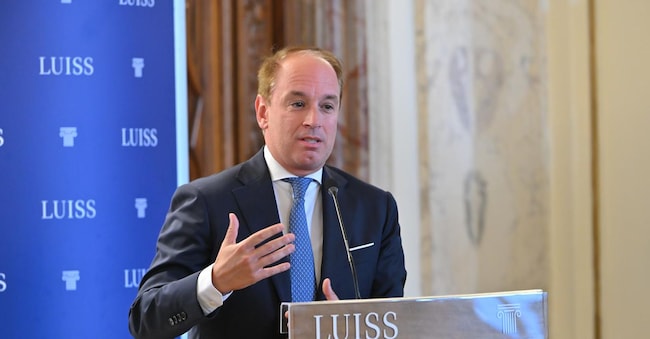
These figures formed the basis for the event ‘Business, Family & Wealth Management: Tools for Continuity and Growth’, which took place at the Luiss campus on Viale Pola and was organised by the ‘Franco Fontana’ Research Centre for Strategic Change. The university also highlighted the data on the age of entrepreneurs: over 314,000 business owners are over seventy years old, accounting for 10.7 per cent of the total.
According to Luiss, this succession comes on top of four pressures already at play: managing the younger generations; the adoption of artificial intelligence; opening up to private capital, with 73 per cent of investment coming from foreign investors; and the new fiscal and regulatory framework.
Rector Boccardelli’s speech
Rector Paolo Boccardelli opened the proceedings. He pointed out that passing on a business means handing down to the next generations ‘a history, skills and responsibilities, enabling them to build on these’. He highlighted training in strategic planning and wealth management as a tool for approaching decisions on business continuity ‘with greater awareness’.
The panels
The first panel featured a discussion between Maria Anghileri, President of Confindustria’s Young Entrepreneurs’ Association; Federico Eichberg, Head of the Cabinet at the Ministry of Economic Development (MIMIT); Anna Lambiase, President of CDP Venture Capital SGR and CEO & Founder of IR Top Consulting; and Mario Vitale, Chief Corporate Affairs & Business Development Officer at Nextalia SGR S.p.A. The debate highlighted that generational change is not merely a formal transition, but a challenge involving strategic renewal.
Brand connect


Newsletter Scuola+
La newsletter premium dedicata al mondo della scuola con approfondimenti normativi, analisi e guide operative
Abbonati