Asset class

Family offices: over 75 billion invested in sport across clubs, media and tech

Research by Goldman Sachs shows that one in four family offices has already invested in sports assets or related activities, such as ticketing, infrastructure and facilities, whilst a further 25 per cent are considering entering the sector.

by Monica D'Ascenzo

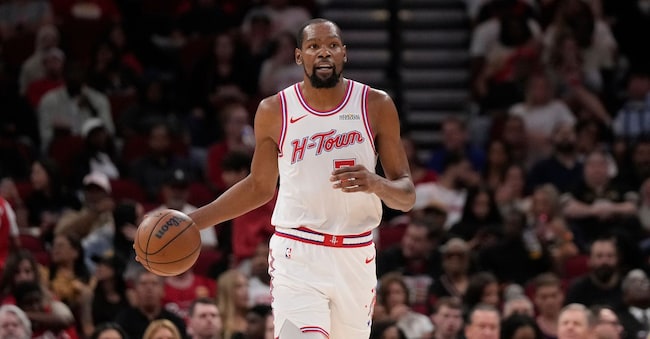
L'ala degli Houston Rockets Kevin Durant (7) controlla la palla durante il secondo tempo di una partita di basket NBA contro i Philadelphia 76ers (Foto AP/Karen Warren)

4' min read

Translated by AI
Versione italiana

4' min read

Translated by AI
Versione italiana

From a niche investment to a structural component of asset allocation. In the world of high net worth individuals, sport is undergoing a transformation similar to the one already seen with private equity or venture capital. The rise in the value of franchises, the growth in revenue from television rights and the expansion of the sports-tech ecosystem are driving family offices to increase their exposure to the sector. Today, a quarter of these firms have already invested in the sector and another quarter say they are interested in doing so, whilst family offices with roots in sport and the media manage a combined total of over 75 billion dollars.

Trend data

The figures paint a picture of a well-established trend. According to Fintrx, a firm specialising in private wealth analysis, around 3% of the global family office sector has built its wealth in the sports and media sectors, with a total value of 75 billion dollars. This segment is still relatively small in numerical terms, but is characterised by substantial assets and a strong propensity for alternative investments.

Loading...

Interest in the sector, however, extends far beyond first-generation family offices linked to sport. Research by Goldman Sachs shows that 25 per cent of family offices have already invested in sports assets or related activities, such as ticketing, infrastructure and facilities, whilst a further 25 per cent are considering entering the sector. This growing interest is fuelled by the prospect of achieving returns that are not directly linked to the performance of traditional markets and of benefiting from effective inflation hedging thanks to the structural growth in the sports industry’s revenues.

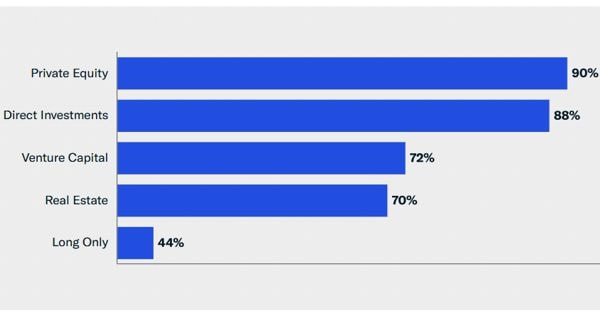
The investment profile of these entities confirms their focus on private assets. Globally, over 78 per cent of family offices invest in private equity, 71 per cent make direct investments in companies and 60 per cent hold real estate. In the case of family offices that have built their wealth in sport and the media, this specialisation is even more pronounced: 90 per cent invest in private equity, 88 per cent make direct investments, 72 per cent are active in venture capital and 70 per cent in property. Only 44 per cent maintain a predominantly long-only strategy in listed markets.
Come investono i family office?

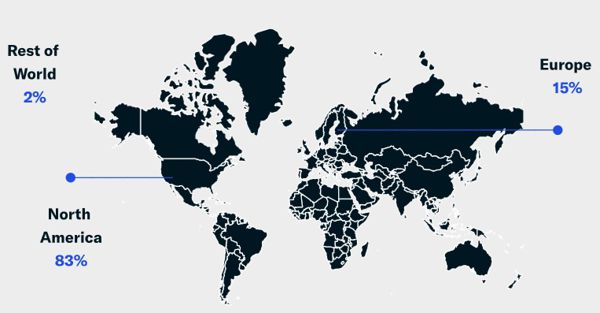
The geographical distribution of the phenomenon also appears to be well defined. 83% of family offices whose wealth originates from sport and the media are based in North America, whilst 15% operate in Europe. Asset sizes are often substantial: the most common bracket is that with assets of between 2 and 5 billion dollars, followed by the 50 to 100 million bracket.
Geografie degli investimenti sportivi

Family investments

The link between the source of wealth and the destination of investments is particularly evident in the sports sector: according to Fintx, 18% of family offices investing in this sector have built their wealth in sport and the media. Next come family offices from the media and entertainment sector, accounting for 11 per cent, whilst telecommunications, personal services and technology represent other significant sources of capital. Among the best-known examples are the family office of former baseball champion Alex Rodriguez, ThirtyFive Ventures run by NBA star Kevin Durant, and Nala Investments, owned by the Mexican Diez Barroso Azcárraga family, which built its fortune in the media and entertainment sector.

Data for May 2026

The acceleration in investment was also clearly evident in May. According to data provided exclusively to CNBC by FIintrx, family offices made 51 direct investments in companies, maintaining a pace that was essentially unchanged from April. Among the most significant deals is that of billionaire Tom Dundon’s family office, which has entered into a partnership with Apollo’s new sports-focused fund to invest $225 million in Pickleball, the holding company that controls Major League Pickleball and the professional PPA Tour. The deal confirms the growing interest in emerging sports and disciplines experiencing strong commercial growth. Dundon, after all, already owns the Portland Trail Blazers of the NBA and the Carolina Hurricanes of the NHL, reflecting an investment strategy aimed at building a diversified sports ecosystem capable of generating value both through media rights and by expanding fan communities.

As for the major professional leagues, Michael Dell has instead increased his stake by acquiring 25 per cent of the Las Vegas Raiders, as part of a consortium led by Egon Durban, managing partner at Silver Lake. The founder of Dell Technologies already holds minority stakes in the NBA’s San Antonio Spurs and the Austin Gamblers, a professional bull-riding team.

Investing in sports tech

However, family offices’ interest is not limited to sports franchises. A growing proportion of capital is being channelled into sports technology, which is regarded as one of the segments with the greatest growth potential. This is the case with David Adelman, an American entrepreneur active in the student housing sector who is playing a leading role in the ongoing expansion of the sports economy. Adelman is a co-owner of the NBA’s Philadelphia 76ers, Premier League side Crystal Palace and the NHL’s New Jersey Devils, as well as holding a stake in Fanatics, a global giant in sports merchandising.

Last May, his investment holding company, Darco Capital, led – alongside Bolt Ventures (David Blitzer’s family office) and Pentland Ventures – a $12 million Series A funding round in PlayerData, a British start-up specialising in technologies for monitoring athletic performance. The company produces GPS-equipped vests and smart balls capable of collecting data on athletes’ movement, speed and performance. This technology is already being used by some of the teams in Adelman’s portfolio. Among them is Crystal Palace, which uses PlayerData’s devices for training sessions in its youth academy.

This investment effectively encapsulates the new direction family offices are taking in sport: no longer merely stakes in iconic clubs or investments in television rights, but holdings across the entire value chain, from infrastructure to technology, right through to data and digital services. This transformation is redefining the relationship between private finance and professional sport and, according to industry insiders, is set to intensify in the coming years, driven by growth in media revenues, the global expansion of leagues and the search by high-net-worth individuals new sources of return as alternatives to traditional markets.

Copyright reserved ©
Loading...

Brand connect

Loading...

Newsletter

Notizie e approfondimenti sugli avvenimenti politici, economici e finanziari.

Iscriviti