
Seven fanatics for whom writing is living
In a moment of crisis, Lydie Salvayre threw herself headlong into the works of seven great authors: Emily Brontë, Colette, Virginia Woolf, Djuna Barnes, Marina Cvetaeva, Ingeborg Bachmann, Sylvia Plath and came out regenerated

5' min read
5' min read
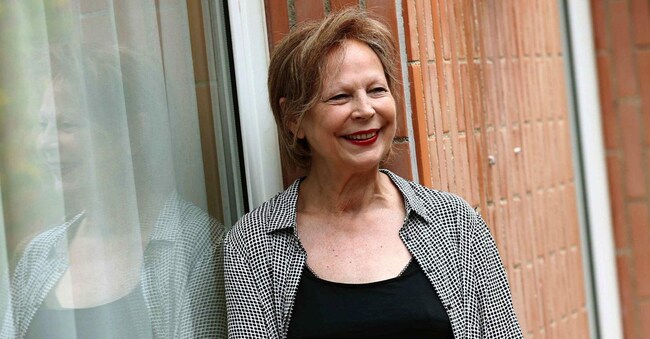
"A year ago I re-read all their books. I was going through a dark period. The desire to write had abandoned me. But I still had that of reading. I needed air, I needed liveliness. Those readings gave me both. I lived with them, I fell asleep with them. I dreamt of them'. Over twenty books already published, in 2012 Spanish-born French writer Lydie Salvayre is in crisis. She threw herself headlong into the works of seven great authors: Emily Brontë, Colette, Virginia Woolf, Djuna Barnes, Marina Cvetaeva, Ingeborg Bachmann, Sylvia Plath. Having devoured their literature, to prolong the happiness that reading them had caused her, she began to immerse herself in their biographies and correspondences. She, who had 'always regarded the idea of collecting information on the authors' lives with the greatest disdain'. And then she decided to recount them, in the seven chapters ofSeven Women (Prehistorica editore, translation by Lorenza Di Lella and Francesca Scala, pp. 232, euro 18). Two years later she won the Goncourt with the novel Don't Cry (also published by Prehistorica, in 2014, which has more of her works in the pipeline). We meet her in Mantua, at Festivaletteratura. She should be tired, she has just arrived from Nîmes, she is 77 years old, and instead she floods us with pure energy: her enthusiasm, her intensity, are overwhelming. I ask her the first question and, just by answering that one, she answers some others that I had prepared.
Why, at a certain point in her life, when she already had a long career as a writer behind her, did she feel the need to immerse herself in the works, and then in the lives, of seven female authors who had gone before her?
Because I admired them, because they were undoubtedly preparing for this movement that was confirmed later, which consists of reviving women who have been forgotten, mistreated, ignored or worse, vilified, such as Emily Brontë, who upon the release of Wuthering Heights was attacked by critics who said that her novel was crude, coarse, vulgar, contrary to art, morally indefensible and the like. In France, an essay by Marcel Proust, Contro Sainte-Beuve, in which he argues that a writer's life and his writing have nothing to do with each other, has always had a lot of resonance. I had always thought this to be the case, and instead realised that the work and lives of these women were not separate, and many even claimed this: Marina Cvetaeva, for example, wrote living-writing in one word. It seemed to me that experience, everyday life were not separate from their literature, on the contrary they were coincidental. And it was not a slogan, it was seen for instance in Silvia Plath's poems, where a line of absolute lyricism can introduce a prosaic sentence about cooking. Or in Cvetaeva, who would interrupt a line if the emotion was too strong, if the emotion of life overrode the writing. All these authors are far removed from formalism. And they all have an extreme experience of pain, as if this takes language to its highest level. In Plath it is so evident. Suffering, instead of silencing them, made their words stronger. It made me think a lot about the relationship between pain and creation. Antonin Artaud said that we write our way out of hell and Woolf said that if she did not write she would go mad. She lived in a time when women could only embroiderBecause I was talking about madness, having had cultural difficulties, living in a time when women could only embroider, and cvetaeva in a political context that made her rejete by the Soviet Union and the white Russians and plath because she had an inner enemy. Woolf the black demon and depression. Today they would be cataleged as bipolar so much they had the impression that the writing came effortlessly, that the words came effortlessly and then woolf once the book was finished, depression, plath living with a famous writer and having the impression of being a living doll. And there was so much pain in that. They raised questions that would be asked momlto later. Orlado the genre
Genre as will baudelarire
Bachman describes what we would now call an invisible, discreet, legal feminicide, marriage, in which a man destroys his wife in the greatest legality and ignorance of everything, is this frnaza. And baum describing a love between two women, also seems to me very ahead of its time.


