Panel industry

Fantoni increases revenues and invests in supply chain control

The group launches a new collection platform for recycled wood. 25 million allocated for the Pesaro centre and a third site in Brianza
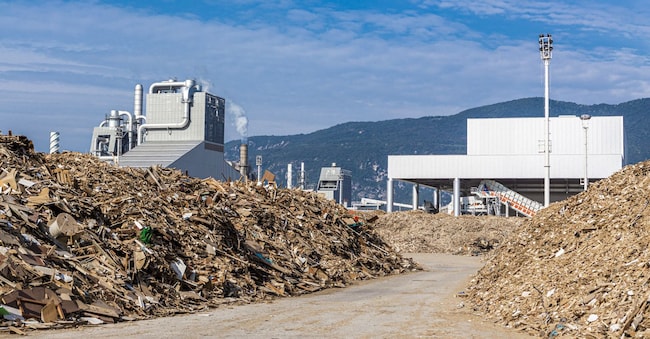
by Giovanna Mancini

Piattaforma di raccolta del legno riciclato a Prodenone del gruppo Fantoni. In arrivo una nuova piattaforma a Pesaro

3' min read

Translated by AI
Versione italiana

3' min read

Translated by AI
Versione italiana

By the first quarter of the new year, the Pesaro platform should also be in operation: the second (after the Pordenone platform started up three years ago) that the Friuli-based Fantoni group has acquired with the aim of increasingly verticalising its production chain and assuming greater control.

The years immediately following the Covid-19 pandemic and the outbreak of war between Russia and Ukraine - which led to a crisis in supply chains and soaring commodity prices - accelerated an already ongoing process, the contours of which are now beginning to become clear.

Loading...

Supply Chain Integration

"Along the lines of Porter's value chain theory, we try to gain every possible edge along the supply chain, taking control of it," explains Paolo Fantoni, president of the group from Osoppo (Udine), which has historically integrated office furniture production activities with those of panel, paper and glue production, creating an industrial reality that closed 2025 with projected revenues of €395 million, up 4-5% compared to 2024, and with an Ebitda between €55 and €60 million.

"Gradually, we have also extended this verticalisation to other activities which, in recent years, have focused particularly on logistics, starting with the acquisition of the Natolino company. This has provided us with 208 vehicles to bring recycled wood, which we use to produce panels, into the plant and transport finished panels, destined for sale, out". Every day about 100 lorries come in, bringing in a total of 450,000 tonnes of recycled wood per year, destined to become chipboard and Mdf panels. One of the main characteristics of the Italian panel industry is in fact the strong 'green' vocation, which gives our country an unusual record, with 95% of panels produced from recycled material.

Wood collection platforms

The Fantoni group plans to further increase investments in this direction, which sees the acquisition of logistic platforms for the delivery of recycled wood as a fundamental cornerstone for securing the second raw material. In fact, the group has recently earmarked 25 million euro for the purchase of the Pesaro platform, which will become operational shortly, and for a third platform in Brianza, in addition to a series of activities in this line of business. "These are centres for the collection of wood, for its disposal and for an initial volumetric reduction of the material, so that also the transport to the Osoppo plant takes place in an efficient manner," says Paolo Fantoni.

Chemical Management

Parallel to this line of development, the group started another line of activity, also aimed at the progressive integration of the supply chain. Almost two years ago, in fact, it acquired the chemical company Alder in Trieste, which allowed Fantoni to become independent in controlling the discharge and storage of methanol, one of the most important components for glue production. This strategy was reinforced by the acquisition, this year, of a 70,000 square metre plot of land and a 7,000 square metre covered warehouse, both next to Alder, where the storage of chemical products arriving by sea will be extended, in particular urea, a gas derivative (fundamental for glue production) whose production is moving from Europe to third countries, with increasing difficulties and costs for procurement.

"We are also evaluating the possibility of extending this activity of storing chemical materials to marketing, in order to enhance the unit in the Port of Trieste, which is strategic due to its proximity to the markets of north-eastern Italy, but also to Slovenia, Croatia, Bosnia and Hungary," adds Paolo Fantoni. Already today, activities in the area of logistics are mainly aimed at supplying the group's factories but, to a lesser extent, also at sales to third parties, and this will also be the case for the activities of the Trieste production unit.

The strategy, also pursued by other large Italian panel manufacturing groups, is therefore to increasingly integrate the different links in the supply chain - a feature that distinguishes the Italian panel industry from its European competitors.

Sustainable and circular production

All this, also aimed, as mentioned, at the policy of creating increasingly sustainable and circular production processes. A strategy that also includes investments in renewables: Fantoni has spent 13 million euros to create a photovoltaic mega-plant on its warehouses (the largest of its kind in Italy and one of the largest in Europe), which will go into production at the end of the year: 27,614 solar panels on 220 thousand square metres of roofs capable of generating 13.37 GWh per year, equal to a reduction in emissions of 4 thousand tonnes of carbon dioxide. This plant will cover 5% of the plant's annual electricity needs, adding to eight hydroelectric power plants and biomass boilers that already cover 70% of their needs from renewable sources.

Copyright reserved ©
Loading...

Brand connect

Loading...

Newsletter

Notizie e approfondimenti sugli avvenimenti politici, economici e finanziari.

Iscriviti