
Solar power: Fantoni builds the largest industrial solar power plant in Italia
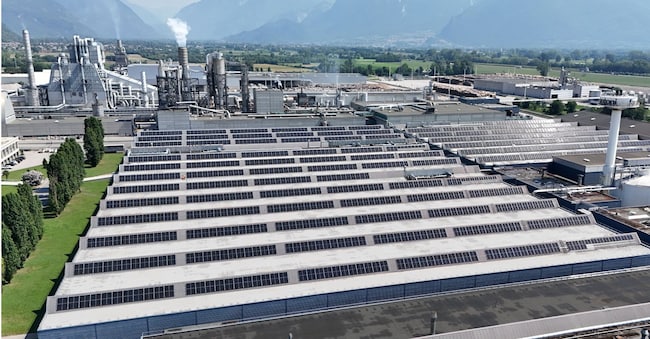
With 27,614 panels covering 130,000 square metres of the factory’s rooftops, it will be able to generate 13.37 GWh of energy per year. It is due to be operational by the end of the year

Key points
The steel and ceramics sectors, of course, as well as the chemical and paper industries. But among the most energy-intensive manufacturing sectors – and therefore those hardest hit by high gas and electricity costs – is also the panel industry, which has long been warning of the risk of losing competitiveness compared with foreign producers.
In order to reduce – albeit to a small extent – energy consumption and costs, the Fantoni Group of Osoppo (Udine), which specialises in the manufacture of panels, office furniture, partition walls and fitted walls, has for some time been making a series of investments aimed at improving the energy efficiency and self-sufficiency of its production facilities. The latest of these is the new photovoltaic system, developed in partnership with Nyox, on which construction work began a few days ago.
An area equivalent to 18 football pitches
With 27,614 panels installed across 130,000 square metres of the factory’s rooftops, once fully operational it will be the largest industrial-scale photovoltaic plant in Italia and one of the largest in Europe, covering an area equivalent to that of 18 football pitches. It will be capable of producing 13.37 GWh of energy per year – enough to meet the energy needs of 4,900 households – whilst preventing the release of 4,000 tonnes of carbon dioxide into the atmosphere, a benefit equivalent to the CO₂ absorption of 130,000 trees.
Our commitment to sustainability
“This project, which required an investment of around 14 million euros, is first and foremost part of our group’s commitment to reducing the environmental impact of our industrial activities; this commitment extends not only to energy, but also to water conservation, the use of materials, and the quality and efficiency of our production processes,” explains Chairman Paolo Fantoni. “In addition to energy supply, we have also invested, for example, in the production cycle: already today, 100 per cent of our chipboard panels and 50 per cent of our MDF are produced using recycled wood,” he adds.
There is also a focus on reducing energy costs, which has now become a priority for the solar panel sector: “Through these ongoing investments, we also aim to free ourselves from the significant and often speculative fluctuations in the energy market that we have witnessed in recent years,” adds Fantoni.

