Malnutrition

FAO: Africa increasingly besieged by hunger

On the continent, one in five people is malnourished, compared to one in eleven worldwide. Wars and climate change worsen the phenomenon

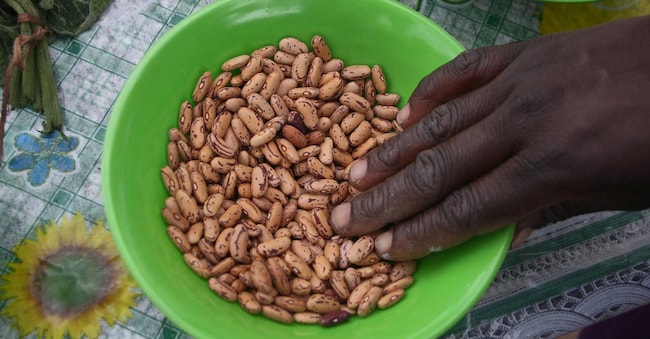
Cibo povero

3' min read

3' min read

More than 710 million people suffered from hunger in 2023: that is one in eleven in the world and even one in five in Africa. The precise estimate, compiled by the FAO in its food security report, is between 713 and 757 million people, about 9 per cent of the planet's population. The scars of Covid-19, which exacerbated global inequalities, leave over 152 million more malnourished than in 2019. And the goal of eliminating world hunger by 2030 seems increasingly out of reach.

Africa getting hungrier

After the jump caused by Covid and the economic crisis that followed, globally, the number of hungry people has remained stable for three consecutive years. Not in Africa, however, where there has been an increase. Here, the malnourished population is 20.4%, compared to 8.1% in Asia, 6.2% in Latin America and the Caribbean and 7.3% in Oceania.

Loading...

In absolute terms, Asia remains the region with the largest number of undernourished people: more than half of the total, i.e. 384.5 million, compared to 298.4 million in Africa, 41 million in Latin America and 3.3 million in Oceania.

According to FAO projections, by the end of the decade, Africa will also hold this sad record. In fact, by 2030, 582 million people are expected to be 'chronically undernourished' (130 million more than the pre-pandemic estimates), more than half of whom will be in Africa (53%).

For Elizabeth Nsimalda, president of the East African Farmers Federation, 'we are losing the battle against hunger, especially in rural communities where many of the people who produce the food we eat are unable to feed themselves and their families.

By contrast, the situation in Latin America improved: 14 million fewer people fell into the 'food insecure' category in 2023, thanks to agricultural funding as well as improved cereal production and industrial capacity, even though the region was hit by extreme weather events aggravated by global warming.

Food insecurity

.

Beyond hunger, food insecurity remains above pre-pandemic levels. In 2023, 28.9 per cent of the global population - 2.33 billion people - were moderately or severely food insecure, without regular access to adequate food. A plague that continues to affect rural areas more than urban ones and women more than men, albeit with a narrowing gap (the percentage point difference fell from 3.6 in 2021 to 1.3 in 2023).

In low-income countries, 71.5% of the population cannot afford a healthy diet. The share drops to 52.6% in lower-middle-income countries, compared to 21.5% in upper-middle-income countries and 6.3% in high-income countries.

"World hunger remains catastrophically high: 36 per cent more people go to bed hungry every day than ten years ago," says Olivier De Schutter, UN Special Rapporteur on extreme poverty and human rights.

Wars and climate change

.

The main causes of hunger are conflict, climate change and economic shocks, which are occurring with increasing frequency and intensity, FAO warns. "The global industrial food system is disastrously vulnerable to increasing climate, conflict and economic shocks, with climate change increasingly affecting farmers. Building climate-resilient food systems is now a matter of life and death. So is creating social protection schemes and ensuring living wages for workers,' De Schutter emphasises.

Estimates of the funding needed to combat hunger and malnutrition are very haphazard and the order of magnitude is several trillion dollars, according to the FAO. Failure to close this gap, the organisation warns, 'will have social, economic and environmental consequences' that will have even greater costs.

Copyright reserved ©
Loading...

Brand connect

Loading...

Newsletter

Notizie e approfondimenti sugli avvenimenti politici, economici e finanziari.

Iscriviti