
Goodbye blank page – AI shortens the time between thought and writing
Google, start-ups, ‘second brains’: the entire writing tools industry has realised that the real work happens before the words are written

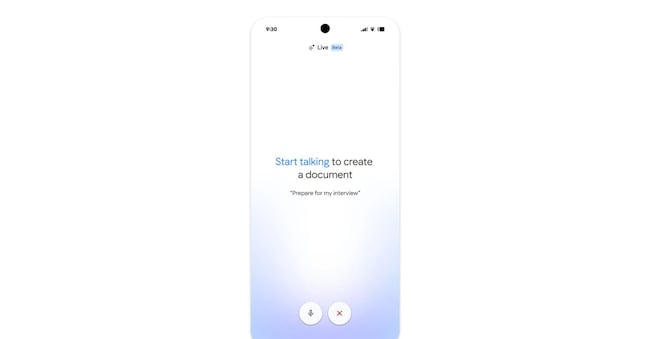
For decades, the text document remained essentially unchanged: a blank sheet of paper, a blinking cursor, the weight of the blank page. Then something changed when Google unveiled Docs Live at the I/O 2026 developers’ conference – a voice-activated feature powered by Gemini that aims to be
a thinking partner and co-writer that helps transform raw ideas, streams of consciousness and brainstorming sessions into a usable first draft, all using just your voice. It’s not just a design update. Docs Live can draw on data from other Workspace services, such as Gmail, Drive and Google Chat, to provide context for the document you’re working on. You can ask Gemini to format text according to a template or to incorporate data from a recent conversation. The document ceases to be an island and becomes a node connected to the workflow. For now, the feature is reserved for Google AI Pro and Ultra subscribers, with early access for Workspace organisations coming later this summer. It’s a sign, however: AI-assisted writing is becoming a paid tier on top of the tools we already use every day.
Google is banking on an insight: the real hurdle is not the writing itself, but the thought process that precedes it. Turning a vague idea into structured words is the most labour-intensive part of the process. Docs Live steps in precisely there, upstream of the cursor, even before you start typing. This same insight has given rise, in the world of start-ups, to a range of far more specialised tools, each taking a different approach to where the real cognitive bottleneck lies. Artificial intelligence acts as an engine for cognitive synthesis, reducing processing times and altering the very nature of the text document. The document ceases to be a static artefact and becomes a dynamic data aggregator, operating as a sorting centre integrated into business workflows and the management of shared knowledge.
Granola: meetings as raw material
Granola starts from an often-overlooked observation: conversations are where the best ideas are born, but also where they are lost most quickly. The tool records and transcribes meetings in real time, then transforms them into structured, intelligent notes, ready to be used, shared or developed further. Granola’s vision is that the document of the future isn’t written from scratch; it’s distilled from what has already been said.

