
Who was Emma Bonino, the champion of democracy?
The long-standing Radical Party leader has died after spending several days in hospital. She had been battling lung cancer

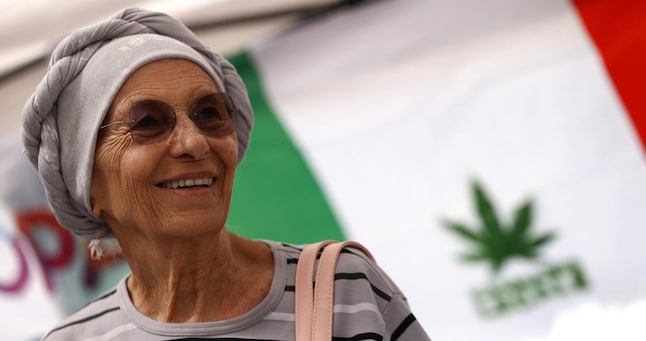
Following Marco Pannella in May 2016, we have also lost Emma Bonino also passed away, and with her went the second leading figure of what had been the Radical Party in Italia, at least since the 1970s. Following her cancer diagnosis in 2015, her treatment, chemotherapy and then a stay in intensive care for respiratory problems in October 2024 – which she also overcame – this time she did not make it. The president of +Europa died today after several days in hospital.
It is no easy task to summarise Emma Bonino’s public life because, as was the case with Pannella, her approach to politics has always been all-encompassing – body and soul, in the literal sense – through a commitment to activism and political engagement that have made Bonino one of the leading figures of liberal radicalism and feminism at European level.
Radical battles
Born in Brà (Cuneo), Piedmont, in 1948, Bonino joined the Radical Party in 1975, playing a leading role from the outset in the campaigns for the legalisation of abortion and against nuclear power, carried out through referendums and civil disobedience. In the years that followed, she championed numerous initiatives for the legalisation of soft drugs and the controlled distribution of heroin (her clash in the late 1990s over drug control and crime prevention with the then UN Under-Secretary-General, Pino Arlacchi) whilst, on the international stage, he was committed to the defence of civil and political rights, the abolition of the death penalty and the fight against world hunger.
Political career
A Member of Parliament from 1976 to 1994, Bonino was president of the Transnational Radical Party from 1991 to 1993, and served as its secretary from 1993 to 1994. From 1995 to 1999, she was a leading member of the European Commission, responsible for fisheries policy, consumer policy and the European Office for Humanitarian Aid, tackling, during her tenure, the major humanitarian crises of the 1990s, including those in the African Great Lakes Region and the Balkans.
Elected to the European Parliament in 1979 and 1984, Bonino was re-elected in the European elections of June 1999, in which she stood – to everyone’s surprise – with her own list, known as the ‘Bonino List’, which secured as much as 8.5 per cent of the vote nationwide. In 2006, following the centre-left’s victory in the general election, she was appointed Minister for International Trade and European Affairs in the Prodi government.

