Goodbye

Ratan Tata, the visionary entrepreneur who transformed Indian industry

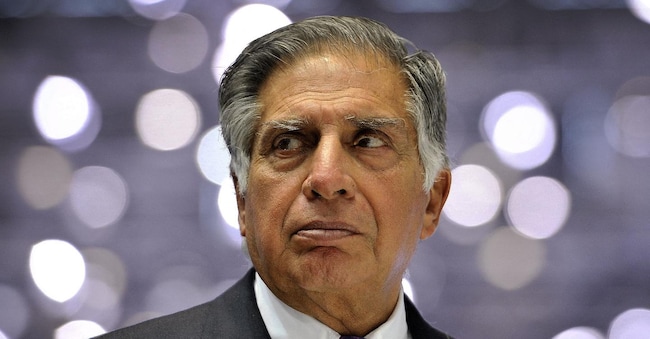
Ratan Tata, the Indian entrepreneur who led the Tata Group to international expansion and the acquisition of major foreign companies, has died at the age of 86. His legacy includes the group's expansion into more than 100 countries and a turnover of $165 billion
by Marco Masciaga

Ratan Tata aveva 86 anni. Ha guidato il gruppo di Mumbai per oltre un ventennio

4' min read

4' min read

From our correspondent

NEW DELHI - Ratan Tata, the man who with a series of sensational acquisitions imposed a vast, somewhat dusty and historically low-profile Indian conglomerate on the global scene, has died. This was announced in the Indian night between Wednesday and Thursday by the Tata Group. He was 86 years old.

Loading...

Tata was in intensive care in a Mumbai hospital, where he had been admitted a few days ago, officially for a series of tests. Prime Minister Narendra Modi, in a post on X, paid tribute to him, remembering a 'visionary entrepreneur, a compassionate soul, an extraordinary human being'.

Tata was the most symbolic figure of India's economic rise. Also for purely anagraphical reasons. In fact, his rise to the top dates back to 1991, the year in which New Delhi, in the midst of a devastating balance of payments crisis, began the process of dismantling the planned economy desired by the father of the fatherland, Jawaharlal Nehru, in order to embark on the path of capitalism.

An interpreter of change

.

Tata has been an interpreter of this wave of change even within a 100-year-old Group. As chairman, he expanded it rapidly: today it has operations in more than 100 countries with a turnover of USD 165 billion in the fiscal year ending last March. One of his first steps as chairman was to try to limit the power of some corporate heads by imposing retirement ages, promoting younger people into top positions and tightening control over companies. What Ratan Tata has not changed is the group's philanthropic vocation. Even today, about two-thirds of the share capital of the holding company Tata Sons is still held by foundations.

In 1996 he founded the telecommunications company Tata Teleservices and in 2004 he took Tata Consultancy Services, the group's golden goose, to the stock exchange. But it is probably the foreign acquisitions that more than anything else have marked his 20-plus years at the helm of the Mumbai-based giant. Under Tata's leadership, the group undertook an expansion that at times seemed to want to avenge India's colonial past. Among the most famous transactions were the purchase of the British tea company Tetley in 2000 for USD 432 million and the Anglo-Dutch steelmaker Corus in 2007 for USD 13 billion, at the time the largest acquisition of a foreign company by an Indian company. Tata Motors then acquired the British luxury car brands Jaguar and Land Rover from Ford in 2008 for $2.3 billion.

The passion for four wheels

.

Cars have been one of Tata's passions. His favourite designs at Tata Motors were the Indica, the first car model designed and built in India, and the Nano, presented as the world's cheapest car. Tata contributed the initial designs of both models. But while the Indica was a commercial success, the Nano, sold for only 100,000 rupees (about 1,100 euro) was a resounding failure. It was supposed to convert Indian families from two-wheelers to four-wheelers, but despite the publicity battage it failed to capture the ambitions of a rapidly changing country and after 10 years production was stopped.

A privileged but difficult childhood

.

Born in Mumbai on 28 December 1937, Ratan Naval Tata was raised by his grandmother after his parents, Naval and Sooni Tata, divorced when he was 10 years old. His father had been adopted into the main Tata family at the age of 13 by the daughter-in-law of Jamsetji Tata, founder of the Tata group. After graduating in architecture from Cornell, USA, Tata wanted to settle in California, but his grandmother's ill health prompted him to return to India, where he received a job offer from Ibm.

The then president of Tata Sons, Jehangir Ratanji Dadabhoy Tata, known as JRD, persuaded him to work for the group instead. The two men were distantly related, belonging to different branches of the Tata family tree, one of the most prominent Parsi families in Mumbai. Trained by JRD, the young Tata began his career with the conglomerate in 1962, undertaking various assignments in various units before entering management in the 1970s. Ratan Tata was the Group Chairman from 1991 to 2012.

After retiring, Ratan Tata became a prominent investor in Indian start-ups, backing several companies including digital payments company Paytm, Ola Electric, and home and beauty service provider Urban Company.

A licensed pilot who occasionally took the controls of the company plane, Ratan Tata never married and was known for his reserved character, relatively modest lifestyle and philanthropic work.

The group's last major acquisition was not of a British company, but it was nevertheless full of symbolic significance. In 2021, Tata Sons took back control of Air India, the country's national airline, almost 90 years after it had been nationalised. Heavily in debt and now a shadow of its former glory, the deal meant that Tata was able to bring an airline originally founded by its mentor, JRD, back into the fold.

Copyright reserved ©
Loading...

Brand connect

Loading...

Newsletter

Notizie e approfondimenti sugli avvenimenti politici, economici e finanziari.

Iscriviti