
Farewell to Paolo Fresco, who gave Fiat a global outlook
The internationally renowned Italian business executive and former chairman of Fiat has died at the age of 93

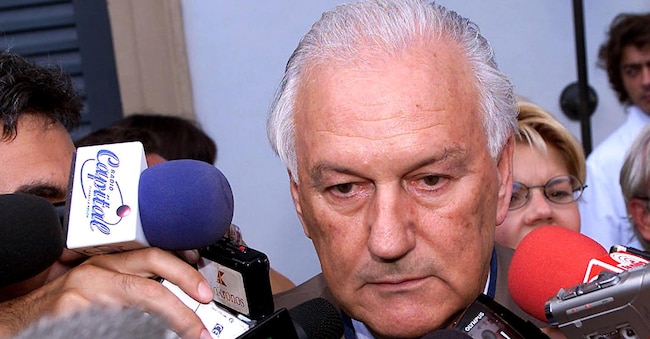
Paolo Fresco, an internationally renowned Italian executive and former chairman of Fiat, has died at the age of 93.
In 1998, he was appointed by Gianni Agnelli to the post of chairman of Fiat. Following a long career at General Electric, he was known in Turin as ‘the American’ due to the experience he had gained in the United States.
Born in Milan in 1933 and raised in Genoa, after graduating with a degree in law he began his career as a solicitor, but soon moved into the world of industry. At the age of 28, he was taken on by CGE (Compagnia Generale di Elettricità). He subsequently moved to the US parent company, General Electric, where he built a brilliant career, holding positions of increasing responsibility until he became vice-president.
Chairman of Fiat from 1998 to 2003
Thanks to his managerial skills, he became one of Jack Welch’s closest associates; Welch was the long-serving chairman and chief executive of General Electric from the 1980s to the early 2000s. From June 1998 to February 2003, he served as chairman of Fiat, with the task of steering the group through a particularly difficult period, marked by fierce international competition and profound changes in the automotive sector. During his tenure, he sought to make the company more competitive through corporate reorganisation and the adoption of new industrial strategies.
One of the most significant events of his presidency was the agreement with General Motors, which was designed to strengthen the partnership between the two companies. Despite his efforts, Fiat’s financial situation remained difficult and, in 2003, Fresco stepped down as chairman.
Paolo Fresco is remembered as a manager with extensive international experience, capable of combining Italian and American business cultures. Throughout his career, he served on the boards of numerous companies and institutions, contributing to the development of major industrial projects.

