
Farmers challenge EU duties on Russian fertilisers
Criticism of the European Parliament for approving increased tariff barriers on fertilisers and some agricultural products from Moscow and Minsk

2' min read
2' min read
The European Parliament said yes to increased EU duties on fertilisers and new tariff barriers on agricultural products of Russian and Belarusian origin not yet subject to additional customs duties. With 411 votes in favour, 100 against and 78 abstentions, the Europarliament approved the Commission's proposal to increase duties on sugar, vinegar, flour and animal feed by 50%, and to set a 6.5% duty on fertilisers imported from the two countries, plus tariffs of between €40 and €45 per tonne for the two-year period 2025-2026.
The regulation will now have to be formally adopted by the Council and is expected to enter into force in early July. But European farmers are already on the warpath. Copa-Cogeca, the largest lobby of the European agricultural sector in Brussels, while acknowledging the political context behind the decision, in a note points the finger at "the total lack of consideration for alternative sources, the absence of an impact assessment and the lack of clarity on the market implications" and underlines "the serious economic and operational consequences that this proposal represents for the EU agricultural sector". Fertilisers are a major cost item for farmers: 'If the EU is determined to reduce dependence on Russian and Belarusian fertilisers,' Copa-Cogeca writes, 'it must present a credible and forward-looking alternative.
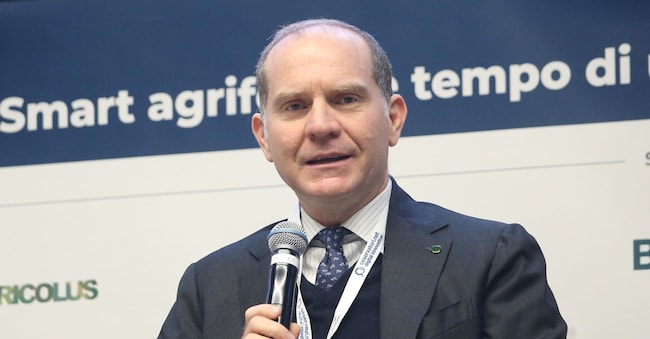
Italy's Confagricoltura also expresses concern over the outcome of the European Parliament vote: "While sharing the general objectives of the measure," reads a note from the association whose president, Massimiliano Giansanti, is also president of Copa, Confagricoltura reiterates the urgency of supplementing the measure with corrective measures. In particular, a gradual revision of the duty system is necessary so that the transition towards a lesser dependence on imports does not penalise the European primary sector, which is already strongly affected by market instability and rising production costs".
What worries farmers most of all is the lack of alternatives to Russian fertilisers, which are destined to become more expensive: from strengthening the use of fertilisers of zootechnical origin such as digestate, to greater flexibility in the application of the Nitrates Directive. "Agricultural companies," said Giansanti, "need adequate answers also in light of the decisions being taken at a national level to improve air quality. In particular, the absolute ban on the use of urea in the Po Valley Basin from 1 January 2027, without any really feasible transitional phase and without any valid alternatives on the market, is an unsustainable imposition. The concrete risk is that the primary sector, already bent by frequent climatic calamities and cost increases, will once again be faced with rules that are difficult to apply, with negative social, environmental and economic effects.


