Made in Italy Day

Fashion fakes, 153 million euro worth of goods seized in 2023-24

by Marta Casadei

Gazebo anti contraffazione della polizia locale in piazza San Carlo, organizzato da FederModaMilano e Federazione Moda Italia

6' min read

6' min read

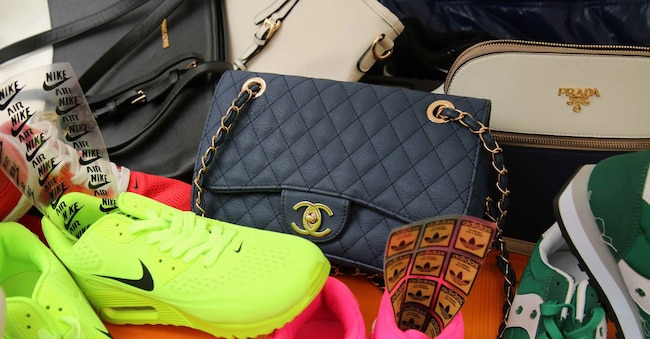
Between 1 January 2023 and 31 December 2024, Italian law enforcement agencies seized more than 10 million counterfeit fashion products with a total value of more than EUR 153 million. A very small share, weighing only 3% of the total, of the counterfeits seized in Italy, in whose 'basket' instead stand out toys, consumer goods and electronics, most of which were intercepted at the marketing stage (in 80% of the cases were seizures from unlicensed hawkers). However, the e-commerce channel is increasingly used for this type of buying and selling.

These are the main findings emerging from the second edition of the report 'Counterfeiting. Evoluzione del fenomeno criminale sul mercato fisico e online" (Counterfeiting. Evolution of the criminal phenomenon on the physical and online market), presented on the occasion of Made in Italy Day and the result of the synergy between the Central Directorate of the Criminal Police - Criminal Analysis Service and the Desk Interforze Anticontraffazione, in which representatives of the Carabinieri and Gdf general commands, the central anti-crime directorate of the State Police, Anci and Siae take part, in collaboration with the local police of Roma Capitale and the central directorate for scientific police and cyber security. The report, which emphasises that 'in times of economic crisis and consequent loss of purchasing power of families and businesses, counterfeiting activities could increase with an index of direct proportionality', also speaks of an increase in the value of seized goods (which are mainly produced abroad) with a 'rise' in the level of the counterfeit industry.

Loading...

Towards a protocol for legality?

The fight against counterfeiting has always been one of the priorities of the fashion system and during the recent round of talks between Minister Adolfo Urso, owner of Mimit, and the associations that bring together the companies in the supply chain, legality was also discussed - in view of an announced 'Fashion Plan' that should be presented at the meeting of the fashion table scheduled for early May, according to what was reported by the undersecretary to Mimit, Massimo Bitonci, in the Senate -: technical in-depth studies would be underway to define an 'Anti-Counterfeiting and Legality Protocol' that would aim to combat violations of industrial property rights and protect legality in the fashion sector.

Although in this historical context, trade issues - first and foremost, the effect of tariffs - hold sway, counterfeiting is an ever-present problem in the fashion industry. More and more topical, considering that the ways in which counterfeit products are marketed have evolved hand in hand with technologies and means of communication.

Italy among the most affected countries in Europe for counterfeit clothing

According to Euipo's most recent figures for 2023, Italy is one of the countries most affected by counterfeiting in the clothing sector, with EUR 1.7 billion in lost sales and 19,000 jobs lost each year. At European level, the clothing industry is the one most affected by counterfeit products, with a loss of almost EUR 12 billion in annual revenue (equivalent to 5.2 % of sales) and 160,000 jobs lost.

According to an elaboration by the Centro Studi Confartigianato Imprese Marche on data from the Chamber of Commerce of the Marche relating to the 4th quarter of 2024, more than one company in four (26.8%) of the Italian manufacturing sector is exposed to counterfeiting. With peaks of 46.8% in Tuscany and 37% in Le Marche. Two regions known for their production districts in the textile-fashion-accessories sector. Overall, as many as 31 provinces (just under a quarter of the total) register an above-average exposure. Leading the way are Prato, with a share of over 84%; Fermo (63.1%) and Florence (over 55%). Lazio, with more than 40.3 million, is by far the first region in terms of the number of counterfeit products (not necessarily clothing or fashion items) seized by the Guardia di Finanza and the Customs Agency in 2023, while clothing accessories (China), labels (Hong Kong and Russia) and clothing items (Turkey and India) are the main products seized in 2023 (elaboration by Confartigianato Marche on data from Mimit, Gdf and Customs Agency).

Business expands online, between ad hoc sites and social

.

After the localised legal battles between reality and the metaverse (such as the querelle between Hermès and the American artist Mason Rotschild over the Meta-birkin) and awaiting the first artificial intelligence-themed litigations, fashion brands are focused on fighting - alongside 'traditional' counterfeiting - with goods that are produced abroad (in the above-mentioned countries) and then imported in large quantities to be resold on the domestic market through different channels (shops, markets, hawkers). Then there is ecommerce: the web is teeming with platforms offering counterfeit products, often referred to as 'replicas'. (Apparently) Italian or foreign sites on which to buy luxury fakes - from the famous Kelly by Hermès to Lady Dior, with prices ranging from 300 to 500 euros, or the Chanel Flap bag that, even discounted, can be found for 299 dollars - complete with reviews by customers who have bought them and the possibility of contacting customer service, even via Whatsapp. The goods then arrive 'comfortably' at home, just like any ecommerce store. These 'low-cost' goods should still be checked at customs, but only to a small extent (experts in the sector speak of 3-4 parcels every 5,000), also because customs clearance does not take place at the airport but at the importer's premises.

"Brands cannot abandon the old offline fight," says Gianluca De Cristofaro, partner and Head of IP at Lca, "but they have to invest in new fights: the Net, however, is a huge reservoir for fakes. Counterfeiting via social is becoming worse than counterfeiting on marketplaces that, on the other hand, are trying to get closer to brands'.

The dupe phenomenon and legal protections

Amplifying the phenomenon of fakes for some years now are social media. Where - through 'anonymous' or hidden links, the hidden links - consumers are connected with platforms on which it is possible to buy fake products from extensive catalogues. And where dupes, products that emulate the most iconic ones, while not being genuine fakes, are all the rage, and which are often proposed as 'cheaper alternatives to expensive and famous products'. The name after all, is an abbreviation of duplicate, in English copy. The most famous case is Walmart's Wirkin: made of leather, in three sizes and five colours, it sold out in a flash thanks to its price, $78.

One of the main vehicles for dupes is TikTok. On the Chinese social media site, as of 14 April 2025, there are 317 thousand videos with the hashtag #dupe, many of which concern copies of famous perfumes, but there is no shortage of fashion products (from the 'equivalent' of Skims bodysuits to Bottega Veneta drop earrings and Oran sandals by Hermès). According to a Trustpilot survey, 60% of Italian consumers said they bought a dupe after seeing the product go viral on social media. "The dupe phenomenon has exploded post Covid because luxury has increased prices a lot," explains De Cristofaro, "and there is a new generation of consumers who would like to buy luxury products, but not at these prices. If until fifteen years ago, fakes were bought knowingly but passed off as real, today the mentality has changed a lot: there is a boast in not spending too much money to buy the original product'.

Dupes are sold legally on the most famous marketplaces (from Amazon to Aliexpress), on ultra-fast fashion platforms such as Shein or Temu, but also in large Italian retailers. The borderline with fakes, however, is very often more than blurred: on TikTok an influencer invites you to buy the dupe of a pair of Gucci PVC slippers, which on the Aliexpress site appear without a logo, but actually have one.

"In the case of dupes, the legal issue revolves not around the counterfeiting of trade marks, figurative or denominative, but of imitation of form. In Italy and in Europe there are instruments against dupes: protection of the shape, for example, if it has become distinctive. Or copyright on industrial design, for super-iconic products. Brands, then, should resume filing trademarks and designs,' De Cristofaro continues.

Dupes have already ended up in court: Louis Vuitton sued Steve Madden, who allegedly copied the Multi Pochette Accessoires; GCDS took Shein to court, guilty of imitating the 'Morso' heel. Uniqlo and Coach (Tapestry) also sued Shein, again for copying and marketing products too similar to their own. However, litigation is not always the path taken by companies: "Sometimes the dupe is a small brand and some big brands are reluctant even to send a warning for fear of being seen as the David acting against Goliath and having a reputational damage," De Cristofaro explains.

Copyright reserved ©
Loading...

Brand connect

Loading...

Newsletter

Notizie e approfondimenti sugli avvenimenti politici, economici e finanziari.

Iscriviti