Labour exploitation

Fashion, legality protocol: lack of reward measures

Lawyer Bernardi (Dentons): the strength is having detailed controls but mechanisms to incentivise companies have been defined

by Sara Monaci

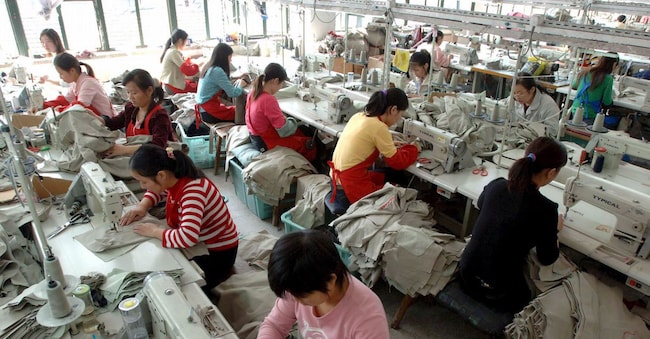
20051010 -ROMA -  LAVORO: ALLARME IN ITALIA, QUELLO CINESE E' TUTTO NERO --  Operaie cinesi al lavoro in una piccola industria tessile.  Lavoratori irregolari e, spesso, anche clandestini; bambini che, anziche' a scuola, passano le giornate in fabbrica; donne agli ultimi giorni di gravidanza alle prese con macchinari spesso in funzione senza regole anche di notte. E' la realta' di molte aziende cinesi in Italia, cosi' come emersa dall'Operazione Marco Polo 2 - condotta tra il 7 e il 18 novembre scorso da 700 uomini tra carabinieri e ispettori del lavoro, Inps e Inail in 15 province, e presentata oggi dal sottosegretario al Lavoro, Roberto Rosso . ANSA ARCHIVIO /ji

3' min read

3' min read

The Memorandum of Understanding for Legality, signed by the fashion industry following the various investigations on caporalato by the Milan public prosecutor's office, together with the Milan Carabinieri's labour protection group, marks at least a new awareness among the big brands. But it evidently has limitations, given in particular by the voluntary nature, the limited territoriality and the difficulty of controlling the entire supply chain. This is said by Arnaldo Bernardi, one of the leading lawyers in Italy who advises many luxury multinationals on the implementation of controls along the supply chain. The Dentons law firm to which he belongs has also assisted several logistics and large-scale distribution companies in similar criminal proceedings.

Let us recapitulate. On 26 May, the Protocol of Understanding for the Legality of Contracts in Fashion Production Chains was signed. The initiative, which aims to create transparent and legal supply chains, was promoted by, among others, the Prefecture of Milan, the Lombardy Region and the Court of Milan along the lines of the protocol signed last year in the logistics sector.

Loading...

The key element is the establishment of a platform to which companies will be able to register on a voluntary basis, providing information on their production chain (especially on the contribution, payroll, tax and health and safety at work situation). The information will be accessible to authorised operators (including sector brands), with levels of accessibility modulated according to distinct 'cones of visibility' for each supply chain.

Although formally from Lombardy, the protocol was also signed by the main trade associations (including the National Chamber of Italian Fashion and Confindustria Moda) and does not aspire to a rigid territorial scope. Companies located outside the Lombardy region will therefore also be able to register.

A key role, in the signatories' intentions, will be played by the brands, to which the protocol expressly assigns the task of sensitising their suppliers to adhere to the system and to carry out strict supply chain audits.

Bernardi emphasises that there are strengths but also weaknesses. 'A strength of the protocol,' says Bernardi, 'is having detailed controls, also in terms of audit frequency, to be carried out by brands regarding their supply chain.

But there is no shortage of limitations: 'Adhesion is on a purely voluntary basis, the territorial scope is limited, and there may be a lack of checks on the information and documentation that will be uploaded onto the platform,' Bernardi explains. 'Moreover, the bonus measures that will be instituted by the Lombardy Region, and which could be the key in pushing companies to register or not, have not yet been specified.

There is an ambiguous plan: territoriality. The protocol was signed by the prefecture of Milan, which makes one think of a local initiative, even though the Milan area is central for this type of production. At the same time, however, Confindustria Moda took part, and not Assolombarda, precisely because the confindustrial system considered the scope of the protocol to be national. Bernardi, on the other hand, explains that 'the initiative is regional in scope and I don't think there is much ambiguity about it. Even Article 7 of the protocol, which describes the bonus measures for the benefit of companies, clearly states that the Lombardy Region will provide incentives'.

Finally, the subject of controls. The protocol is along the lines of the actions taken by the Milan Public Prosecutor's Office, which have repeatedly emphasised the importance of carrying out effective audits on their contractors and subcontractors. The text clearly states that Brands will be required to carry out audits to verify 'the effective and substantial compliance of the company with the minimum required standards'. However, says Bernardi, 'only the completeness and regularity of these audits will be able to guarantee the effectiveness of legality'.

Finally, a wish: 'It is in any case desirable that the protocol may serve as a replicable model in other regions,' the lawyer concludes, 'and that its scope be progressively extended nationwide.

Copyright reserved ©

Brand connect

Loading...

Newsletter

Notizie e approfondimenti sugli avvenimenti politici, economici e finanziari.

Iscriviti