
Fashion, four investigations in the luxury sector in one year
They uncovered a perverse mechanism of labour exploitation, which the further it moves away from the parent company, the more it becomes nobody's place

3' min read
3' min read
In order to understand why the fashion industry is trying to run for cover and reduce the damage - at least reputational damage - we need to reconstruct what happened in Milan in the space of a year and a half. There have been enquiries into the sector's suppliers in other areas of the country as well, but only in Milan have they pointed straight at the leaders, the big brands, the ones that no one has ever questioned because of the creative value and economic inducement they represent.
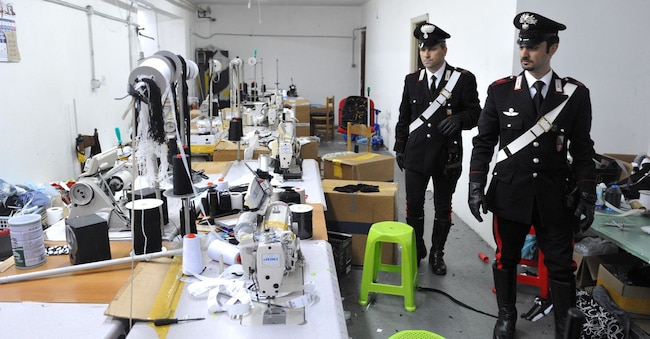
On the other hand, the caporalato investigations in Milan have revealed a perverse mechanism of exploitation along the luxury supply chain, which the further it moves away from the parent company, the more it becomes a no-man's land, with no controls and no respect for workers' rights.
The large companies, however, are never accused of 'caporalato', but of a lack of controls, which is why they have been placed under judicial administration, in order to 'clean up' the chain of producers.
The latest case is that of Valentino Bags, which emerged in mid-May. The mechanism that was brought to light by the investigators - in particular by prosecutor Paolo Storari - is the complete outsourcing of production processes: the contracting company fictitiously has a real production capacity, but in fact only has the 'sampling of the material'. In this way, costs are further reduced 'thanks to the use of irregular and clandestine labour'.
The public prosecutor's office in its investigation emphasises that there is 'an illicit practice that is so deep-rooted and well-tested that it can be included in a broader corporate policy aimed at increasing business'. In other words, we are faced with 'an illicit business policy, a process of organisational decoupling by virtue of which, in parallel with the formal structure of the organisation aimed at complying with institutional rules (codes of ethics, organisational models, which, however, have a merely cosmetic function), another structure is developed, an informal one, aimed at following the rules of efficiency and results'.


