
Creative directors: following Piccioli’s departure, Martine Rose joins Balenciaga
The Roman designer’s tenure at the Kering Group’s fashion house lasted a year and a half; he is being replaced by the British-Jamaican designer: the first woman in the brand’s 109-year history. Gabriele Colangelo is leaving Giada, a brand owned by the Chinese group Redstone Haute Couture, which he had been at the helm of for 16 years

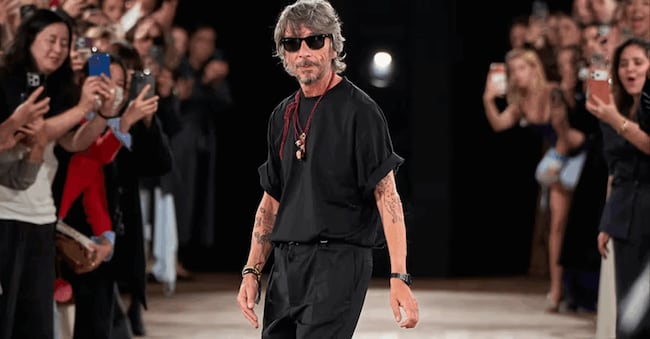
The exodus of creative directors continues: Pierpaolo Piccioli is leaving Balenciaga just over a year after his appointment, whilst Colangelo and Giada are parting ways after a decade-long collaboration.
The two cases, however, are quite different. The Balenciaga affair is taking place within Kering, where Luca De Meo is imposing a managerial style that is not always in line with the creative vision of the creative director. In recent days, Anthony Vaccarello has stepped down as head of Saint Laurent after 10 years, and Sean McGirr has left his role at Alexander McQueen after three.
Colangelo’s minimalist approach to Giada’s work, on the other hand, was developed with sensitivity over a long period, revealing convincing nuances and variations. In both cases, however, the creative journey seemed to have run its course.
Piccioli, like Colangelo, have said everything there is to say. To Piccioli, this may sound absurd, but if one looks closely at the context in which he found himself operating, it will appear unclear right from the start. The combination of Piccioli’s vibrant purism and Demna’s cynical expressionism – those trainers that brought the fashion house so much profit, and which no one would have dreamt of removing from the range – was perhaps not the best plan for renewal, and unfortunately this has become apparent.
Piccioli’s fine touch seemed uncertain: too stubbornly tied to his Valentino days, too constrained to truly soar. However, the designer alone should not be blamed for this failure. If fashion houses now operate as a collective, with the CEO as the true figurehead, then the responsibility is shared. It is a pity, because Piccioli’s artistry deserves a place where it can flourish once more, perhaps without the recent and rather unnecessary attempts at eclecticism.

