

Oltre l’incubo Fukushima: in Giappone la seconda era dell’atomo
dal nostro corrispondente Marco Masciaga

by Enrico Netti
3' min read
3' min read
An almost epochal change of pace is looming for the world of catering and eating out. After the +3.4 per cent average growth rate recorded by the fast-food sector, that without table service, between 2019 and 2024 for the next five years the forecast is for an average annual growth rate of 1 per cent.
"The quick service restaurant sector (fast food without table service ed) grew by 3.4% from 2019 to 2024 and now represents 30% of the catering sector in Italy for a total value of 24.9 billion - explains Tommaso Nastasi, partner and value creation service leader at Deloitte -. By the end of 2025 it is expected that fast food catering will reach a turnover of around 25.2 billion, a value destined to grow further to over 26 billion by 2029, registering a compound annual growth rate of +1% in the period 2024-2029".
According to the forecasts of the "Foodservice market monitor 2025" report by Deloitte that Il Sole-24 Ore is able to anticipate, the next few years do not promise to be particularly favourable for out-of-home consumption because growth will be zero while the sector's overall turnover will drop from 83 billion in 2024 to 84 billion in 2929. If fast food outlets achieve +1% growth in revenues, traditional catering will maintain its position with a 50% market share. Suffering, with a loss of three-tenths of a point to 2029, street food after the exploit seen in the last ten years, while the bar channel will accuse, again according to Deloitte experts' forecasts, a loss in turnover of 1.3%.
"Despite some growing niches, such as fast food and delivery, the Italian market overall remains mature," comments Nastasi. "The stability expected until 2029 is due to structural factors such as high competition, declining purchasing power and a slow transition to new consumption models. These elements tend to balance growth in some areas, keeping turnover stable. The stagnation in out-of-home consumption reflects greater caution on the part of families, who are being pushed by inflation and declining purchasing power to favour domestic spending, especially in large-scale distribution,' Nastasi comments. 'In the short term, we expect selective growth, driven by accessible formats, quality offerings at good prices and digital innovation. Prospects will depend a lot on the recovery of consumption, consumer confidence and the sector's ability to adapt to new habits and lifestyles that are more convenience-oriented,' he says.
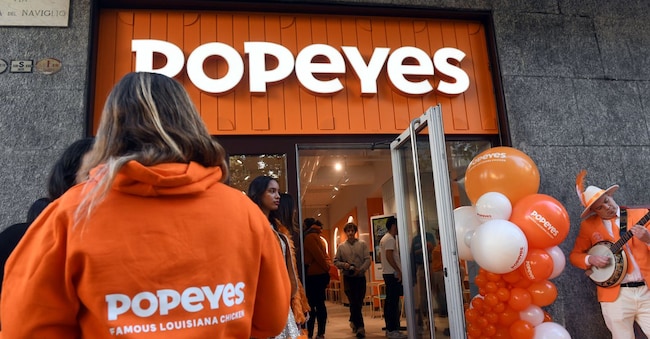
Compared to other markets, Italy offers room for growth for both domestic and foreign chains. Among the latest arrivals from the USA are Popeyes (fried chicken) and the return of Wendy's hamburgers. For the next few years the best opportunities seem to lie with fast food chains, which today have an 18% market share in Italy against 67% worldwide. There is a particular focus on young people in Gen Z who on average dine out 3 or 4 times a month, while 15% reach 5 times. "The expansion of the more scalable formats such as counter service venues show a clear evolution of consumption habits and business models," continues the partner of Deloitte Italia. "In this context, Italy confirms its strength as a market: while it still has a low penetration of chains compared to international benchmarks, it is showing very encouraging signs of acceleration, with a growth of fast food chains that exceeds the global average.

