
Fed leaves interest rates at 3.50-3.75 %, in line with estimates
The decision comes after three consecutive reductions in the cost of money and while an investigation is underway into Chairman Jerome Powell's refurbishment of the Fed's headquarters

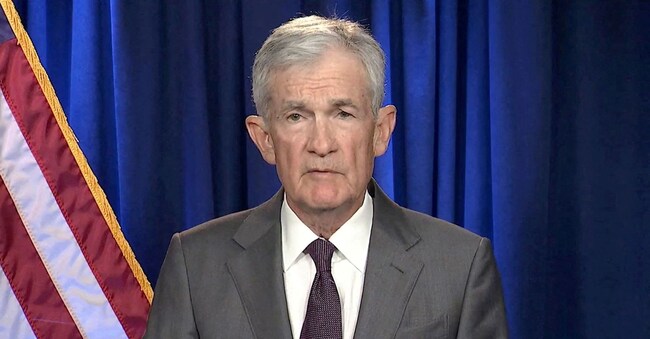
Rates steady at 3.50-3.75 %. As analysts had predicted. The Federal Open Market Committee (FOMC), the Federal Reserve's monetary policy committee, decided to hold interest rates at December levels, after three consecutive reductions in the cost of money, while an investigation into Chairman Jerome Powell's renovation of the Fed's headquarters is underway. The decision was made with only two votes against: Stephen I. Miran and Christopher J. Waller, closer to Donald Trump's economic policy vision, would have preferred a 0.25 percentage point cut.
More optimism about the economy
The official statement presented a slightly more optimistic diagnosis of the economy. Economic activity is now considered to be expanding at a 'sustained' (solid) pace, whereas in December it was only 'moderate'. 'Consumer spending has proven resilient and business fixed investment has continued to expand,' Chairman Jerome Powell said at a press conference. New hiring, which last month was described as 'slowing throughout the year', now 'has remained low' while the unemployment rate 'has shown some signs of stabilising'; in the December statement it was pointed out that it had risen slightly since September. The statement that 'downside risks to employment have increased in recent months' has also disappeared. The labour market trend thus seems to be of somewhat less concern.
The impact of tariffs on inflation
Inflation remains somewhat elevated, but the sentence emphasising its increase throughout 2025 is gone. "Excluding food and the more volatile components," Powell was keen to point out, however, "core PCE prices rose by 4.3 per cent; the high numbers largely reflect price increases in the goods sector, supported by the effects of tariffs," while services prices continued to slow. It is therefore a situation of substantial stability in the economy that is being described, albeit at levels that are not yet deemed satisfactory and with some risks linked to the US Administration's trade policies. "The current stance of monetary policy," Powell explained, "is seen as appropriate to foster progress toward both the goals of maximum employment and 2 per cent inflation". No comment on the dollar: currency policy is, the president explained, a matter for the administration.
Not impossible a prolonged phase
The next decisions will be made, as always in recent years, 'meeting after meeting', based on the data. Powell emphasised, however, that 'the economy is growing at a strong pace, the unemployment rate is broadly stable, and inflation still remains somewhat elevated, so we will look at our target variables and let the data show us the direction'. This is not the announcement of a pause that could be prolonged, but these are words that seem compatible - in the current situation - with this scenario. "There is still some tension between employment and inflation, but it is less than previously. I think both upside risks to inflation and downside risks have probably eased to some extent," Powell added, not surprisingly.
Untenable fiscal policy
The Fed does not appear worried about the effect of tariffs, which is beginning to be felt, either. "There are many different estimates and they are all very uncertain, but most of the overrun in asset prices comes from tariffs. This is actually good news, because if it did not depend on tariffs it could mean that it was due to demand, and that would be a difficult problem to solve. In fact, we believe that tariffs tend to transfer into prices and produce a one-off increase'. Net of the effect of tariffs, inflation would, he added, be just above 2%. Moreover, 'there is disinflation underway in all service categories, a development we view as positive'. The Fed's expectation "is that the effects of tariffs on asset prices will peak and then begin to subside, provided that no new major tariff increases are introduced". "If that were to occur," he further said, "it would be a signal for us to ease monetary policy. Powell also reiterated that fiscal policy is 'on an unsustainable path' due to a large deficit at a time of essentially full employment; therefore 'the fiscal framework requires action'.


