
Fed leaves rates unchanged in the range of 4.25-4.50%
The Federal Reserve has once again decided, resisting the now continuous pressure from President Donald Trump, to keep rates unchanged: the target for Fed funds rates, in open market operations, thus remains between 4.25 per cent and 4.50 per cent

5' min read
5' min read
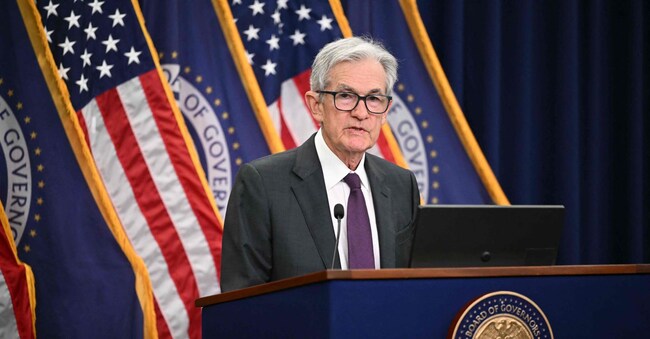
Firm rates. Again. The Federal Reserve has once again decided, resisting the now continuous pressure from President Donald Trump, to keep rates unchanged: the target for Fed funds rates, in open market operations, therefore remains between 4.25 per cent and 4.50 per cent. The decision was not unanimous, as has been the case in previous meetings: two governors, known to be closer to the positions of the Administration - Michelle W. Bowman and Christopher J. Waller - would have preferred a small cut of 0.25 percentage points, thus far from the President's wishes. Absent from the FOMC meeting, the monetary policy committee, Adriana D. Kugler, a member of the central board.
A slightly slowing economy
There were very few changes - in the final statement - to the diagnosis of the economy. The Fed noted the slowdown of the economy in the first half of the year, thus going beyond the data, distorted, of +3% GDP in the April-June period, while in June it believed the economy was expanding at a 'solid' pace: an indication that could also prepare for a September cut. 'Recent indicators,' added Chairman Jerome Powell, 'suggest that growth in economic activity has moderated. GDP increased at a pace of 1.2 per cent in the first half of this year, down from 2.5 per cent last year. Although the increase in the second quarter was stronger at 3 per cent, focusing on the performance in the first half of the year helps to offset the volatility of the quarterly data'. The moderation in growth "largely reflects a slowdown in consumer spending (and exports). In contrast, business investment in equipment and intangibles increased from last year's pace. Activity in the real estate sector remains weak'.
Uncertainties about tariffs
The uncertainty, which had diminished in the statement of a month earlier but remained high, is in the July note simply 'high'. The theme is still tariffs: 'We now have three or four tenths of 'core' inflation from tariffs,' Powell explained. The situation is also constantly changing. "Government policy changes," he said, "continue to evolve, and their effects on the economy remain uncertain. Higher tariffs have begun to be reflected more clearly in the prices of some goods, but their overall effects on economic activity and inflation remain to be assessed. A reasonable baseline assumption is that the effects on inflation may be short-lived, reflecting a one-off shift in the price level. However, it is also possible that inflationary effects will prove more persistent, and this is a risk that needs to be carefully assessed and managed. Our task is to keep long-term inflation expectations well anchored and to prevent a temporary rise in the price level from turning into an ongoing inflationary problem. For the time being, we are in a good position to acquire further information on the likely course of the economy and the development of the balance of risks, before adjusting our monetary policy stance," which is currently "moderately restrictive".
Stimulus towards stability
.Trump's trade policy seems to be becoming clearer, however, and the Fed is aware of this. "It's been an extremely dynamic period for these trade negotiations," the chairman explained, "with lots of events in between meetings. But we are still a long way from seeing where things will stabilise. We are clearly getting more and more information, and I think that, at this point, the estimates - our own and external ones - of the likely actual level of tariffs are not changing much anymore. At the same time, however, there are still many, many uncertainties to be resolved. So yes, we are learning more and more, but it doesn't feel like we are anywhere near the end of this process; and while it is not for us to judge, the feeling is that there is still a lot to be seen in the coming months'. The bottom line is that the situation is 'unusual' because 'there are risks to both the employment and inflation mandates. This is the nature of a supply-side shock'. This, he added, is another reason for the two disagreements: nothing particularly new, or traumatic, in the world of central banking.
Healthy economy
.As in June, the economy still looks healthy and does not require immediate action: 'the unemployment rate remains low and labour market conditions remain solid. Inflation remains moderately elevated'. Price velocity, Powell said, 'has been slightly above our long-term target of 2 per cent'. This aspect, repeatedly repeated, explains the maintenance of rates at current levels. "We believe," he added, "that our current monetary policy stance is adequate to protect against inflation and its associated risks. The new element is the fact that the Fed is now paying attention "to the risks associated with employment, which is the other pillar of our mandate. In the coming months, we will receive a wealth of data that will help us better assess the balance of risks and determine the appropriate level of the federal funds rate'.


