
Fed: Warsh says AI risks cannot be ignored; there could be significant economic costs
The possible scenarios range from economic growth to rising unemployment and a potential slowdown

Key points
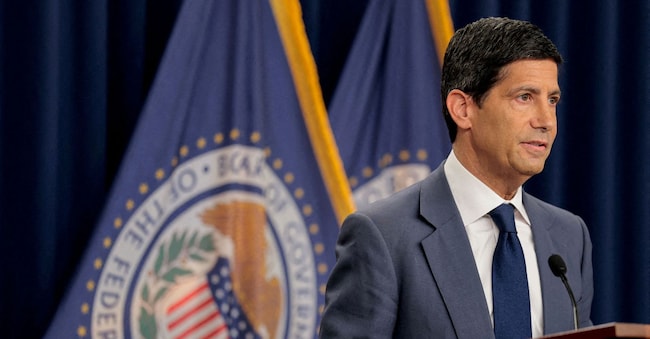
Federal Reserve Chairman Kevin Warsh said on Monday that emerging technologies will have a significant impact on the economy, but possible outcomes range from rising growth with widely shared benefits to rising unemployment and a potential slowdown should the expected returns on investment prove disappointing.
Warsh refers to artificial intelligence as ‘superintelligence’ – the term favoured by President Donald Trump – and stated that it could stand out from previous technologies as a force capable of ‘enhancing the generation of ideas’.
Possible scenarios according to the Fed Chair
In the best-case scenario, Warsh said in a speech prepared for a Fed conference on AI in San Francisco, the technology could lead ‘to an increase in productivity and economic benefits widely shared between workers and capital holders. In that case, growth in real GDP would remain consistently above its long-term average and the United States would move towards a state of full employment’.
‘Highly disruptive and economically costly’ risks
However, Warsh stated that the risks – including rising unemployment and the use of AI by ‘malicious actors’ – could be ‘highly disruptive and economically costly’.
“Our task is to prepare for any eventuality,” he said, commenting on the Fed’s decision to convene a group of AI experts to explore the implications of the technology for the economy and central banks.

