
Federal judge bans use of National Guard in California
The stop to President Trump's initiative to fight crime in California

2' min read
2' min read
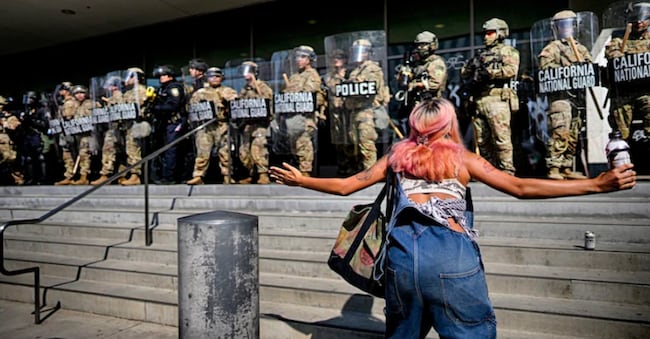
A federal judge has placed a brake on the use of the National Guard ordered by the Trump administration to fight crime in California, calling the measure a violation of federal law. The order, signed by Charles Breyer, a San Francisco-based magistrate in the Northern District Court of California, emphasises that the intervention of the armed forces in public order tasks falls outside the presidential prerogatives.
The decision is a blow to the former president, who had ordered the deployment of some 4,000 National Guard members and 700 active-duty Marines in Los Angeles last June. The move had been presented as a necessary response to the tensions that erupted in the Californian metropolis following protests against immigration raids. In previous weeks, the administration had in fact intensified ICE (Immigration and Customs Enforcement) operations, which had led to hundreds of arrests in neighbourhoods with a strong Hispanic presence.
The operations, conducted with a massive deployment of federal agents, had triggered street demonstrations and protests organised by civil rights associations, religious communities and local activists. In some parts of the city there had been clashes between protesters and police forces, episodes that the White House had described as signs of 'widespread disorder' and that had prompted Trump to call for direct intervention by the armed forces.
In his order, Justice Breyer recalled how the law prohibits the use of federal armed forces for domestic police activities, referring in particular to the Posse Comitatus Act, which has strictly limited military use in domestic security operations since 1878. The only exception, the magistrate pointed out, concerns cases in which Congress explicitly authorises the use of troops: a circumstance that did not occur in the Californian case.
The pronouncement fuels a heated debate on the relationship between the federal government and the states, especially with regard to law and order and immigration, central themes of the Trump presidency. For California, this is a new chapter in the institutional clash with Washington, while on a national level, the decision could set a significant precedent in view of possible future military interventions in support of civil authorities.

