
Female engineers and scientists, growing numbers in European countries
Women scientists and engineers in the EU have almost doubled since 2008, but remain stuck at 40.5 per cent with large gaps between countries and sectors
by Davide Madeddu (Il Sole 24 Ore)
 Aggiungi Il Sole 24 Ore
ai preferiti su Google
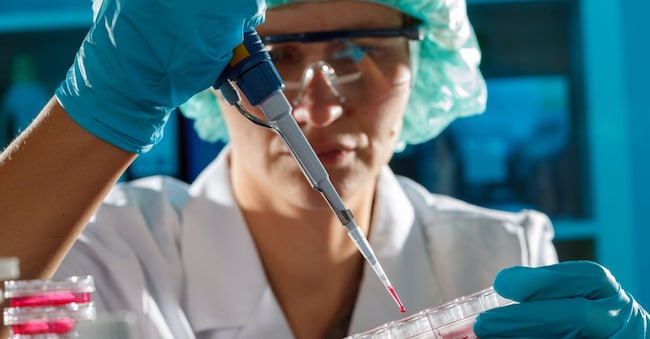
The trend is there, although the numbers are still low: in EU countries, the number of women working as scientists and engineers is growing. In the space of 16 years, the figure has more than doubled. It rose from 3.4 million in 2008 to 5.2 million in 2014, and then to 7.9 million in 2024.
"In all economic activities, women accounted for 40.5 per cent of the workforce of scientists and engineers in 2024," says a Eurostat report. "This share was highest in total knowledge-intensive services with a share of 45.1 per cent and in service categories with 45.0 per cent. In manufacturing, women accounted for 22.4 per cent of scientists and engineers, while in other activities, that share was 23.6 per cent'.
Highest percentage in Latvia
The highest percentage of women scientists and engineers in 2024 was in Latvia where the share in the total was 50.9%, then Denmark, 48.8%, Estonia 47.9% Spain 47.6% and Bulgaria and Ireland, both 47.3%. The lowest representation of female scientists and engineers was in Finland 30.7%, followed by Hungary 31.7%, Luxembourg 32.4%, Slovakia 33.6% and Germany 34.6%. In four regions of Spain, the percentage exceeded 50%.
Among the tail-end countries with the lowest percentages are the Hungarian region of Közép-Magyarország (with 30.0 per cent), the Finnish region of Manner-Suomi (30.7 per cent), and the German regions of Rhineland-Palatinate, Baden-Württemberg and Hesse.
Things are not much better in Italia where the numbers are below 40%: the percentage of women out of the total number of scientists and engineers is 38.015 in central Italy, 37.5% on the islands and 34.949% in the north west, 34.574% in the north east, and 31.113% in the south. There is some growth in the registration of engineers by women.

