The trend

Female entrepreneurs who invest: the generational shift is giving rise to new businesses

From family-run businesses in silk or wine to cosmetics, from art to design, from perfume to fashion: heirs who are transforming their businesses and supporting their local areas, whilst retaining control and independence

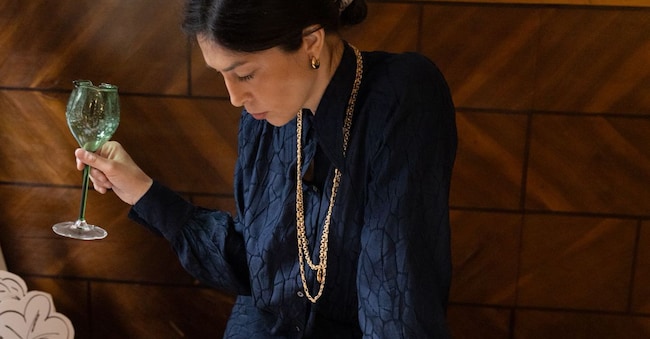
Gaia Rotelli. Architetto, artista e designer ha una linea di gioielli e uno studio creativo

4' min read

Translated by AI
Versione italiana

4' min read

Translated by AI
Versione italiana

A family business from which to draw inspiration before launching one’s own venture. Or creating a venture alongside one’s career. It is a stimulating, yet challenging, journey of conception and creation that many female entrepreneurs have chosen to embark upon. The stories range from that of Miriam Leone, a renowned actress who chose to create a brand of advanced cosmetics, to that of Olivia Ghezzi, heiress to a perfume empire who chose to devote herself to fashion, or even Gala Rotelli, who drew inspiration from her father’s art, Marco Rotelli, and subsequently applied it to design.

A family legacy is not just a business to be inherited. For a new generation of female entrepreneurs, it can be a starting point.

Loading...

Francesca Di Lenardo began her professional career in communications; her family runs a wine business in Friuli, which is still in operation today. Skincare began as a personal interest and evolved into a business venture. This led to the creation of Insìum, built on a premium positioning. “The philosophy,” says Francesca, “is that of a vegan and clean brand; hence the decision to focus on research and biotechnology, through boosters developed in collaboration with formulators and specialist laboratories.”

The business model is asset-light: Insìum works with four external laboratories, selected on the basis of the formulations. The company currently has a turnover of around one million euros, with a target of 1.3 million, and produces approximately 25,000 items. It is a family business and has no venture capital backing. The sales network is so crucial that Insìum has chosen not to run its own e-commerce platform, so as not to compete with its distributors. The priority is to maintain control over the brand and quality.

It is a strategy that reflects a certain aspect of Italian entrepreneurship: small companies with room for growth, which do not regard the involvement of an investment fund or the maximisation of volumes as their ultimate goal.

The sector is fashion, but with a unique twist. After more than 20 years’ experience as a stylist and buyer for fashion houses such as Prada and department stores such as Bongénie, Daiana Giorgi has chosen to focus on vintage and second-hand fashion. She has therefore decided to launch a new venture – although fashion runs in the family, given that her husband owns the Tessabit shops in Como – by founding the luxury platform Frida. The project focuses on second-hand items and historic archive pieces, selected from the 1920s to the 1990s to be reinterpreted with a modern twist. There are now two shops, in Cernobbio and St. Moritz, as well as a pop-up at La Rinascente, but a major opening is planned for this autumn in Milan’s Quadrilatero district.

Olivia Ghezzi comes from a family with close ties to the world of fragrances; her family owns the Moellhausen group. However, after training in fashion design, she chose to establish Maison Olivia, a Milanese atelier that now specialises in ‘bespoke’ clothing and wedding wear. “The atelier was founded in 2008; the project developed around tailoring and personalisation,” says Olivia, who was also a television personality for many years. “Maison Olivia was immediately hit by the 2008 financial crisis. Traditional retail gave way to bespoke tailoring, with an increasingly strong focus on formal wear and wedding attire.”

Gala Rotelli, daughter of Marco Rotelli, is an artist and architect who grew up immersed in a culture of design that became her professional expertise. She graduated with a degree in Architecture, went on to specialise in design, and developed the Gala Rotelli Studio jewellery brand and creative studio. ‘A design-oriented mindset is something I absorbed through osmosis,’ she explains. Design becomes economically significant when it manages to transform into a product, a commission, an installation or a brand identity. Gala has worked for Acqua di Parma, amongst others, creating glasses, goblets and jugs, as well as site-specific projects. “I’ve taken various courses in design, neurodesign and accessory design in Milan and London, at the Politecnico and at the Sotheby’s Institute of Art,” she explains. I have taught at the IED and give talks and lectures on design and storytelling. My latest project? A site-specific installation for a historic bathing establishment in Forte dei Marmi, the Bagno Costanza.”

It was a journey from silk to cosmetics that led Giada Mieli to found J.And.C, a brand of products based on sericin, a silk protein.

“My family has been working in the silk industry for generations, in Como, and we also have a production facility in China,” she says. It was from that supply chain that the idea of recovering sericin arose, initially also to reduce the silk company’s production costs.” Giada, a graduate of IULM, decided to join the project after a brief stint in communications. It was 1999. Growth, however, was not immediate. “It was a struggle,” she says. At the start, there was a lack of confidence and a lack of specific knowledge of the cosmetics sector. Over time, she built up expertise in formulation, active ingredients and product positioning. She was helped by the Passera family’s decision to stock the products in hotels belonging to the Vista Group, now located in Verona and Ostuni. The strategic decision was not to turn the brand into a multinational, precisely to preserve its quality. “We received proposals from various investment funds, but we turned them down. The idea is to continue growing, without losing control of the company,” she concludes.

Copyright reserved ©
Loading...
  • Paola DezzaCaporedattrice del Lunedì e responsabile del settore real estate per tutto il gruppo

    Lingue parlate: inglese, francese

    Argomenti: mercato immobiliare, architettura, finanza immobiliare, lifestyle, turismo, hotel e ospitalità

    Premi: “Key player of the italian real estate market” di Scenari Immobiliari

Loading...

Brand connect

Loading...

Newsletter

Notizie e approfondimenti sugli avvenimenti politici, economici e finanziari.

Iscriviti