
Feralpi shows the way to reduce emissions hard to abate
Steel bigwig invests 400 million in renewables, circular economy, an electric furnace in Brescia, a hi-tech rolling mill in Germany

6' min read
6' min read
Feralpi accelerates towards the ecological transition, as part of the 400 million euro investment plan planned and implemented in spite of the difficult steel situation in Europe. The latest green investments concern the maxi electric induction furnace, in place of the previous methane-fuelled one, which has just been installed in the Brescia plant in Lonato del Garda (which drastically cuts climate-changing emissions), then a new hi-tech rolling mill twin to the Italian one in the German plant in Saxony, and also important investments in the production of energy from renewable sources (photovoltaics in Italy and, in the future, wind power and green hydrogen in Germany), as well as significant good practices of circular economy concerning processing waste. The starting point, then, is already very good: 98.6% of Feralpi's steel is made from recycled, recovered or by-product material, while waste and production residues are mostly sent for recovery (88%) or classified as by-products.
"The electrification of production processes represents an important decarbonisation lever as it acts on the reduction of direct emissions. For this reason, Feralpi has included electrification among the drivers of its industrial development in synergy with its ESG strategy and the newly launched scorecard,' explained Isabella Manfredi, chief sustainability & communications officer, at the end of a visit to the renovated Brescia plant. A renovation launched precisely to replace, where possible, the use of fossil fuels with energy from renewable sources (self-produced or supplied by partners such as Enfinity Global and the investee Alpicapital). Of particular note, among recent achievements, is the replacement of the methane gas reheating furnace with new induction furnaces, a cutting-edge technology based on electricity, which we are now replicating in the German plant'.
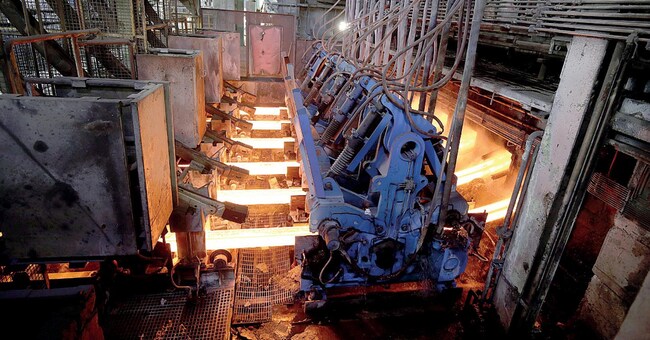
A visit to the Feralpi facilities in Lonato sul Garda, which are open to visitors a couple of times a year, offers scenery of rare suggestiveness and strong visual power, with impressive steel castings on view (beyond the glass windows) and a large rolling mill as far as the eye can see, all governed by hi-tech sensor technology, artificial intelligence systems, advanced software taming billions of data per second, under the watchful eye of highly specialised men and women who, with a few touches of joystick, rectify the dance of containers draining molten steel like pasta. Outside, rows of trucks deliver the scrap that constitutes the basic raw material for production, automated mechanical systems sort it, graphite bars to be used in hi-tech plants, warehouses are being rebuilt, electrical and district heating systems to bring the heat produced to the city, zero-impact offices and even an open-air museum with works created with the entire range of steel produced. All in the name of energy efficiency and combating waste, with extensive recycling and reuse of production waste thanks to the SteelZeroWaste project.
The group, one of the leading steel producers in Europe (with 2.5 million tonnes of steel produced each year, a turnover of EUR 1.7 billion in 2023 and more than 1,900 direct employees in seven countries), is highly energy-intensive: its electricity consumption is estimated to be three thousandths of that of Italy. It is therefore not surprising to see heavy investment in photovoltaic plants, with multi-million euro allocations, and experiments on the use of green hydrogen planned in Germany, dreaming of the safe and clean mini nuclear reactors on which Italy has great manufacturing expertise.
The Italian 'best practice' is now being replicated in Germany, where the subsidiary Feralpi Stahl is the tenth largest steel producer with a production of about one million tonnes of steel per year. 'In the Riesa plant, where more than 800 employees work, we are currently completing the new rolling mill, built by Danieli, which should come into operation in the spring of 2025,' explains chairman Giuseppe Pasini. 'It is the most innovative rolling mill in Europe in terms of technology and sustainability, since it is a totally electrified plant. That is, there is no use of gas (traditionally used to heat semi-finished steel products before rolling) thanks to new induction furnaces powered exclusively by electricity. This results in the substantial elimination of direct CO2 emissions and the absence of NOx emissions. It was necessary to create a connection to the existing continuous casting plant and we came up with the idea of creating a scenic corridor, 300 metres long and six metres above the ground. The transfer of the billets (i.e. the semi-finished products produced after continuous casting and destined for subsequent rolling) will take place directly through a roller way located in the corridor, so that the heat will be conserved, reducing electricity consumption by around 80% compared to more traditional heating techniques.


