
Feralpi stronger in Germany, 280 million invested in four years
Interview with President Giuseppe Pasini: 'We applaud the European measures on steel which, consumption being equal, will support European production and jobs. It is a strong first signal'

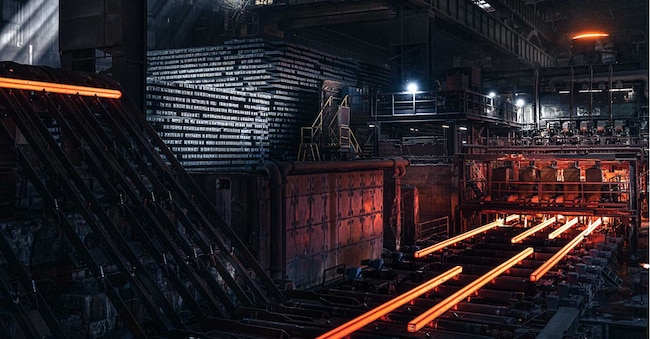
"We are satisfied. Approximately one year after the inauguration of the new zero-direct-emission rolling mill in Riesa built together with Danieli, the first rolling mill in Germany for the production of Spooler and the first in the world to produce 8-tonne coils, production capacity has increased by 30 per cent. We have achieved the savings we set out to achieve and created 100 jobs. In the last four years we have invested EUR 280 million in the plant in Germany. And we continue to focus on Germany, the largest consumer of steel in Europe. But Germany is no longer the Germany that welcomed me when I decided to take over the Riesa plant in 1992. The Germans then had the will and enthusiasm to grow and become leaders: now I see them as submissive. The German workers, for example, are asking for a short 35-hour week: but it is unattainable, because there is a shortage of skilled labour'.
Speaking is Giuseppe Pasini, president of the Feralpi Group, one of the leading steel producers in Europe, 1.6 billion in revenues and around 2000 employees. Pasini has not lost his enthusiasm. 'Steel is a material that goes everywhere. The Union of Europe began with coal and steel, with the ECSC born in 1951 also with the aim of controlling war production. And today steel is back in the limelight with the EU safeguard measures on steel that will come into force on 1 July. Furthermore, I expect positive spin-offs for the European steel industry from increased European defence investment. The world is splitting into large blocs and Europe cannot just be a spectator, it must react and create its own identity in foreign policy,' Pasini said in this exclusive interview with Il Sole 24 Ore.
What is your assessment of the EU Steel Action Plan?
"We applaud the European measures on steel which, consumption being equal, will support European production and jobs. This is a strong first signal. The 47 per cent reduction of duty-free imports to 18.3 million tonnes compared to the previous threshold and the tariffs doubling from 25 per cent to 50 per cent from 1 July are a safeguard for European steel producers. In the last eight years, 40 million tonnes have been lost in Europe, annual steel production has fallen from 170 to 130 million tonnes. The situation has worsened with the crisis in the automotive sector which, it must be said, was provoked by the EU itself: these measures to safeguard the steel industry do nothing more than repair the mistake made by the EU on electric cars'.
Is it enough to protect Europe from China's overproduction?
"Europe has to defend itself. In 2025, for the first time since 2018, steel production in China fell below 1 billion tonnes but let's look at the numbers: China continues to produce more than half of the world's output which is 1.7 billion. China's steel production has slowed by 47 million tonnes in one year, which is almost as much as Germany (34 million) and Italia (19 million) produced in one year combined. And to think that 25 years ago we were exporting steel to China. The steel industry remains a difficult market, not only because of China and the world's steel overcapacity: the Gulf crisis is driving energy costs through the roof'.
What other challenges do you see in the future?
"If interest rates rise again, it will slow down the real estate sector, and that will be another negative impact for building steels. And then decarbonisation, which has only been postponed for a few years by Europe and where Feralpi has been ahead of schedule: sustainability has always been the lever of our group's growth.


