Cars

Ferrari 296 Challenge Stradale and Challenge Evo: track performance hits the road, without a hybrid system

Two new Ferraris with twin-turbo V6 engines producing 670 and 700 cavalli, without any electrification. The Challenge Stradale costs 291,000 euros – 1,000 less than the 296 GTB – and brings a level of specialisation to series production that was previously reserved for racing.

4' min read

Translated by AI
Versione italiana

4' min read

Translated by AI
Versione italiana

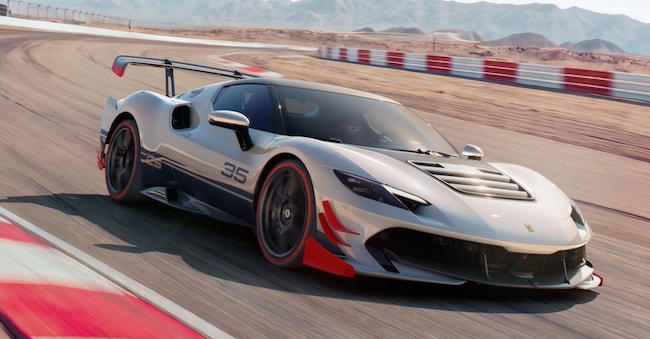
Ferrari is further bridging the gap between its racing cars and those approved for road use. It is doing so with two new versions of the 296 platform, unveiled at the Ferrari World Finals in Barcelona: the 296 Challenge Stradale and the 296 Challenge Evo.

The first represents a first-of-its-kind model in Maranello’s production line-up: a production sports car with a technical configuration so close to that of a racing car. The second, on the other hand, is intended exclusively for the track and will make its debut in the Ferrari Challenge Trofeo Pirelli in 2027.

Loading...

Ferrari 296 Challenge Stradale e Challenge Evo presentate a Barcellona alle Finali Mondiali 2026

Photogallery15 foto

The link between the two is particularly close, to the extent that the Challenge Stradale acts as a sort of missing link between the 296 Speciale and the 296 Challenge racing car.

Ferrari 296 Challenge Stradale: 670 cavalli of pure adrenaline

The most surprising figure is the price: 291,000 euros – a thousand less than the 296 GTB – despite its greater technical specialisation. This is explained by the removal of the electrified components and the complete sacrifice of comfort. The air conditioning, for example, remains but is not dual-zone. Every decision is based on the pursuit of the purest form of performance.

The engine is a three-litre twin-turbo V6 with a 120-degree cylinder bank angle, without the hybrid system, capable of producing 670 cavalli and 740 Nm of torque. Power is transmitted via an eight-speed dual-clutch gearbox, with rear-wheel drive.

The removal of the electric motor required a redesign of the connection between the engine and the gearbox, incorporating a structural component – a spacer – which is also designed to dampen vibrations.

The kerb weight is down to 1,330 kg, 140 kg less than the GTB. The claimed performance figures include 0–100 km/h in 2.8 seconds, 0–200 km/h in 7.9 seconds and a top speed in excess of 300 km/h.

Aerodynamics: the front end has been completely redesigned

The numerous aerodynamic appendages, starting with the striking rear wing, certainly ensure that the Challenge Stradale does not go unnoticed. But the most interesting transformation concerns the front end. The entire cooling and airflow management system has been redesigned according to a concept derived from the 296 Challenge racing car.

The hot air from the radiators is channelled towards the openings in the bonnet and directed over the bodywork, rather than being discharged beneath the underbody. This results in cleaner surfaces on the underbody, which are essential for increasing front downforce and balancing that generated by the imposing rear wing.

This solution has also necessitated a different layout of the space under the bonnet: the front boot capacity is reduced to 67 litres – essentially enough for a small trolley – leaving space at the sides for the aerodynamic ducts. The overall result is a downforce of 617 kg at 250 km/h, 72 per cent higher than that of the 296 GTB.

Loading...

The connection to the racing car is also evident in the work of the Ferrari Style Centre, headed by Flavio Manzoni. The two 296 models share a deliberately very similar design language, whilst adopting different solutions to meet technical and regulatory requirements. The Stradale, for example, uses two front radiators instead of the single one found on the track-only Challenge, whilst the rear wing and diffuser feature geometries adapted to meet type-approval requirements. Manzoni sums up this approach as follows: “Performance dictates the rules; design transforms them into beauty.”

Consistent performance, not just for show

The philosophy behind the Challenge Stradale goes beyond the pursuit of maximum acceleration or the fastest lap. The main aim of Ferrari’s engineers has been to ensure consistent performance during extended track sessions, bringing the car’s handling closer to that of a road-legal racing car.

Specifically tuned suspension, much stiffer springs, semi-active dampers, carbon-ceramic brakes and specially developed Pirelli tyres all help to maintain consistent balance, precision and responsiveness to driver input. At Fiorano, the Challenge Stradale clocked a time of 1’18”500, 2”5 slower than the GTB.

The sound is also part of the experience. Ferrari offers an original sports exhaust system, which is more open and has a distinctly racing-style sound; it can be fitted through the official network without affecting the warranty. However, it is intended for track use only.

A carbon-fibre-clad cabin

Inside, the focus is on achieving a sense of lightness. Carbon fibre, tubular seats and minimalist upholstery characterise an interior in which every superfluous component has been scrutinised. It is even possible to order a configuration that leaves some of the chassis’ structural elements partially exposed.

A choice that clearly defines the target audience for the new Ferrari: not so much those looking for a supercar for everyday use, but rather the Ferrari enthusiast who already takes part in the Challenge and wishes to experience similar thrills on the road, perhaps during a weekend in the Alpine passes. Or the enthusiast who wants to gradually work their way up to the Prancing Horse’s one-make racing series.

Challenge Evo: 700 cavalli for the 2027 one-make series

Whilst the Stradale brings the track to the road, the new 296 Challenge Evo has been designed to further reduce lap times during race weekends around the world. The twin-turbo V6 produces 700 cavalli, still without any electric assistance, and is paired with a seven-speed F1 gearbox.

The aerodynamic package has been further developed, delivering a 12 per cent increase in maximum downforce compared with the previous Challenge model and a ‘Low Drag’ configuration that reduces minimum aerodynamic drag by 4 per cent. The traction control, electronic differential and braking system have also been updated to improve stability and consistency of performance. In tests at Mugello, the Evo has already beaten the previous Challenge’s lap time by eight tenths of a second. Its competitive debut is scheduled for 2027, when the Ferrari Challenge will celebrate its 35th season, also introducing new endurance races.

Two cars that confirm just how much motorsport continues to serve as a vital testing ground for Ferrari. And which, in the age of electrification, demonstrate how lightness, aerodynamics and an internal combustion engine can still provide a winning technical formula for those who love the purity of performance.

Copyright reserved ©
Loading...

Brand connect

Loading...

Newsletter

Notizie e approfondimenti sugli avvenimenti politici, economici e finanziari.

Iscriviti