
Festival of Economics, Tamburini: an opportunity to talk about dilemmas and uncertainties of our time
'What Italy will look like in terms of transport, goal 2032', with the Deputy Prime Minister and Minister of Infrastructure and Transport opening the round-up of ministers this morning.

Key points
- Labour, Brunetta (Cnel): minimum wage law is not the solution
- Olympics 2026: Abodi, some delays and complexities, but works will be done
- Nobel 2011 Tawakkul Karman: "Good Cpi with indictment of Sinwar and Netanyahu"
- Waiting lists, Schillaci (Health): working on platform for real-time monitoring
- Pope's message at the Festival of Economics: peace as a primary good
- Salvini: the home-saver is not an amnesty
- Salvini to Sole 24 Ore: "The redditometer? Outdated"
- Trento Festival of Economics, first day kicks off: future and growth among the themes
Festival of Economics: Tamburini, an opportunity to talk about dilemmas and uncertainties of our time
"Uncertainty scenarios are the order of the day, we live in a scenario of total uncertainty. The dilemmas of our time are many and our ambition is to make a small but significant contribution to sowing knowledge, because only from this comes awareness and the possibility of being protagonists'. This was said by Fabio Tamburini, editor of Il Sole 24 Ore, Radiocor and Radio 24, during the opening ceremony of the 19th edition of the Trento Festival of Economics, organised by the 24 Ore Group and Trentino Marketing on behalf of the Autonomous Province of Trento and in collaboration with the Municipality of Trento and the University. "The principle of delegation cannot work, we must all feel responsible, because if we don't we end up with a few people making the decisions but many bearing the consequences. We must be ready to act on reality, we are not talking about the future but about our present," said Tamburini, saying that he hoped that "this Festival can offer a contribution to answering questions and to starting a path towards a future of peace". Tamburini recalled that, in recent years, 'we have been the protagonists of extraordinary events, which bring incredible uncertainty. We thought of the pandemic as an extreme scenario, a hypothetical risk, an unthinkable scenario drawn up by insurance companies, instead it really happened. It seemed that war scenarios in Europe were a thing of the past, instead we are living the conflict in Ukraine. The mechanism of globalisation, which I thought was a model of relations destined to last forever, has jammed, perhaps it will return with other models. Who thought double-digit inflation would return to the western world?".
Festival of Economics: Cartia d'Asero, moment of confrontation and dialogue, inspiration for young people
"From 2022 to today, the Trento Festival of Economics has been a crescendo of events, popularity and attention. More than a festival it has become a celebration, people are curious to see, know and learn'.
This was said by the managing director of the 24 Ore Group, Mirja Cartia d'Asero, during the opening ceremony of the event organised by the 24 Ore Group and Trentino Marketing on behalf of the Autonomous Province of Trento and in collaboration with the Municipality of Trento and the University. At the opening of the ceremony, a message from Pope Francis was read out. "The Holy Father's words were as unexpected as they were welcome.
The festival is a moment of sharing and confrontation,' said the CEO, emphasising that 'we live in a context in which the only certainty is uncertainty, we cannot foresee what the future scenario will be, which is why moments of confrontation and exchange are important, such as the Festival, which is the Festival of Trento and Italy and is an intergenerational dialogue, we give information to young people but it is a flow, an exchange'. The managing director said that 'we provide our experience, the experts, economists and Nobel Prize winners who speak do the same, and this is important for young people who live in uncertainty and have to face this change of scenario and in a certain sense suffer its repercussions'.
Many young people, Cartia d'Asero explained, are looking for inspiration and opportunities like this can help them find it: "This is event is not a closed conclave, it is an exchange with families and young people. We also wanted to talk to them through the off-festival. What we want to send out is an intergenerational message,' he said.
Festival of Economics: Ianeselli, it's about asking the right questions
"This year we are the European Capital of Volunteering and during the days of the Festival we are the capital of free thinking, which does not mean arriving here and having the solution to everything. The Festival serves to ask the right questions about where we are going, to reflect and slip into those debates and encounters that may not be the most emblazoned but then leave you with something that remains'. Franco Ianeselli, Mayor of Trento, said this on the sidelines of the opening ceremony of the Trento Festival of Economics. 'We Trentino people know how to organise events and it seems to me that the response is already there, the hotels are really full,' Ianeselli added.
Fugatti, important presence 2 Nobel Peace Laureates
The Festival of Economics 2024 'has a very broad programme and I also look at the scientific level, five Nobel Prizes are many, I note that in addition to the Nobel Prizes for Economics, which are obviously here, there are two Nobel Prizes for peace and at a time that is unfortunately difficult like this at the international level due to the wars underway and the scenarios that exist, we look at the reflections and debates that the Nobel Peace Prize winners can also bring'. This was said by Maurizio Fugatti, President of the Autonomous Province of Trento, on the sidelines of the opening ceremony of the Trento Festival of Economics.
Chancellor of the University of Trento Deflorian: Festival great opportunity, stimulating events
The Trento Festival of Economics 'is an event to which the University has always contributed on the side that is most congenial to us, i.e. the scientific side, in helping to promote the presence of speakers in the field of economics who can be interesting. We have the opportunity to have very important people here in Trento, from the worlds of economics, politics, culture, and so it is a great opportunity, not only for the citizenship, but for our students to participate in stimulating and interesting events'. Flavio Deflorian, Rector of the University of Trento, said this on the sidelines of the opening ceremony of the Trento Festival of Economics.
Silvestri, approach vector for young people, city lights up
The Trento Festival of Economics, but above all the Fuori Festival, 'is the vector for approaching young people, such a target audience is not reached by waiting for them to stick to their positions but by questioning themselves and speaking different languages, thus discovering that young people are much more interested in major issues than one might imagine'. This was said by Federico Silvestri, managing director of 24 Ore Eventi, on the sidelines of the opening ceremony of the event organised by the 24 Ore Group and Trentino Marketing on behalf of the Autonomous Province of Trento and in collaboration with the Municipality of Trento and the University of Trento.
'The city lights up, this year we wanted to involve many squares, there are many indoor and outdoor events. In addition to Francesca Michielin, who opens the festival from an entertainment point of view, there are many artists, such as Jake La Furia and Clara, who is much loved by young people for her participation in Mare Fuori. There is Ale and Franz for comedy, but also an offer for classical music lovers. There is also a beautiful space dedicated to gaming, which is an industry that moves billions but is also an entertainment that occupies the days
and young people,' said Silvestri, explaining that 'we wanted to talk about important topics, but also give space for entertainment'.
FS: Cuzzilla (Trenitalia), new fleet thanks to Pnrr
One thousand new trains for high-speed rail 'with the most advanced technologies on the sustainability front' and another 750 for regional routes. These are the investments that Trenitalia, a company of the FS group, will be able to put in place thanks to the Pnrr, according to chairman Stefano Cuzzilla. Speaking via video link at the Trento Festival of Economics, Cuzzilla remarked that 'in the next few years we will have a new fleet'. 'Our programming is extensive,' he added, 'if we think that in addition to one thousand new trains for high speed, we have already changed 450 regional trains, up to 750'.
Migrants: Father Fortunato, flow is protest against industrialised countries
"Migration is a dramatic and silent form of protest against the more industrialised countries. The Pope is warning us of this and it will be up to us, it will be up to politics to put in place logics that are not only tied to the logic of the vote". This was said by Father Enzo Fortunato, spokesman of the Papal Basilica of St. Peter's, speaking at an event of the Festival of Economics in Trento. "Children have become merchandise for blackmail," Father Fortunato added, "Pope Francis wants to put the reality of children back at the centre, asking us first of all what future we want to give our children.
Labour, Brunetta (Cnel): minimum wage law is not the solution
"That the answer to low wages is a minimum wage law does not convince me". This was said by Renato Brunetta, president of Cnel, during the conference 'Disintermediation and the role of intermediate bodies', within the Trento Festival of Economics. "If the minimum wage is set by law,' Brunetta added, 'those who work in that sector either close down or start operating in the black economy: in order to increase productivity, investments and profitability are needed, otherwise it would be like setting prices by law. And when this happens, that product disappears from the market'.
Innovation, De Maria (Istituto Poligrafico), 'we guarantee value and identity for citizens'.
"During the event, we talked about the role of the Poligrafico within the Dpi - Digital Public Infrastructure, i.e. within a digital infrastructure designed to simplify the interaction of citizens and businesses with the public administration. The role of the Poligrafico in guaranteeing this transaction, which is what the Poligrafico has always done in that it guarantees value and the identity of the citizen, is done in particular with the digital identity system that the Poligrafico has designed and created. We are also bringing it to the digital identity wallet, which sees the Poligrafico committed to ensuring the identity of the citizen". These are the words of Andrea De Maria, Innovation Management Manager - Instituto Poligrafico e Zecca dello Stato, on the sidelines of the meeting entitled 'Digital infrastructures at the service of citizens and businesses', held in the setting of the Trento Festival of Economics, scheduled from 23 to 26 May 2024 and organised by Fondazione Hub Innovazione Trentino (Hit).
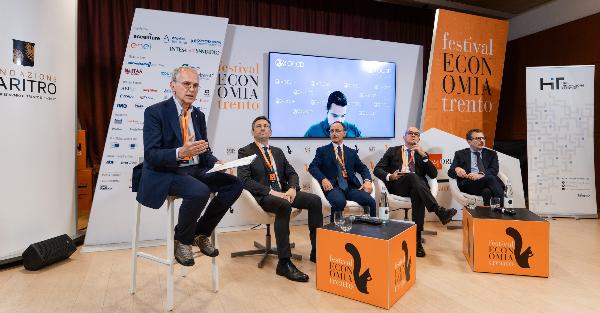
Festival dell'Economia Infrastrutture digitali al servizio di cittadini e imprese Nella foto:Pierangelo SOLDAVINI; Achille SPINELLI; Andrea SIMONI; Maurizio FATARELLA; Andrea DE MARIA; Felipe GONZALEZ ZAPATA (da remoto)
The topic of the debate is Digital Public Infrastructures (DPIs), which for the past year have been at the centre of the international agenda for a digital transformation that emphasises open protocols, standards and solutions, and which represent an approach capable of creating the ideal conditions for the growth of public and private digital services, with fair and inclusive access for the entire population. "The technical challenges are many, as the wallet is something that does not yet exist. When the initiative started, most of the technological standards were still to be defined, and they are still being defined,' De Maria explains. 'It is quite a challenge, we are fully engaged in the design of these standards, also in the European forum together with Fbk - Fondazione Bruno Kessler and the Department for Digital Information. A discussion on the role of public digital systems and the opportunities they enable for businesses and citizens.
On this topic, Trentino is a vanguard laboratory on a national and European scale thanks to the collaboration between Fbk - Fondazione Bruno Kessler and the most important players in this transformation, PagoPA and Ipzs. Fondazione Hit - Hub Innovazione Trentino has therefore organised a round table in collaboration with Fondazione Bruno Kessler and the Autonomous Province of Trento, as part of the Festival of Economics. The event hosts interventions by the most important international institutional interlocutors: OECD and the European Commission.
Fatarella (Dg PagoPa): 'Dpi is the basis of our mission'
"The concept Dpi - Digital Public Infrastructures is at the core of our mission and way of working. Our mission is to create and develop digital platforms to simplify the interaction between citizens and public administration and to support the establishment of a digital ecosystem of public services. Our platforms have an impact on the lives of millions of citizens and that is why they are inclusive, i.e. they provide different ways of accessing them'. These are the words of Maurizio Fatarella, general manager of PagoPA, on the sidelines of the meeting entitled 'Digital infrastructures at the service of citizens and businesses', held in the framework of the Trento Festival of Economics, scheduled from 23 - 26 May 2024 and organised by Fondazione Hub Innovazione Trentino (Hit). A discussion on the role of digital public systems and the opportunities they enable for businesses and citizens. On this topic, Trentino is a leading laboratory on a national and European scale thanks to the collaboration between Fbk and the most important players in this transformation, PagoPa and Ipzs. Fondazione Hit - Hub Innovazione Trentino, therefore, organised a round table in collaboration with Fondazione Bruno Kessler and the Autonomous Province of Trento, as part of the Festival of Economics. The event will host interventions by the most important international institutional interlocutors: OECD and the European Commission. The topic of the debate will be Digital Public Infrastructures (Dpi), which for the past year have been at the centre of the international agenda for a digital transformation that emphasises open protocols, standards and solutions, and which represent an approach capable of creating the ideal conditions for the growth of public and private digital services, with fair and inclusive access for the entire population. "Our platforms were born based on open standards, secure, reliable, scalable, and prepared to operate in an interconnected manner," Fatarella resumes, "and their diffusion has generated important benefits throughout the system, especially in terms of efficiency and innovation. Thanks to these experiences, today we are here with our partners to work on the digital wallet, the new IPR of the latest generation,' he concludes.
Nobel Phelps, don't push people away from work, value their skills
Governments "should not adopt programmes that put people out of work and they should do things that can be satisfying regardless of whether they have little commercial value". This was one of the lessons that Nobel laureate in economics Edmund Phelps delivered to the audience of students who listened to him for an hour as part of the first day of the Festival of Economics. Phelps, one of the leading exponents of the new Keynesian macroeconomics, who was awarded the Nobel Prize almost twenty years ago (2006) for clarifying the understanding of the relationships between the short-term and long-term effects of economic policies, spoke about his long journey through economics ideas and theories, from the hypothesis of the natural rate of unemployment linked to the concept of job-search models to the characteristics of welfare economics and public finance to the post-Keynesian debate. Central was his 'correction'' of the 'Phillips curve' (when inflation is high, unemployment is low and vice versa): according to the American economist, inflation does not only depend on unemployment, but also on the expectations of firms and workers regarding the future development of prices and wages. Up to the most recent elaborations.
For Phelp, the big challenge today is how to restore dynamism to economic growth, a condition of which is to promote, safeguard 'the broad creativity' that is based on the capacity for innovation that starts with individuals. In this context, 'removing obstacles to such a process, creating new production, reforming hierarchical structures in the workplace, everything that prevents the transmission of new ideas'. And also, the economist adds, 'improve worker morale with higher wages. As well as recognising that economists also need to address the need for people to live a life that makes sense, a life of which having an engaging job is an important part.
2026 Olympics: Abodi, some delays and complexities, but works will be done
"We risked the baton falling, but we picked it up on the fly. We don't have time as a friend, but we have to do the best with the time we have left. The key once again is collaboration between the parties involved'. So said Andrea Abodi, Minister for Sport and Youth, interviewed during the 19th edition of the Economy Festival in Trento. "There is an element of complexity. If we are less than two years away from the Games and there are some dossiers that cannot be closed, the situation becomes reckless. But let's not hunt for the culprit of the delays, let's work seriously and be aware of the time that remains. The works will all be done, but not all for the Olympics, that will not be possible,' Abodi said.
According to the minister, 'the legacy of the Olympics will have to go beyond the games, it will have to be consolidated over time, but this time must be certain. I can guarantee that what is in the dossier, albeit with some changes decided over time, will be done and realised, perhaps immediately after the Olympics, especially with regard to public works'. The sports facilities "will all have to be built, we have some critical issues, I think it is decent to say if we have a problem, but we will address it and solve it," the minister concluded.
Abodi, no majority or opposition vision, common vision for the country's interest
"It is necessary to have a strategy and a vision, common strategies can be found on sport, there is no majority or opposition vision, but the will to act for the common good, in the interest of the Nation". These were the words of Andrea Abodi,Minister for Sport and Youths, interviewed during the 19th edition of the Trento Festival of Economics, organised by the 24 Ore Group and Trentino Marketing on behalf of the Autonomous Province of Trento and in collaboration with the Municipality of Trento and the University of Trento. "I am a minister without portfolio, but a minister without portfolio has a portfolio full of problems, with my team we try to turn problems into opportunities", said Abodi, stressing that "we have a lot to do, we will work with perseverance and determination. Because the more sport grows, the more the State invests. We also deal with social sport, i.e. sport and school, sport and sustainability'. The minister, in emphasising the social role of sport as well, recalled that 'since September 2023, sport has also been included in the Constitution, recognising its educational, social and psychophysical wellbeing-promoting value of sporting activity in all its forms, demonstrating that it is a matter of common good and improvement'.
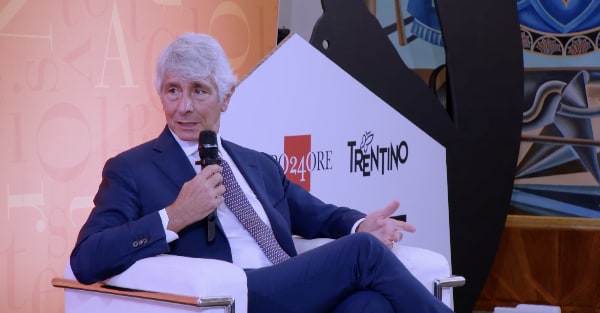
Andrea Abodi, ministro per lo Sport e i giovani, intervistato durante la 19esima edizione del Festival dell’Economia di Trento
2011 Nobel laureate Tawakkul Karman: 'Good Cpi with accusation of Sinwar and Netanyahu'
"We must be able to tell our sons and daughters that those who commit the heinous crimes we are seeing are punished. I want to congratulate the International Criminal Court in The Hague on its request to issue arrest warrants" against Hamas leader Yahya Sinwar and Israeli Prime Minister Benjamin Netanyahu on charges of war crimes and crimes against humanity. These were the words of Yemeni politician and activist Tawakkul Karman, 2011 Nobel Peace Prize winner, on the stage of the Festival of Economics in Trento, during a discussion on children's right to happiness, with Enzo Cursio, candidate for the 2018 Nobel Peace Prize, Enzo Fortunato, spokesman for the Papal Basilica of St. Peter's and Fabio Tamburini, editor of Il Sole 24 Ore, Radio 24 and Radiocor and president of the festival's scientific committee. Tawakkul Karman, recalling that it is children and women who suffer the effects of wars, recalled that in Palestine "30,000 children have died so far". Those who pay the price of war, "of all wars, are civilians, women and children". "We must stop the occupation of Palestine by Israel, there are possibilities to do so, on the basis of UN resolutions, to save those children whose future is being taken away. The same,' Karman added, 'is happening in Ukraine'.
Karman strongly emphasised that all boys and girls have "the right to be born happy and to live happily. This means that they must have the full right to education and health, to clean water, to services, to electricity, to live in countries and situations that are not subject to tyranny and corruption, with the full right of expression'. Introducing the panel, Director Tamburini recalled that war 'has once again become a widespread tool, with almost 60 conflicts going on right now. Wars,' he said, 'are no longer the result of local conflicts but a real method, as if the lesson of the world wars had been forgotten'. Recalling the ongoing conflicts around the world, Karman said this is the time to "work together to stop not only wars, to stop and defeat poverty, child abuse" and reiterated the need to avoid countries ruled by dictatorships, the antechamber of all war and injustice, "to avoid occupations, to prevent wars from breaking out, to prevent them". "Seeking justice is the key word to defend children everywhere," he said forcefully, "it is the path to take.
Father Enzo Fortunato, spokesman for St. Peter's Basilica, wanted to highlight that 'children have become blackmail merchandise. Pope Francis," he recalled, "wants to put the reality of children back at the centre, asking ourselves first of all what future we want to give our children". Reiterating the importance of the role of schools and teachers, and recalling the issue of denatality that affects Italy, Father Fortunato called politics to its responsibilities and the role of the West: "Migrations are a dramatic and silent form of protest towards the more industrialised countries, here the Pope is warning us of this and it will be up to us, it will be up to politics to put in place logics not only linked to the logic of the vote". Lastly, Enzo Cursio, peace activist, candidate for the 2018 Nobel Peace Prize, emphasised that in war situations, in addition to the children who die, those who do not survive also have no future and this, Tamburini concluded, is the only important investment to make: the one in children and their future.
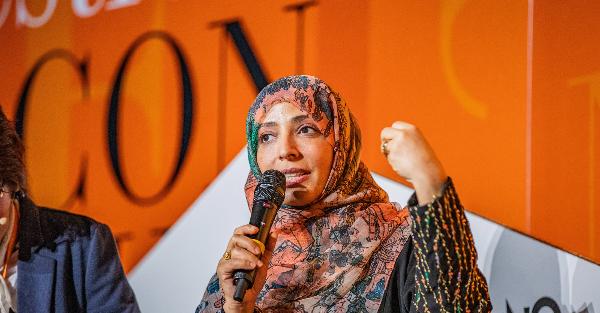
I bambini nascono per essere felici Nella foto: Tawakkol KARMAN
Confcooperative, 'Italian welfare needs an overhaul'
"Our welfare needs a cut, needs to be updated and responses adapted by building a system that is universalistic and sustainable: the welfare of the future either we build together or the market will do it, which will exclude large sections of the population". These were the words of Maurizio Gardini, president of Confcooperative, speaking at the panel "Italy at the challenge of welfare" as part of the Trento Festival of Economics.
'We are aware of the difficulties we are facing,' explained Maria Teresa Bellucci Deputy Minister for Labour and Social Policies. - I am proud of the approval of the Elderly Law Decree in 150 days. The home must become the main place of care. Reducing improper admissions helps the services and improves the psychological amount of patients. I hope that the next Europarliament will be able to promote EU policies capable of taking action. A cohesion system is needed. A very small segment of the population will have access to the silver economy. We must not only think about physical places. But how do we fill them? With what professional skills? With the old Pnrr in healthcare, there was a risk of having barracks without soldiers. It is good what Minister Fitto has done in revising the Pnrr'.
"One-third of the population is over 65, and in the coming years it will reach 50%," recalled Giuseppe Milanese, president of Confcooperative Sanità. "Of these, 60% have chronic diseases. System solutions are needed'. Among the problems most felt by the population,' added Stefano Granata, president of Confcooperative Federsolidarietà, 'non-self-sufficiency is not among the most cited (only 9%) even though it touches everyone, it is a sign of resignation that there is no answer to the need for assistance. Our role is fundamental in building a system because we provide professionalism, but we also promote a culture of the right to assistance, to which individual answers are given today, despite the fact that it affects 13 million people and therefore requires collective solutions'.
Dl elderly: Bellucci, home will become main place of care
"I am proud of the approval of the Dl seniors in 150 days. The home must become the main place of care. Reducing improper admissions helps the services and improves the psychological amount of patients'. This was explained by Maria Teresa Bellucci, deputy minister of labour and social policies, speaking at 'Italy at the challenge of a new welfare', a panel of the Trento Festival of Economics underway until Sunday. 'I hope that the next European Parliament will be able to promote EU policies capable of intervening because there is a need for a cohesion system,' Bellucci added.
Bellucci (Labour), with old Pnrr Sanità was barracks without soldiers
'With the old Pnrr in health care, there was a risk of having barracks without soldiers. Good what has been done by Minister Raffaele Fitto in revising the Pnrr'. This was said by Maria Teresa Bellucci, deputy minister at Labour and Social Policies, speaking at 'Italy at the challenge of a new welfare', a panel at the Trento Festival of Economics underway until Sunday. 'The silver economy will be accessed by a very small segment of the population,' Bellucci added.
Schillaci, 'working to revise expenditure ceiling on recruitment'
"We are working to revise the expenditure ceiling on recruitment, which has existed for over 20 years. I am sure that we will have a loosening of this stranglehold by the end of the year, and then we will get to the complete abolition of the spending cap because it is essential to have new forces, new professionals to bring into the national health system,' he said. This was said by the Minister of Health, Orazio Schillaci, speaking on the sidelines of the meeting 'Why the National Health Service must be defended', as part of the Trento Festival of Economics.
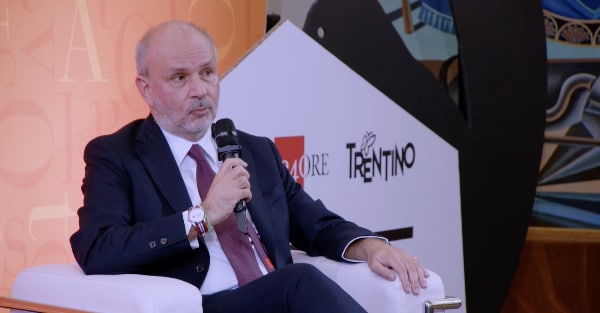
Schillaci (Sanità): abolishing the numerus clausus? 'Moving towards more places in Medicine'
Will the numerus clausus in medicine be abolished? It is going 'towards an increase in places, with a number that we call programmed. In the latest call for applications that Mur has now published there are almost 20,000 places, the number of places will still be increased in the coming years: I believe, therefore, that the risk of a shortage of doctors, we absolutely will not have it any more'. This was stressed by Health Minister Orazio Schillaci, speaking at the Trento Festival of Economics. 'I was the dean' of the Faculty 'for almost nine years,' he said, 'and back then the number of students enrolled in the Faculty of Medicine was around 8,000 every year. I have to say that the Conference of Deans called for this number to be increased. If in the last ten years we had had, instead of 8,000-9,000 enrolled, 15,000, by now we would have had 50,000 more doctors, which is what we need and there would have been no shortage of them'.
Lockyear (Msf), less aid in Gaza than on 7 October
"It is true there are characteristics that differentiate the conflict. It is an enclave where there is an ongoing siege, because the Strip is under a blockade with very few humanitarian supplies coming in. Suffice it to say that fewer humanitarian trucks are entering today than before 7 October. An attack which, I want to point out, was a terrible massacre and for which our organisation also offered help to the Israeli government. Today, however, we are dealing with the consequences of a terrible war'. This was said Christopher Lockyear, secretary general of Doctors Without Borders, speaking at 'Today's wars and the drama of civilians', a panel at the Trento Festival of Economics. "Médecins Sans Frontières provides basic relief, also working with other health organisations and entities," Lockyear added. The structures in Gaza are extremely under pressure, they already were and now even more so. We see a lot of children in our work, because if you look at the demographics, the population of the Strip is very, very young. If you walk around Gaza, especially in the southern part, which is the one that has undergone a displacement of one to two million people, there are children everywhere'.
Schillaci (Sanità) on waiting lists: 'Illegal to close agendas and no floating lists'
On the issue of waiting lists, 'another important aspect' is that 'there is a law that is unfortunately largely unenforced, which categorically prohibits closing agendas. The diaries of bookings' for visits and examinations 'should not be closed'. The problem is that 'the citizen calls and one is ashamed to tell him that he has to come in three months. And one thinks it is more 'politically correct' to say that the diary is closed. But closing agendas is illegitimate, the law does not allow it' and 'we will make sure that no one does that anymore', because otherwise 'we will never know what the real waiting times are. So the diaries must be kept open'. This is the warning issued by the Health MinisterOrazio Schillaci, speaking at the Trento Festival of Economics. The minister outlined some points of the announced decree to resolve the problem of waiting lists. And among the distortions that need to be corrected, he elaborated on some aspects of the management of booking agendas in health facilities. 'Another phenomenon of which I am aware,' he explained, 'is the fact that some people are put on a so-called floating list, i.e. they are told that they have been taken care of, but it is not known when. This seems frankly unacceptable to me: a patient should know when he or she can have the examination'.
Lockyear (Msf), possibility of assistance collapsed in Gaza
"We see at the Al Aqsa hospital in the central part of the Strip and in other areas amputations, broken legs, wounds that become infected. All this, together with logistical difficulties, makes medical care and even the possibility of having qualified medical workers extremely complex. We are in a situation where medical needs have exploded and the possibility of providing care has collapsed'. This was said Christopher Lockyear, secretary general of Médecins Sans Frontières, speaking at 'Today's wars and the drama of civilians', a panel of the Trento Festival of Economics.
Climate, Bernabè, thanks to EU -35% Co2 emissions since 1990
"Certainly the actions put in place by Europe are relatively insignificant, but after 20 years of major energy policies it is a fact that compared to all that has been done, including the 200 billion, the impact can only be described as modest: modern renewables, wind and solar are worth 2 per cent, 10 per cent are solid and liquid biological renewables, 80 per cent are fossil, 5 per cent are nuclear, 3 per cent are hydro. Today, the entire energy transition is based on the process of electrification that is travelling towards the net zero goal. But the real challenge remains the reduction of C02 in the atmosphere. Europe, for its part, has contributed a lot: between 1990 and today it has decreased by 35 per cent. The targets are important but must not be too far away'. So said Franco Bernabè, chairman of Techvisory, speaking at a panel at the Trento Festival of Economics.
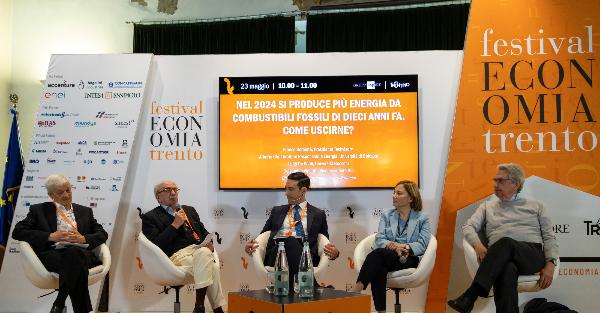
Festival dell'Economia Nel 2024 si produce più energia da combustibili fossili di dieci anni fa. Come uscirne? Nella foto: Luigi DE PAOLI; Alberto CLÒ; Gelsomina VIGLIOTTI; Cheo CONDINA; Franco BERNABE’
Schillaci, 'Accredited private is not the enemy, by joining agendas less waits'
"There are some who ideologically see the accredited private sector as the enemy. Accredited private is public. Citizens if they go to an accredited private hospital, if they go to the public, they often don't even know it. The important thing is that, if a citizen does a service, he does it with the co-payment or if exempt without paying it, and does it in a high quality facility. Some regions, since I have been suggesting it for more than a year, have already implemented it: the problem of waiting lists is to really know how much is missing, and so I am convinced that by rationalising and putting agendas together well, times will fall significantly'. This was said by the Minister of Health speaking at the Trento Festival of Economics, referring to the decree on waiting lists that is coming. 'I notice that those who criticise then propose the same remedies,' he added, 'Today I find it written in this bill made by the PD to put public and accredited private services together in the regional Cups. By putting the agendas together, the situation will improve, the minister points out. "After that, I unfortunately do not exclude that there will still be some conditions and situations that are unacceptable today".
Climate, Clo (UniBo): EU spent 200 billion but policies failed
"Any policy, including climate policy, must be evaluated by its results against the goals set and not the ideologies that fuelled it. European policies have proven ineffective against the first objective: to decrease global emissions, the ones that matter, which continue to increase. Despite the 200 billion spent'. This was said by Alberto Clo, director in charge of energy at the University of Bologna, speaking on a panel at the Trento Festival of Economics. 'The energy transition, the transition from the dominance of fossil fuels to the dominance of renewables, has failed,' added Clo. 'And not least, the green deal: instead of strengthening the European economy, it has reduced its competitiveness and entailed extraordinary costs. A European competitiveness crisis has hit Germany in particular, which is experiencing a technical recession in many sectors'.
Schillaci (Health), working with Mef to abolish personnel expenditure ceiling
"We are working to remove the spending cap" on health personnel "and abolish it, we are working to do that. We have been working on it with the Mef for almost two years, it is clear that the Mef is always concerned about public accounts, but it is a measure put in place 20 years ago, today the world has changed: we have blocked turnover, with many young doctors who cannot enter the public sector'. So said Health Minister Orazio Schillaci during his speech at the panel 'Why the National Health Service must be defended' at the Trento Festival of Economics.
Waiting lists, Schillaci (Sanità): working on platform for real-time monitoring
"The problem of waiting lists in the health sector needs to be tackled in an organic manner, and I have put my face to it, because I believe that there is no way around it, given that it is a need that is very much felt by citizens, even though the regions are responsible for it. The first aspect that needs to be addressed in order to solve it is to have a monitoring of services and individual waiting lists: this is why I am thinking of the possibility of setting up a shared platform with the regions to know the situation in real time. These were the words of Health Minister Orazio Schillaci during his speech at the Festival of Economics currently underway in Trento.
Schillaci (Sanità): SSn our excellence, no one asked me to divert resources to the private sector
'My assessment after a year and a half as Minister of Health is certainly positive, even if not everyone agrees with me. I consider it an important achievement to have put healthcare back at the centre of the political discourse: I found a situation that was patchy, light and dark, but the National Healthcare System is undoubtedly our excellence, thanks above all to the enormous professionalism of our operators. I can guarantee that no one has asked me to dismantle the SSN in order to divert resources to the private sector'. These are the words of Orazio Schillaci, Minister of Health, interviewed by journalist Marzio Bartoloni, Il Sole 24 Ore, during an event at the Festival of Economics currently underway in Trento.
European elections, Salvini: 'Happy to be an ally of Le Pen, I hope others on the centre-right are too'
"I will never allow an Italian soldier to go and fight and die in Ukraine and compared to Macron, Le Pen has a totally different approach. I see that even the Italian newspapers are appreciating her posture, good. Because I think that the vote on 8 and 9 June is an historic opportunity to have a parliamentary majority in Brussels without the left, without the socialists, without Macron, without those who would like to create a common European debt to buy weapons, and Le Pen has absolutely clear ideas on this, I am happy to be her ally for so many years'. This is what Transport Minister and Deputy Prime Minister Matteo Salvini said while speaking at the Trento Festival of Economics. Regarding the trend of the European polls, Salvini said: 'The numbers today say that the centre-right and centre-left are even, so we'll play it out. Of course, if someone from the centre-right says I don't want to be with Salvini and Le Pen, I prefer the Left,' he adds, 'it's clear that the numbers change, I hope that no one from the centre-right says this'.
Messina Bridge, Salvini: 'It will remove 100,000 tonnes of CO2 and is also an anti-mafia operation'
"It's a bridge only in Italy you can make controversy about a bridge, it's not the sovereignist bridge. The bridge will remove 100,000 tonnes of CO2 from the air because today I don't know if anyone for tourism or work takes the ferry to do those 3 kilometres, it takes in summer, even 3, 4, 5 hours...if instead of three hours it takes 3 minutes think of the time and emission savings". This was said byTransportation Minister and Deputy Prime Minister Matteo Salvini speaking at the Trento Festival of Economics. "The number that struck me is 120 thousand, the Stretto di Messina company estimates that from the opening of the construction sites to the management of the bridge 120 thousand jobs will be created in Italy, especially for young people," Salvini added. In Sicily and Calabria, when young people finish high school or university they just have to decide where I'm going to run away, I'm going to emigrate...an infrastructure like that, in my opinion, is also a great anti-mafia operation. The mafia is there where there is desperation,' he argued, also recalling the anniversary of the Capaci massacre that falls today. "So my goal is to open the construction sites by 2024," Salvini reiterated.
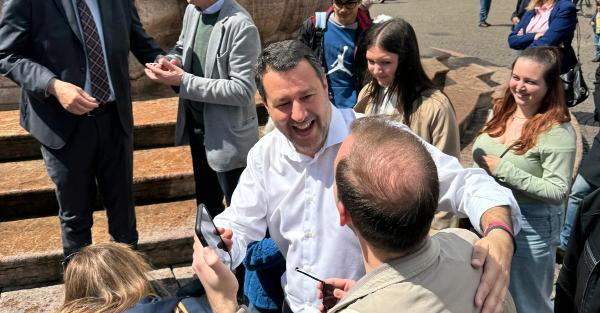
Il ministro dei Trasporti Salvini si concede un selfie in centro a Trento
De Gennaro (Gdf), evasion is very high but not to 'drop dead'
'Evasion in Italy is very high but not to die for'. This was said by Andrea De Gennaro, commanding general of the Guardia di Finanza, speaking at the meeting 'Artificial intelligence, a new frontier in the fight against evasion' at the Festival of Economics in Trento, in response to the request to make a comparison between tax evasion and a disease. Regarding the fight against evasion, "in 2024, the trend is positive, we are achieving interesting results," continued General De Gennaro. "From a qualitative point of view, the focus is on the most extensive frauds, first and foremost that on non-existent credits. There have been interesting results in the area of labour, on the illicit supply of labour. We are seeing that more and more often - especially in sectors such as logistics and services - large companies if they need labour are subcontracting with sometimes dubious invoicing' and on this 'we are carrying out checks to see if in some areas it can be called 'caporalato', and the phenomenon is patchy throughout Italy'. Moreover, the Guardia di Finanza is also engaged in 'controls on international tax evasion: there are subtle forms of evasion by foreign companies that have a stable organisation in Italy and do not declare it. The latest case is of a hotel services company that paid 720 million to the State. We are carrying out further checks, it is an ongoing phenomenon, but it may be that someone has come into line in the meantime. It is a phenomenon that has affected everyone, from airline companies to high tech,' De Gennaro concluded.
Confcooperative, invest in culture and inland areas
Enhancing the expertise of Trentino cooperatives, focusing on a different relationship between public and private, and investing in enterprises and start-ups in territories with less than 5,000 inhabitants. These are, in short, the objectives set by the president of Confcooperative Culture Tourism Sport, Irene Bongiovanni, during the meeting 'Unesco Heritage, Intangible Assets and Impact on the Territory', moderated by Sole 24 Ore journalist Nicola Barone at the Trento Festival of Economics. "In Italy we have dealt a lot with the 'walls' of heritage. Impeccable, but too often cultural planning has been lacking. We must move from opportunities to environmental, economic, social and labour development projects,' he pointed out, highlighting how cooperation expresses '50,000 workers in creative cultural enterprises alone'. Another point highlighted by Bongiovanni concerns depopulating villages, noting how there is a lack of 'a strategy that looks at the complexity of the Italian creativity sectors' and calling for 'support that looks at the durability of projects especially in inland areas', where 26% of cooperative enterprises are based.
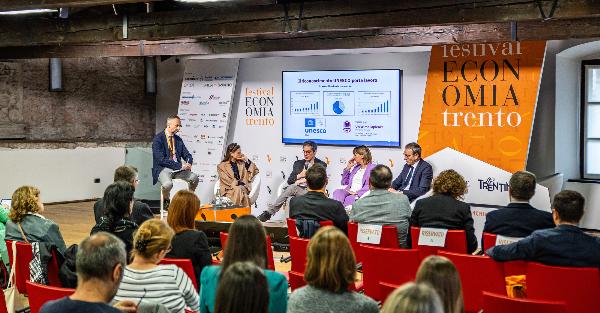
Festival dell'Economia Patrimonio Unesco, beni immateriali e ricadute sul territorio Nella foto: Nicola BARONE; Sara FARNETTI; Pier Luigi PETRILLO; Irene BONGIOVANNI; Roberto FAILONI e pubblico in sala
Cars: Salvini, forward on electric incentives? Reflection in progress
Going ahead with incentives for electric cars? 'Good question, ongoing reflection...' retorts deputy prime minister Matteo Salvini on the sidelines of the Trento Festival, convinced that a 'less polluted Italy does not pass from electric and Chinese cars'. This, he adds, 'would be suicide, certainly not a less polluted country'.
Highways: Salvini, State intervenes on concessionaires who do not invest
"If one undertakes to do maintenance works and does not do them, to do new works and does not do them, and then perhaps cashes in billions in dividends, then a problem arises and the state has to intervene. We are thinking about this'. Vice-Premier and Minister of Transport Matteo Salvini, from the stage of the Trento Festival of Economics, launches his idea on what he calls 'a new idea of motorway concession, where the public takes its responsibilities'. Pressed by reporters on the sidelines on Cdp's role in the motorways, he added: 'I do not enter into the merits of choices that will then concern other ministers. I have an interest in the private concessionaires making the investments they have promised to make, without wasting time'.
Within this framework, the public company Autostrade dello Stato was 'already born'. As for the future, 'expired concessions will have to be renewed, there will have to be tenders, and I don't want to nationalise, I am a liberal,' but 'there are those who invest in infrastructure and those who do not. And I think that the State,' he concludes, 'must create the rules and private individuals must take action.
Salvini, I wonder if Toti's arrest was necessary now
'I think he is innocent because of the experience and work he has done in these years at the head of the Liguria Region. And I ask myself a question: was it necessary to arrest a governor a month before the elections for episodes that took place the year before? '. This was said by the Minister of Infrastructure, Matteo Salvini, during a meeting within the Trento Festival of Economics organised by the 24 Ore Group and Trentino Marketing on behalf of the Autonomous Province.
Space, Severino: treaty respect must be a bulwark against partisan interests
International law must have "a very high level of attention on the subject of space" and "we must be careful to ensure that respect for international treaties remains a powerful bulwark to prevent economic interests from leading to military wars that could also involve the conquest of satellites from which to observe the world". This was emphasised by Paola Severino, President of the School of Law of the Luiss Guido Carli University, in her speech on the topic of "Space Economics and Rules" at the Festival of Economics in Trento, after reviewing the fundamental legal principles expressed in the international space treaties signed since the Cold War period. "We jurists believe in international law and we believe that the conventions and treaties signed by the most important states, based on the principle of the non-usability of space for war, can protect us," he added, "This is true until someone violates the treaties or withdraws his signature from the international treaties, as was the case when the enormous value represented by space was realised.
-U66263372423lSo-600x313@IlSole24Ore-Web.jpg)
Economia dello spazio e regole Nella foto: Paola SEVERINO
Tax, De Gennaro (Gdf): Counterfeiting little perceived as a serious offence
"We do everything to make people understand the danger of this phenomenon. In particular by making people understand where the illicit proceeds end up. Despite everything, the counterfeiting of products is not always seen as a serious offence by the population. With online sales, the offence is more accessible. Often on platforms that are based in countries where police cooperation is very complex. We do not give up, but the cooperation of production companies is essential'. These were the words of General Andrea De Gennaro, Commander General of the Guardia di Finanza, speaking at the Trento Festival of Economics on 'Artificial Intelligence, the new frontier in the fight against evasion'.
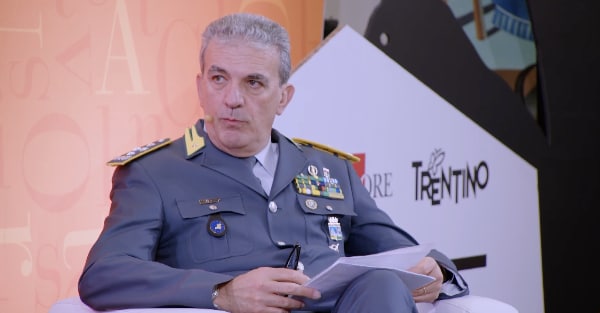
Il generale Andrea De Gennaro, comandante generale della Guardia di finanzal corso del suo i ntervenento al Festival dell’economia di Trento su ’Intelligenza artificiale nuova frontiera del contrasto all’evasione’.
More on this: Strengthened counterfeiting
Pensions, Salvini: 'goal to overcome Fornero within legislature, quota 100? I would do it again'
"The goal is to allow young people to work before the age of thirty by the end of the year, but it is clear that if you keep people over a certain age in the workplace, the spaces in companies, in shops, in hospitals for 25, 30 year olds will never open up. So I think that by the end of the parliamentary term, definitively overcoming the Fornero law is an economic and social moral duty, and then with the other ministers we will find the necessary balance. Let it be an option eh, because who feels good even at the age of 80'. And to the question whether he would redo Quota 100 'absolutely yes' Salvini replied.
'Italy is one of the European countries where the average age for retirement is highest. What I lend to the state at the end of the month as my pension payment is my money, not the state's,' he continued, 'you can also put clauses in place but if one can't do it any more it's a danger at work, then we talk about accidents at work. 'to allow someone who has been breaking his back for 41 years to enjoy a few years of life before going to the cemetery I think is morally and economically correct,' he concludes.
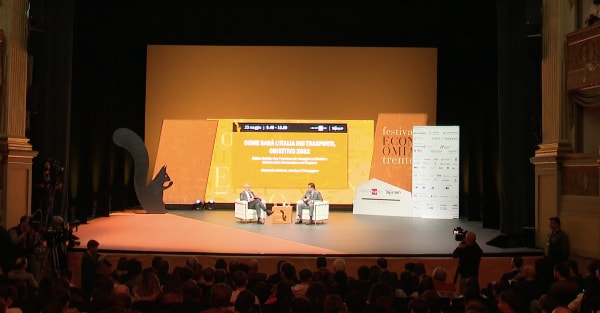
Il ministro delle Infrastrutture e dei Trasporti Matteo Salvini sul palco del Festival di Trento
Pope's message at the Festival of Economics: "You will be called to question yourselves on issues dear to me".
Pope Francis' message and blessing also arrived on the first day of the 19th edition of the Festival of Economics organised by the 24 Ore Group and Trentino Marketing on behalf of the Autonomous Province of Trento and in collaboration with the Municipality of Trento and the University of Trento. "I am happy to be able to reach out to you with a message on the occasion of the 19th edition of the Festival of Economics in Trento, during which you will be called upon to question yourselves on some themes that are particularly dear to me, which require a common and responsible reflection on the part of all those who care about the future of humanity"..
Highway Code, Salvini, no more road deaths
"I am counting on the traffic law being approved by July. Let's bring in a different highway code, with traffic education and penalties. It is not possible to have so many deaths from road accidents'. So said Matteo Salvini, Minister of Transport, speaking at the Trento Festival of Economics.
For more information: Reform of the Highway Code: new rules for cars, motorbikes and scooters on the way
Space, Battiston: economic development only with stability in international relations
The economic development of space will depend on how "stable the system of international relations will be" and on the fact that "we will not have wars in space". This was emphasised by physicist Roberto Battiston, former president of the Italian Space Agency, speaking at the debate 'Space economics and rules' as part of the Trento Festival of Economics. "How much is the economic development of space worth? 1,000 billion dollars according to some estimates compared to the current 350-400 billion, others estimate much larger numbers - he explained - But it will be more or less large the more stable the system of international relations is and we will not have wars in space. Otherwise we will soon discover how fragile this environment is. The growth will hopefully happen because it means that the level of relations will have returned to acceptable levels, otherwise there are risks'. Space from 'res nullius' (no man's land) has become 'res disputanda, something to be conquered,' Battiston continued, 'something to compete for or even fight over. From the economic point of view, everyone's main need,' said the physicist, 'is not the creation of energy, but the extraction of all the raw materials that are needed: this requires first finding deposits and then how to solve the problem that extraction pollutes so much. In 20 years' time, there will be wars not for energy but for raw materials'.
Salvini, commitment to open construction sites for the Strait Bridge by 2024
'The job of the Minister of Infrastructure is to do public works'. This was said by the Minister of Infrastructure, Matteo Salvini, during a meeting at the Trento Festival of Economics organised by the 24 Ore Group and Trentino Marketing on behalf of the Autonomous Province. 'We,' he added, 'finance public works that serve the country. Only in Italy is it possible to make controversy over a bridge. It is a bridge that serves millions of Italians and will remove one hundred thousand tonnes of Co2. We foresee one hundred thousand jobs. In Sicily and Calabria there is record unemployment and an infrastructure like the bridge is also a great anti-mafia operation. My goal is to open the construction sites by 2024'.
Read more: Strict Strait Bridge, construction site slips. The dossier in extra time
De Gennaro (Gdf), developing data management systems with AI
"Artificial intelligence is a relatively new phenomenon. As Guardia di Finanza, we are trying to exploit all the IT tools for massive data management and we have set up an office that will review the information analysis part and evaluate the development of new systems. We are still in a phase of full development'. This was said by General Andrea De Gennaro, commanding general of the Guardia di finanza, during the meeting 'Artificial intelligence, the new frontier in the fight against tax evasion', as part of the Trento Festival of Economics. According to the general, the use of artificial intelligence 'will be reflected in the near future in the training of personnel' of the Guardia di finanza, as data analysis will require human intervention. "We cannot predict today where we will arrive with the development of these systems," he pointed out, "but the human decision has a fundamental importance: it is we, on the basis of IT development, who can direct the work. From a practical point of view, De Gennaro explained that artificial intelligence opens up new frontiers in risk assessment, which is then evaluated by professionals in special departments. "The mass of data is fed into computer tools that refine the data. The result is then sent from the special departments to colleagues on the ground for the direct operational phase,' he said.
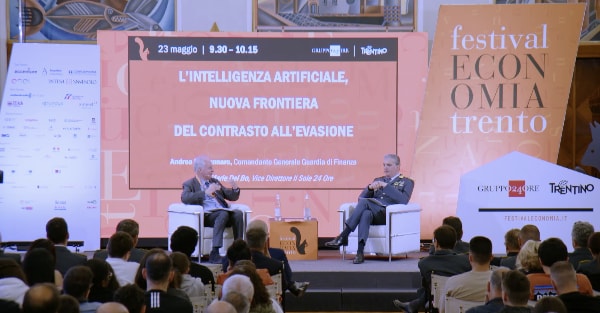
L’intervento del generale Andrea De Gennaro, comandante generale della Guardia di finanza, nell’ambito dell’incontro “L’intelligenza artificiale nuova frontiera del contrasto all’evasione”, appuntamento del Festival dell’economia di Trento
Salvini: the home-saver is not an amnesty
'Politics must make life easier for citizens. Tomorrow in the council of ministers I'm going to approve the save-home decree. It is not an amnesty because if one is going crazy because of thirty centimetres of non-conformity then it must be resolved'. This was said by the Minister of Infrastructure, Matteo Salvini, during a meeting at the Trento Festival of Economics organised by the 24 Ore Group and Trentino Marketing on behalf of the Autonomous Province.
Vice-Premier Salvini, redditometer path error, largely overcome
"The redditometer is a legacy of the past. Wealth and welfare are not evil. The state should not prosecute on the basis of assumptions. It must incentivise. It is an error of path, largely outdated." This was said by the Minister of Infrastructure, Matteo Salvini, during a meeting at the Trento Festival of Economics organised by the 24 Ore Group and Trentino Marketing on behalf of the Autonomous Province.
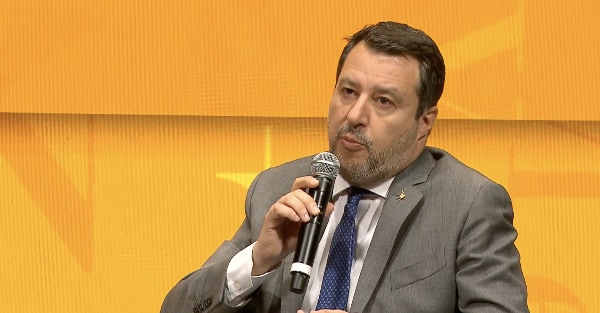
Il ministro delle Infrastrutture e dei Trasporti Matteo Salvini sul palco del Festival di Trento
Deputy Prime Minister Salvini protested by young environmentalists on his arrival at the Festival
'Congratulations to the whistle blowers, a round of applause to the creative people who welcome in Trento...louder applause, thank you guys, make the day sparkling those who want electric cars produced in China where they burn coal to pollute less: in Trento you have not understood anything about life'. This was said by the Minister of Transport and Deputy Prime Minister Matteo Salvini, speaking at the 19th edition of the Trento Festival of Economics to those who challenged him at the opening of his speech, at the panel 'How Italy will be in transport, objective 2032'. To those who spoke to him about drought, linked to climate change, Salvini recalled the heavy rains in the north in recent times: 'You have the wrong address, go to Veneto to talk about drought, a phenomenon...'.
Salvini to Sole 24 Ore: 'The redditometer? Outdated"
"The redditometer? Outdated'. So said Deputy Prime Minister Matteo Salvini before the start of his speech on the future of transport at the Festival of Economics.
Economy protagonists on stage in Trento
In addition to Minister Matteo Salvini, the Festival will be attended by many protagonists of the economy. Among them will be Ferrovie dello Stato Group CEO Luigi Ferraris, PagoPA CEO Maurizio Fatarella, and Edmund Phelps, 2006 Nobel Prize winner for economics. In the evening, the opening ceremony will be attended by Cardinal Gianfranco Ravasi, the president of the Autonomous Province of Trento Maurizio Fugatti, the mayor of the city, Franco Ianeselli, the rector of the university, Flavio Deflorian, and the top management of the 24 Ore Group with president Edoardo Garrone and managing director Mirja Cartia d'Asero.
Minister Salvini has his say on transport Italy
'What Italy will look like in terms of transport, objective 2032', with the Deputy Prime Minister and Minister for Infrastructure and Transport Matteo Salvini opening this morning the roundup of ministers guests at the 19th edition of the Trento Festival of Economics.The first day will also feature the Minister for Health, Orazio Schillaci, in dialogue with Marzio Bartoloni, journalist for Il Sole 24 Ore, on 'Why the National Health Service must be defended'. Also guesting at the opening of the Festival will be the Minister for Sport and Youth Andrea Abodi in dialogue with Simone Casalini, editor of 'Il T quotidiano' on 'Sport, society and geopolitics: dialogue or exclusion'. Economy Minister Giancarlo Giorgetti will also be present on 'Italian public debt, spread trends and the country's autonomy'.
Trento Festival of Economics, first day kicks off: topics include future and growth
The Trento Festival of Economics gets off to a flying start with the first day packed with events and food for thought. The event, organised by the 24 Ore Group together with Trentino Marketing on behalf of the Autonomous Province of Trento and with the contribution of the Municipality and the University, is now in its nineteenth edition and will focus on the dilemmas of our time with the changing world. Central themes of the day will be infrastructures, economic growth and the challenge of artificial intelligence.
Brand connect

