
Festivals are made by the films but much more by the directors
While Venice and Cannes vie for market share, the glorious Berlinale, with a few exceptions, has stalled
Very up and down, the 76th edition of the Berlinale, which, under the direction of Tricia Tuttle, presented unusual lowlights for a festival that under Dieter Kosslick (2002-2019) brought Martin Scorsese to Hayao Miyazaki to the German capital. Paul Thomas Anderson had chosen the Bear Festival for hisThe Oilman in 2008. In 2009, the murky psychoanalytic cult film Shutter Island starring Leonardo DiCaprio had landed here, while Wes Anderson had opened the festival in 2014 with his best-loved film, The Grand Budapest Hotel. For Italia, the Taviani brothers had won with the sensational Cesare deve morire in 2012, about the prison world, so Gianfranco Rosi with Fuocoammare in 2016, about immigration.
The competition between Cannes and Venice
In Europe, Cannes and Venice push cinema. At one time, there was also Berlin. It is useful to use the past tense, because, for some years now, the Berlinale no longer fulfils the function of surprising, discovering, sowing seeds, horrifying and making people think, as weighty festivals usually do. The problem is not the lack of big names in the programme (apart from a few sprinklings of stars in the casts: youth idol Callum Turner, Elle Fanning, Jamie Bell, Amy Adams, Juliette Binoche, Isabelle Huppert, Pamela Anderson). Incidentally, the director has a point in giving space to newcomers and lesser-known names. Often festival posters are filled with masters who bring minor or exhausted films, taking away space from innovation and experimentation. Not that Cannes shirks these logics, but it does let the collateral sections fulfil this task, without turning them into dumps. This is where names often come to the fore. For example, Alice Rohrwacher, who from the Directors' Fortnight with Corpo celeste (2011) then made her way to the competition (Le meraviglie, 2014, Lazzaro felice, 2018, La chimera 2023). But at the Berlinale, which with this year counts 76 editions, cinema, with two or three exceptions, has not been there. Or at least great cinema. This means that to lead an important festival you need a figure respected by the filmmakers who willingly entrust their creature to him. Film festivals cannibalise each other and directors often favour those with the most active market, i.e. Cannes, even though Venice has nothing to envy to the Croisette. The director of the Lido Film Festival, Alberto Barbera, has excellent relations with Hollywood and guesses the titles that go on to the Oscars, managing to convince the stars to make the ocean crossing for the tapis rouge, despite the proximity of the Toronto festival, whose market serves all of North America. In recent years, however, Berlin seems to have gone off the rails. Someone blames the Covid, which brought it to a standstill for a year, someone blames the overwhelming power of the platforms: those who oppose hosting films produced by the latter risk getting the crumbs. True, but not enough to sink a festival. The current Berlinale has abdicated, for one thing, its function as sentinel of the Balkans and Eastern Europe, which it has always had also by geographic predisposition.The Secret of Esma by Jasmila Žbanić won in 2006 when the dust of the war in former Yugoslavia was still in the sky. Here Jafar Panahi earned the Golden Bear with his underground Taxi Tehran in 2015. Turkey has always floured the programme, even with second-generation immigrant Germans, see Fatih Akin, Golden Bear in 2004 with The Turkish Bride.
This year's films at the Berlinale
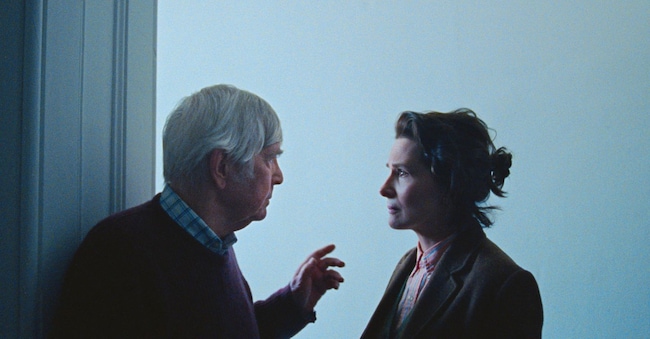
Turkey, indeed, opened the competition with Yellow Letters, the ones the regime sends you when it has to send you to rest. However, the parable of an artist couple crushed by regime censorship does not have the force of İlker Çatak's precedent, The Teachers' Room, also about power relations. On the Kurdish issue was Kurtuluş by Emin Alper, between action and telenovela with ghosts and predictions. Mah! The best films came from terrain that Tuttle knows how to cultivate. Already the author of the programming for The London Lesbian and Gay Film Festival, she had a privileged channel for works with an eye on the protection of rights, such as À voix basse by Leyla Bouzid on the repression of homosexuality in Tunisia, well constructed and acted. Tuttle graced the programme with films featuring women protagonists. The inaugural film, out of competition, No good men, was special for its director and performer, Shahrbanoo Sadat, an Iranian who grew up in Afghanistan, who narrates Kabul from a female perspective in 2021 before the Taliban take over. While only one film was out of the ordinary, Rose, by Markus Schleinzer, starring Sandra Hüller, about a woman wearing trousers in 1600s Germany. Also interesting is Queen at sea by Lance Hammer about the inability of a daughter, Juliette Binoche, to understand love in old age (to quote a beautiful book by Vivian Lamarque). In Kornél Mundruczó's At the Sea it was Amy Adams' acting, in the imperfections of a destructive mid-life crisis, that struck. As an American, the director has a good eye for respecting minorities. One of the most applauded films was Warwick Thornton's Wolfram, an Australian western with Aboriginal revenge thanks to a handful of Chinese gold diggers. Bizarre but full of sweetness. Otherwise, it was a minefield of kidnappings in front of the screen. Just to name a few, Alan Gomis's African-style Dao, Hanna Bergholm's horror Nightborn with a young bride impregnated by the forest, Angela Schanelec's Fassbinderian/Brechtian (please) My wife cries.
The political controversy
It was realised that the 'buying power' of a director of a major festival lies in authority, the talent to attract, and the ability to handle controversy, something the American director was not able to do. Last year there was a big uproar over the pro-Palestinian declarations of some guests at the award ceremony, which were unwelcome by the German government, which has a different sensitivity on the issue for obvious historical reasons. Thus, when this year Wim Wenders, president of the jury, asked to let cinema speak and not politics Arundathy Roy cancelled his participation. Kaouther ben Hania, director of The Voice of Hind Rajab, refused the Cinema for Peace award, while more than 90 authors, including Ken Loach, Tilda Swinton and Javier Bardem, signed a letter addressed to the organisation against the silence imposed on Gaza. Film festivals are a test of art and politics, they must be handled with care also because, amidst the glitter and controversy, they push a concrete industry. And, speaking of our house, besides people, certainty on tax credit can make a difference.
© REPRODUCTION RESERVED


