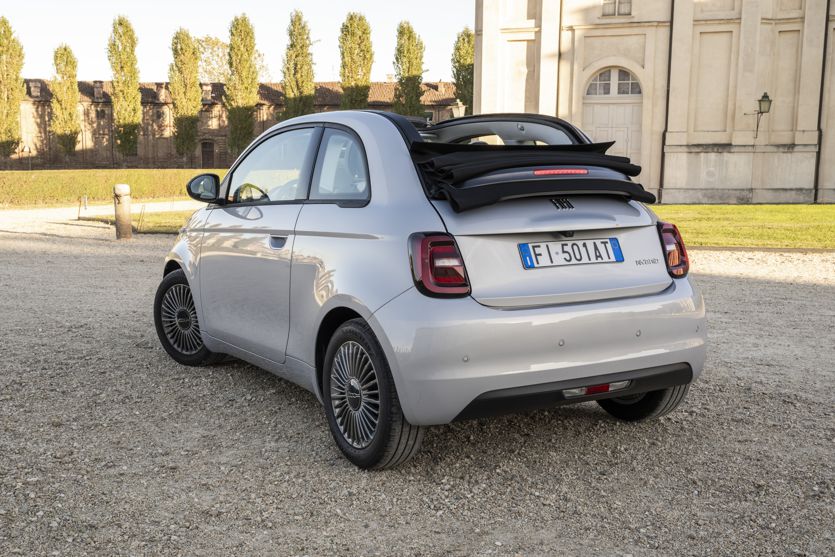
Fiat 500 Hybrid: the test: how the Mirafiori-built mild hybrid citycar is made and goes
The small Italian car is the result of a conversion to thermal power for the 100% electric model of 2020. Under the bonnet is the familiar 1,000 cc three-cylinder Mhev 12 Volt with an exclusively manual gearbox. The price list starts at around 20,000 euros.
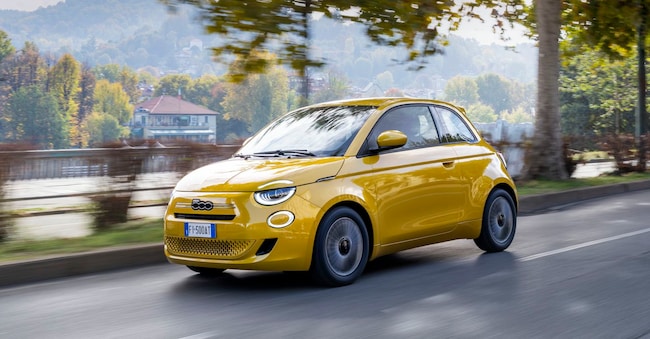
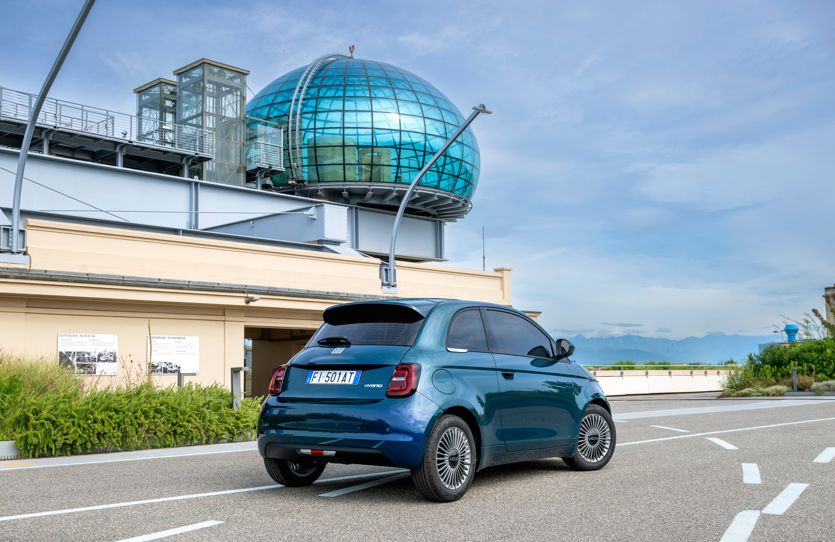
Proudly made in Italy, or rather built in Turin', in the historic Mirafiori factory which, according to Stellantis' plans, should get back on track with 100,000 units a year and 5,000 already by the end of the year (an estimate later revised to 6,500). In fact, the Fiat 500 Hybrid has a value that is above all industrial, with a somewhat complicated history and a decidedly singular, certainly pragmatic, reconversion from electric to thermal, and the child of the times of a transition to electric cars imposed by the EU with the Ice ban to 2035, which was not appreciated by consumers and accelerated in many cases to avoid the infamous CO2 emission fines.
In fact, they have made a U-turn at Fiat: they have taken a beautiful electric city car from five years ago, created specifically and exclusively for battery traction, with a fascinating, undoubtedly iconic line that does not - and will not - suffer the ravages of time. On the contrary, it remains elegant and has been transformed by a complex 'retrofit' into a light hybrid, or rather an ultra mild hybrid with 12 volts, a manual gearbox and under the bonnet 65 horsepower and 90 Nm of torque at 3,500 rpm delivered by the well-known three-cylinder 1,000 Firefly homologated Euro 6e bis
This, in short, is the Fiat 500 Hybrid (which, however, bears the Hybrid inscription on the tailgate, that of the old series made in Tichy, Poland). The car, born from a late conversion to the engine of the highly praised 500e (the 100% electric one) is, in fact, the child of the electro-transitional drama of recent years, when the heads of the manufacturers (all of them, without exception) thought of selling electric cars as if they were iPhones on sale on Black Friday and with the marketing offices competing to see who would be the first to launch into the infamous all-in on battery-powered cars. No, that's not what happened: the Bev market has expressed different dynamics from those that were estimated, but which perhaps, with hindsight, were not difficult to predict.
The likeable Fiat 500 Hybrid is a child of this: having ended production in Poland of the old 2007 edition in late spring 2024, Fiat found itself without a car worth 100,000 units a year that could not be replaced by the electric version built in the iconic Mirafiori factory. And in a rush to make amends, the Stellantis brand engaged reverse gear: it modified the car with not a few engineering difficulties. Gone is the battery, gone is the electric motor, gone is the power socket and under the bonnet is the classic one thousand 3-cylinder Firefly 12-volt mild hybrid, the same one built in Termoli and mounted on the Panda-Pandina of Pomigliano and the old 500 of Tichy, which cannot be upgraded also because of the cost of ADAS by law. And with a six-speed manual gearbox that, however smooth and pleasing to many customers, remains anachronistic and sidereally distant from the Chinese-driven technological mainstream of the smartphone-sized car. The Fiat 500 Hybrid certainly has its limits, but it shines for its original style, iconicity and the subtle taste of having a truly Italian car that proudly gives oxygen to the Mirafiori factory, keeping the 500 myth alive while waiting (we hope) for a new generation based on the long-awaited Stla Small platform.
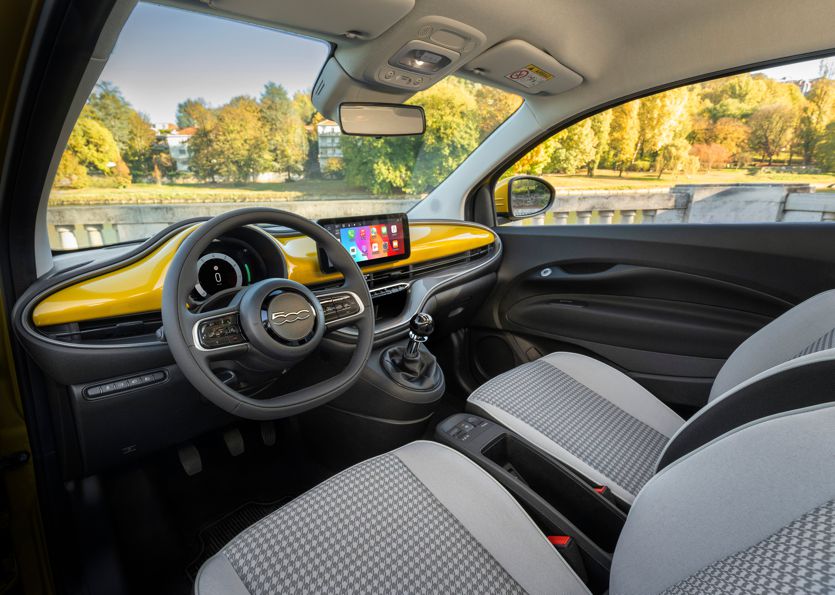
The styling compared to the 2020 500 Electric does not change, except for the front air intake and a few details. Inside, the decor is the same except for the gear lever. Digital instrument cluster and 10.5" infotainment (depending on version) with CarPlay and Android Auto complete the picture. This system proves its worth, a pity about the presence of TomTom: it would have been better to update the whole system with a solution based not only on Android Automotive like the current one but also equipped with Google Maps services included.