
FIFA doubles its Olympic revenue
In the four-year period leading up to the 2026 World Cup, FIFA generated revenue of 14 billion, compared with the 7.6 billion generated by the IOC between 2021 and 2024

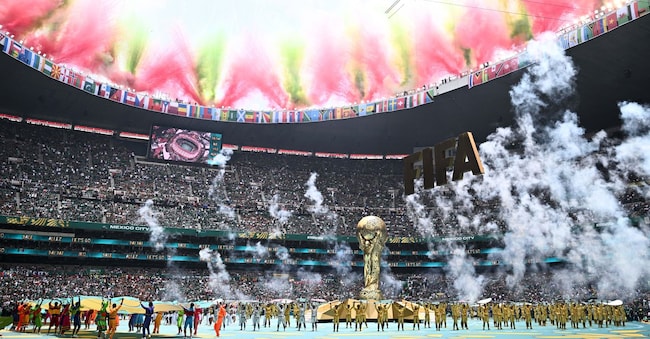
The expanded 48-team North American World Cup, which kicked off last night at the legendary Azteca Stadium in Mexico City, and strategies to boost club tournaments and the women’s game have helped drive FIFA’s revenue to unprecedented levels, with the result that it has almost doubled the International Olympic Committee’s takings. This is a shift in which football has overtaken the Olympic Games, a trend that has developed over the last ten years.
During the four-year cycle leading up to the tournament hosted by the United States, Canada and Mexico, FIFA has in fact generated $14 billion in revenue: $11.5 billion from the World Cup, $2 billion from the Club World Cup to be held in 2025, also in the US, and just under $600 million from the 2023 Women’s World Cup. In the 2019–2022 cycle, FIFA had already achieved record revenue of $7.5 billion, an increase of 18% ($1.1 billion) compared to the $6.4 billion recorded in the 2015–2018 period. The World Cup in Qatar had already generated the highest revenue recorded to date for the tournament, at $6.3 billion.
To get an idea of how the balance of power has shifted in terms of turnover, just consider that in the four-year period from 2013 to 2016, the Olympic Committee, with the Sochi 2014 and Rio 2016 Games, generated $5.7 billion, rising to around $7 billion in the following four years. The Paris 2024 Olympic Games, by contrast, generated revenues of almost €4.5 billion, just over a third of the 2026 FIFA World Cup, and more generally, the Olympic Committee recorded revenue of $7.6 billion for the entire four-year period 2021–2024, derived mainly from television rights and top sponsors.
In light of these figures, FIFA – which, from this World Cup onwards, has taken direct control of all revenue streams (outsourcing high-end hospitality to On Location) – has reaffirmed its status as a non-profit organisation, promising to reinvest over 12 billion in the development of global football, allocating more resources to federations that are less financially independent.
A substantial prize fund will be shared amongst the 48 participating teams, starting with a guaranteed contribution of 12.5 million per association. Back in December, in Doha, the FIFA Council had already approved the allocation of bonuses totalling 727 million dollars. This prize money rose by 15% in April following the meeting in Vancouver: the revised figure stands at $871 million (€751 million), which is $431 million more (double) than the previous edition in Qatar.


