Football and geopolitics

FIFA readmits Russia to youth football (for now)

More than four years after the invasion of Ukraine, a Russian national team will be able to take part in the new Under-15 Festival, scheduled to take place in Azerbaijan from 22 to 31 October

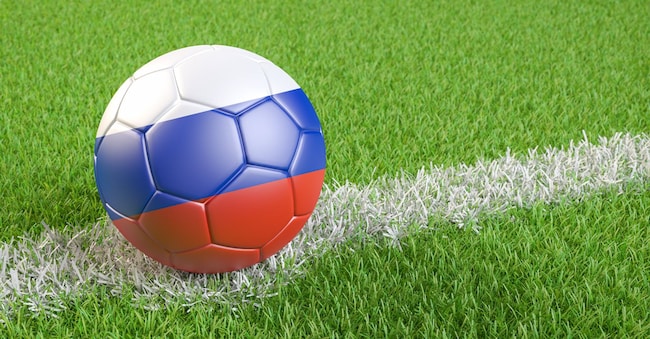
 (AdobeStock)

3' min read

Translated by AI
Versione italiana

3' min read

Translated by AI
Versione italiana

More than four years after the invasion of Ukraine, the Russia issue has resurfaced in the world of global sport, with developments that clearly reflect not only geopolitical tensions but also the growing economic and institutional interests at stake. The most recent development comes from FIFA, which has announced that the new Under-15 Festival – scheduled to take place in Azerbaijan from 22 to 31 October – will be open to ‘all affiliated federations’, including, therefore, Russia.

A decision which, in essence, marks the first easing of the restrictions imposed on the Russian sporting system following the invasion of Ukraine in February 2022, when FIFA and UEFA jointly decided to exclude Russian and Belarusian national teams and clubs from international competitions. This unprecedented measure has affected not only sporting participation but also the associated economic ecosystem: TV rights, sponsorship deals, the transfer market and international visibility.

Loading...

The legal issue

The crux of the matter, however, lies elsewhere: the Russian Football Union has never been formally suspended by international bodies. This distinction is anything but formal. On the one hand, it has allowed institutional channels between Moscow and the global federations to remain open; on the other, it has left legal scope for any gradual readmission.

The Under-15 Festival falls squarely within this grey area. As it is a youth tournament with no direct implications for the FIFA rankings or major official tournaments, the decision appears to be a sort of ‘de-escalation test’, designed to minimise the immediate political impact whilst opening up a new avenue.

It is no coincidence that the Kremlin picked up on the signal straight away. The Russian Minister for Sport, Mikhail Degtyariov, spoke explicitly of ‘an important step towards the return of Russian teams to international sport’, expressing the hope that this is merely the first step towards a full return to normality.

The Olympic Front

The picture becomes even more complicated if we broaden our view to the Olympic system. In May, the International Olympic Committee recommended a partial review of the restrictions, but with a differentiated approach: an opening towards Belarusian athletes, who will be able to return to competition under their national flag and to their national anthem, and a stricter line towards Russian athletes.

As early as March 2023, the latter had been readmitted to competitions, but subject to strict conditions: participation limited to individual events, proven political neutrality (no active support for the war) and no contractual ties to the army or security services.

A model that sought to strike a balance between two conflicting demands: on the one hand, the political and moral pressure to isolate Moscow; on the other, the defence of the principle of the universality of sport, which is one of the cornerstones of the Olympic system.

Economy and governance

Significant economic dynamics can also be discerned behind this gradual reorganisation. Russia’s exclusion – a market of over 140 million people – has had an impact on television audiences, sponsors and certain commercial sectors within football and international sport.

In particular, for FIFA – which is currently engaged in a process of global expansion and revenue diversification (think of the expanded World Cup and the new youth formats) – maintaining good relations with all its affiliated associations is a strategic asset. It is no coincidence that the return is taking place via an Under-15 tournament: a segment that receives less attention but is fundamental to the development pipeline of the football system.

At the same time, the reputational risk remains high. Any overture towards Russia is closely monitored by Western governments, international donors and public opinion, particularly in Europe.

It remains to be seen whether this will be an isolated incident or the start of a wider redefinition of the global sporting balance of power. As is often the case, the solution will not be black and white: between total exclusion and full reinstatement, a third way is emerging, one built on compromises, exceptions and a gradual approach. Against this backdrop, football – once again – proves itself to be not merely a game, but a mirror of international relations. And, as such, it is deeply influenced by interests, balances of power and strategies that extend far beyond the pitch.

Copyright reserved ©
Loading...

Brand connect

Loading...

Newsletter

Notizie e approfondimenti sugli avvenimenti politici, economici e finanziari.

Iscriviti

Tutto mercato WEB