Presentations

FIFA: Infantino’s fourth term puts the organisation’s governance to the test

The bid for 2027 raises a question regarding the governance of world football

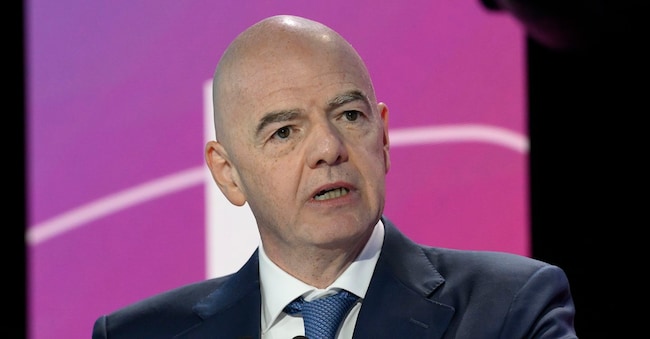
Gianni Infantino  (Photo by Fabrizio Corradetti / LaPresse)

3' min read

Translated by AI
Versione italiana

3' min read

Translated by AI
Versione italiana

Football generates billions, shapes identities and provides entire communities with a common language. FIFA, which has forecast revenues of 11 billion dollars for the 2023–2026 cycle, is not merely a sports federation: it is a global regulator, a competition organiser and a major economic player. An institution of this magnitude cannot be run like a private club. The forthcoming election of its president should therefore provide an opportunity to discuss not only who will lead FIFA, but also under what rules and with what checks and balances.

The first real test concerns Gianni Infantino himself. At the Vancouver Congress in May 2026, the president announced that he would stand for re-election in 2027. If elected, he would remain at the helm until 2031, for a total of fifteen years – just two years fewer than the seventeen years Sepp Blatter spent as president. This puts the credibility of the reforms approved in the wake of the scandal that engulfed Blatter’s tenure to the test.

Loading...

In 2016, the Extraordinary Congress introduced, amongst other measures aimed at restoring confidence in the organisation, a three-term limit. Infantino, then UEFA General Secretary, had taken part in the work of the FIFA Reform Committee. The twelve-year limit had a specific aim: to reduce the risks of concentration of power, self-serving behaviour and impunity.

Article 33(2) of the Statutes stipulates that no one may hold the office of president for more than three terms. Infantino was first elected in February 2016 and subsequently re-elected in 2019 and 2023. In December 2022, however, the FIFA Council endorsed the interpretation of the Governance, Audit and Compliance Committee that the period 2016–2019 does not count as a term of office for the purposes of the limit.

It is here that a dispute over the statutes becomes a governance issue. FIFA has not disclosed the full reasons behind the decision to exclude almost three years of the presidency from the calculation. In the absence of an explicit clause in the statutes regarding the treatment of a partial term of office, such a significant decision would have required a particularly transparent process, a public explanation and a genuinely independent review.

The Statute grants Congress the power to adopt and amend the fundamental rules, whilst the Review Committee is responsible for verifying the eligibility of candidates, including the president. The Council, on the other hand, has confirmed in advance a decisive vote on whether the incumbent president should remain in office. Even if one were to concede that this interpretation could be defended on legal grounds, the institutional question remains: who oversees the overseer when the outcome directly affects the organisation’s leader? After all, a governance rule is most effective when it applies to those in power.

The issue extends beyond the term of a presidency. FIFA sets the rules for world football and enforces them, authorises competitions and, at the same time, organises tournaments and exploits their commercial rights. It is both a regulator and an economic operator within the same market. The Court of Justice of the European Union, in its 2023 Super League ruling, highlighted the risk of a conflict of interest that arises when a party in a dominant position controls access to the market without transparent, objective, non-discriminatory and proportionate criteria.

Added to this overlap is the financial aspect. FIFA redistributes significant resources to the 211 national associations, and it is precisely these associations – each with one vote at the Congress – that elect the president. Financial solidarity is an essential function, particularly for associations with lower revenues; but it can also create political dependence on whoever heads the system that allocates the funds. Footballers, clubs, leagues, supporters and other stakeholders, however, remain on the sidelines of the electoral process.

Preventing or allowing a fourth term of office would therefore not be enough to resolve the outstanding issues. The necessary reform concerns the overall governance structure of football: separating regulatory functions more clearly from commercial ones; entrusting decisions on eligibility, discipline and conflicts of interest to independent bodies; publishing the reasons behind these decisions; enhancing transparency in the allocation of resources; and giving a voice to those who generate football’s economic and social value.

The autonomy of sport safeguards a legitimate sphere of self-governance, but it cannot become a shield against the rules of good governance, competition law and the principles of the rule of law. Infantino’s candidacy offers FIFA an opportunity to demonstrate this. Football does not need to wait for another scandal: it needs institutions that are equal to the economic power and public trust they manage.

Copyright reserved ©
Loading...
Loading...

Brand connect

Loading...

Newsletter

Notizie e approfondimenti sugli avvenimenti politici, economici e finanziari.

Iscriviti