
Filippo Panseca, father of Computer Art and Psi organic intellectual, dead
He conceived the famous red carnation and the 1980s displays at Bettino Craxi's socialist congresses
2' min read
2' min read
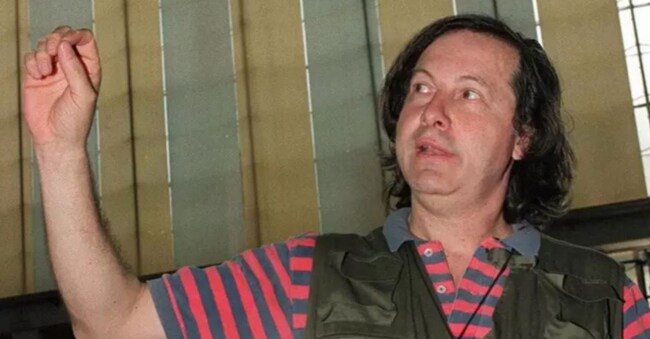
Filippo Panseca died at the age of 84 from a fulminating heart attack that struck him during the night. The efforts of the medical staff at Pantelleria's Nagar Hospital were futile. This was reported by the Pantelleria Internet news site. He had arrived in Pantelleria in 1976 with his wife Margherita Boniver with whom, along with other Craxian socialists, he had founded the Brera International Centre.
Panseca, the artist father of so-called Computer Art, who was at the centre of controversy in the 1980s for his installations at Psi congresses, had been a teacher of figure and ornate modelling at the Palermo Art School from 1964 to 1967, In 1965 he founded the Tempo Sud Group. In 1970 he started Biodegradable Art. In 1986 he was invited by Tommaso Trini to exhibit the video Immagini Digitali Fotodegradabili at the Venice Biennale and took part in the Milan Triennale by presenting Il Luogo del lavoro di Filippo Panseca, a suitcase containing dreams and the tools to realise them. He became well-known in the 1980s as the creator of innovative set designs for the congresses of the Italian Socialist Party, inventor of the red carnation in the electoral symbol.
Famous are the Rimini temple and the telematic pyramid erected in 1989 in the Ansaldo area of Milan. He also collaborated as a set designer with La Scala in Milan, RAI, Mediaset and Rete A and as a designer for Kartell, Onlywood, Martini, Arteluce, Fiorucci and Baghetti. In 1988, he was among the founders of the Arte Ricca movement in Turin and participated in all the group's exhibitions in Italy and abroad. In the early 1990s, he patented and created Swart Art O Mat, a remotely programmable vending machine for works of art that can be used with banknotes or credit cards. In 2009, he continued his path with the series of works Digital Mythological Chronicles representing the lives of well-known personalities - from politics to industry - in the guise of gods with their merits and defects, vices and virtues. The works were exhibited in Savona at the Priamar Castle and later at the Battaglia Gallery in Milan. Since 2015, using an innovative technique, he has been creating photocatalytic works, which were presented in June for the first time at the Adalberto Catanzaro Gallery in Bagheria (Palermo) and subsequently at the Palazzo Riso Museum in Palermo.

