
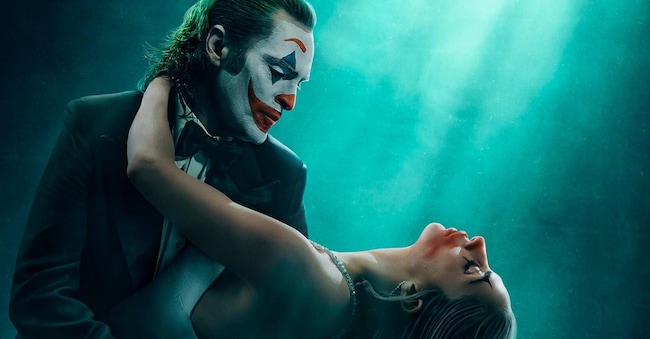
"Joker: folie à deux", Joaquin Phoenix and Lady Gaga dance in a swinging sequel
The highly anticipated sequel to the 2019 blockbuster arrives in Italian cinemas. Also among the novelties is 'Bestiaries, Herbaria, Lapidaries'.

3' min read
3' min read
It had stunned (almost) everyone "Joker", the 2019 film with which director Todd Phillips completely abandoned the comedy tones of his most famous works - from "Starsky & Hutch" to the "The Hangover" trilogy - to plunge into a dark and disturbing origin-story with Batman's historical enemy at its centre.
In addition to its excellent technical and narrative performance, 'The Joker' received an extraordinary reception at the box office (it topped $1 billion in total takings) and an equally incredible run at the awards: after winning the Golden Lion at the Venice Film Festival, it went on to win two Golden Globes and two Oscars, also becoming the first film based on a DC Comics character to compete for the Best Picture statuette at the Academy Awards.
Simply impressive numbers that would have been almost impossible to bet on before the presentation in Venice. For all these reasons, expectations for the sequel, the absolute star of the weekend in theatres, could only be sky-high.
The plot naturally follows the events of the first chapter: after terrorising Gotham, Arthur Fleck, known as the Joker, is imprisoned in Arkham following his arrest. One of his jailers takes him to join a choir where he meets a girl who could change his life by making him feel loved at last.
It is a feature film that plays with duplicity, 'Joker: folie à deux', a film that thrives on the same bipolarity as its protagonist, where romanticism mixes with brutality, musicals and social drama go hand in hand, with references ranging from the past to contemporary America today.

