
Filomena Nitti, the scientist who gave up the Nobel Prize for 'the family'
In Carola Vai's book, the story of the scholar who dedicated her life to scientific research together with her husband and left him honours and glory

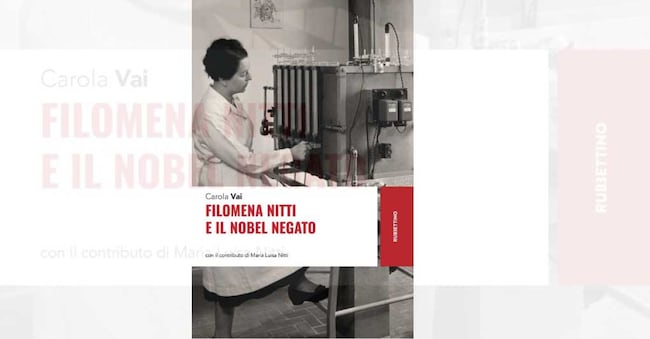
Sembrano sempre troppo poche le storie note di donne straordinarie. Carola Vai con Filomena Nitti e Il Nobel negato ne regala una, italiana. Filomena Nitti, infatti, è stata una donna straordinaria dalla vita straordinaria. Coetanea di Rita Levi-Montalcini, ricercatrice in campo medico, fu un’eccellenza italiana messa in ombra dalla storia, dal successo dei due uomini della sua vita, il padre, ministro del governo Giolitti ed europeista Francesco Saverio Nitti e il marito, lo scienziato Daniel Bovet, premio Nobel per la medicina nel 1957. La carriera del padre prima e del marito poi condizionarono inevitabilmente le scelte della scienziata ma non spezzarono mai l’orgoglio e la consapevolezza di Filomena che continuò a dedicarsi alla ricerca scientifica in campo medico. A lei insieme al fratello Federico e Bovet dobbiamo il primo farmaco antistaminico. Insieme posero le basi per le ricerche che portarono alle prime cure della chemioterapia e
If Rita Levi Montalcini always forcefully declared her dedication to science alone and her choice not to owe anything to anyone else, least of all a husband, Filomena Nitti lived all the 'roles' of the feminine, woman of science, loving mother and dedicated wife.
Rita and Filomena, two parallel and very distant lives, two versions of the love for scientific research that Carola Vai in her book Filomena Nitti e Il Nobel negato juxtaposes because they were of the same age (she is also the author of the only complete biography of Rita Levi Montalcini for Rubettino Editore), with a professional curriculum of excellence, and grew up in the same political and social climate. Two pioneers, one a daughter of the North, Jewish, who visited Europe as a tourist, the other a daughter of the South, who experienced political flight with her family. Both, for years, lived with the desire to return to their homeland.
Despite being exiled at a very young age with her family first to Switzerland and then to Paris, Filomena was not crushed by family events, nor did she let them get her down. On the contrary, she developed a rebellious character after her adolescence, which clashed, even politically, with her father (she was the first communist in the family).

