
Filosa to the Industry Committee: ‘Italia should not feel second to anyone’
The Group’s CEO makes it clear that Cassino’s future will be linked to the Mirafiori revitalisation plan – “One billion to expand the range of commercial vehicles at Sevel”

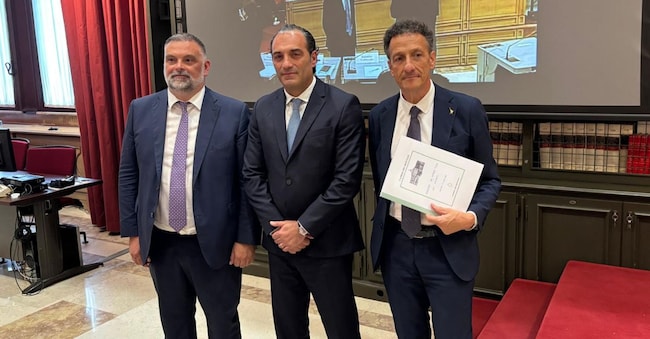
The hearing of the Stellantis CEO before the Industry Committees of the Chamber of Deputies and the Senate began with a tribute to Sergio Marchionne, who would have turned 74, and concluded by highlighting the initial results of the turnaround in the market (+15% in registrations) and on the production front (+16%), as well as the priorities for reviving production at Italian plants: a focus on electric cars at Pomigliano and Mirafiori, a production plan for the new range of large commercial vehicles at Atessa, involving an investment of one billion, and the relaunch of Maserati with a strategy to be announced by the end of the year.
On the subject of Cassino, Antonio Filosa does not provide any further details – “we’re working on it” – but he does make a commitment: “We are working with an industrial partner to revitalise the plant as part of the plan for Maserati. As for suppliers, the Stellantis CEO’s assurance relates to the 7 billion in annual purchases. To this, Filosa adds an important point that marks a break with the past: “We are working with the Italian supply chain to develop the new range of commercial vehicles that we will produce at Sevel; we will follow the same approach for the development of the new Alfa Romeo, which we have assigned to the Melfi plant.”
The common thread running through these industrial partnerships – which has seen the Group sign an agreement with Leapmotor for Spain and with Dongfeng for France – “will also be confirmed for Italia,” Filosa reveals, “particularly for Cassino, Modena and also for the electric cars in Pomigliano, where there could be three models – one more than previously announced”,
Filosa points out that the situation remains complex, even though there are very encouraging signs for the Group. “In the first quarter of 2026, we returned to profitable growth” says Filosa, noting the 45 billion in liquidity available to the Group, which, however, follows the “sacrifice” of over 22 billion in extraordinary costs on the balance sheet caused by misguided industrial strategies and the uncertainties surrounding electrification in the market.
On the subject of Italia, Filosa adds a few points to what was already mentioned during Market Day and during the meeting with Emanuele Cappellano a few days ago. In addition to the 5 billion earmarked for Research and Development up to 2030, Filosa has put forward a further sum for the production of commercial vehicles at the Atessa plant. “Italia,” explains Filosa, “will be the production hub for small cars at the Mirafiori and Pomigliano plants; for mid-to-high-end and luxury cars at the Melfi, Cassino and Modena plants; and for commercial vehicles at the Atessa plant,” explains the CEO.


