
Baccalaureate reform 2026: more focused tests and smaller commissions. All new features
Novelties also for educational trips, the teacher's card and the new technical chain, 4+2. More resources for the contract.
by Eugenio Bruno and Claudio Tucci
Key points
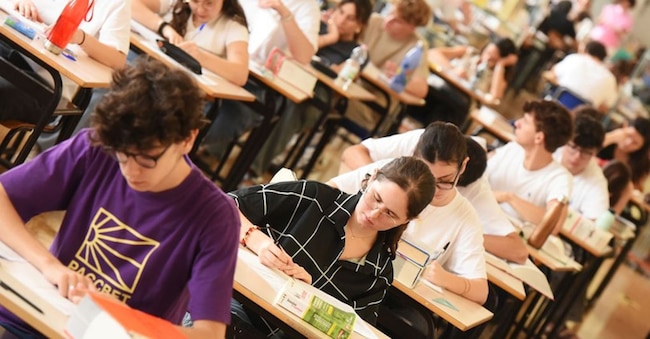
With the final approval of decree no. 127 comes the long-awaited reform of the state exam. The main innovations desired by the Minister of Education and Merit, Giuseppe Valditara, come out substantially unscathed after examination by the two branches of parliament. And so: from June 2026 the final exam of the second cycle of education will once again be called the 'maturity exam' and will have to go beyond the questioning of the various subjects. The first to test it will be the approximately 500,000 students in the fifth grade.
Change oral and commissions
The oral exam will be limited to four disciplines to be chosen by MIM in January together with the second written test, and the commissions will be mini: five members instead of seven, two of whom will be internal and two external, such as the president. As a result of a double change introduced in the committee, the endowment for training courses for commissioners increases by EUR 3 million in 2026 and 11 in 2027, and the bonus that can be awarded to candidates with marks of 90 and above (and no longer 97) becomes three points. But let us proceed in order.
The news of the interview
The planned interventions are quite incisive, because some key aspects of legislative decree 62/2017 are being amended. Stop stubborn silence: the Matura is only valid by participating in all the tests, the two national written papers and the interview. Those who will voluntarily play dumb at the oral will be failed. The aim is to avoid evasive strategies and to ensure that all candidates take the assessment seriously.
Addio poi all’accertamento delle conoscenze su tutte le materie. D’ora in avanti ci sarà un focus su quattro discipline caratterizzanti, individuate annualmente dal dicastero di viale Trastevere. Viene quindi eliminato l’avvio del colloquio per ogni candidato partendo dall’analisi di un materiale scelto dalla commissione finalizzato a favorire la discussione sui nodi concettuali caratterizzanti le diverse materie e del loro rapporto interdisciplinare, modalità che aveva creato incertezze ed eccessiva diversità nella conduzione della prova. La modifica punta a rendere l’esame più mirato e approfondito, all’insegna di maggiore serietà e serenità, evitando la dispersività di un colloquio troppo ampio e concentrando l’attenzione su un nucleo essenziale di saperi. Le altre discipline non scompaiono ma restano valutate attraverso il credito scolastico del triennio, creando un sistema bilanciato che unisce la verifica dell’intero percorso scolastico con un approfondimento mirato sulle competen
The 4+2 becomes structural
For the rest, the legislative decree makes the new technological-professional training chain structural, the so-called '4+2' model, i.e. four years of high school plus two years in the Its Academy, as of 2026/27, and extends - due to a parliamentary amendment - the specialisation courses for future support teachers managed by Indire with or without the universities by another year (i.e. until the end of 2026), also providing that temporary workers with three years of service in the last eight years (instead of five) can participate. At the same time, the date by which it is necessary to have completed a specialisation course abroad for which there is an appeal pending before an Italian Regional Administrative Court is extended from 1 June 2024 to 24 April 2025.

Brand connect


Newsletter Scuola+
La newsletter premium dedicata al mondo della scuola con approfondimenti normativi, analisi e guide operative
Abbonati