
Finance, industry and defence. The new security paradigm in Enrico Della Gatta's book
Published by Egea and recently in bookshops, the essay 'Defending the Future. Finance, innovation and geopolitics in the new security economy', outlines the transformation of deterrence: from traditional military force to an integrated ecosystem of innovation and capital

Private capital as a lever of western security. At a time when deterrence is no longer measured in accumulated arsenals, but in the ability to turn innovation into strategic advantage. This is at the heart of the book 'Defending the Future. Finance, innovation and geopolitics in the new security economy by Enrico Della Gatta, published by Egea and in bookshops from 13 March.
Della Gatta, after a long career as an Army officer - with active service in multinational operations and at the highest military, national and European institutions - is now vice-president of Fincantieri, where he heads the Defence Market Business Intelligence function. Defence,' he explains, 'has become an 'asset class': the ability to quickly turn ideas into operational systems now counts for more than static arsenals.
'Twenty-first century deterrence is not measured in stocks,' Della Gatta observes, 'but in the ability to regenerate technological advantages faster than adversaries erode them. It is not just the military: it is industry, entrepreneurship, capital'.
Through an analysis that interweaves history, geopolitics, industry and financial markets, the author outlines a concrete and non-ideological key to understanding the new security economy. From the cases of defence start-ups - such as Palantir, Anduril and SpaceX - to specialised funds, from investment metrics to the new balances between state and market, the essay builds a perspective based on first-hand experience along the entire security spectrum: from command on the ground to confrontation with governments and institutions, to the definition of industrial and corporate strategies on a global scale.
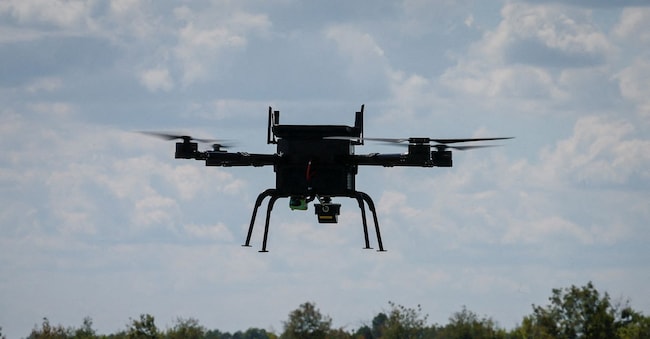
This reading is complemented by an analysis of the main defence industrial players at global level, supported by a wealth of data, statistics and details on the trends affecting defence companies in different countries, and concludes with the droning theme of the conflict in Ukraine. A start-up war, as the author defines it.

