
Financial advice: Anasf and Fecif present the European 'radiography'

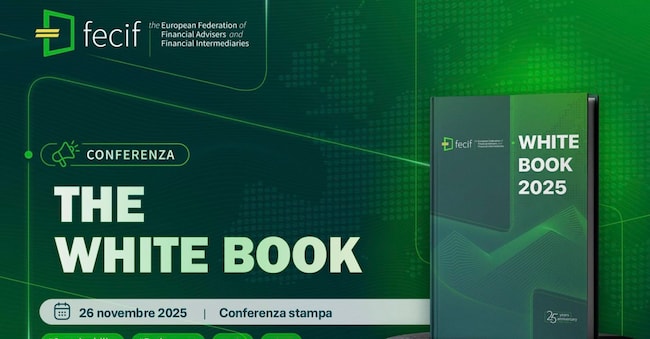
'Advice is one: there are those who do it and those who do not'. Luigi Conte, president of Anasf at the presentation of the White Book of Financial Advice, produced by Fecif, the European Federation of Financial Advisors and Intermediaries, and which represents an initial survey at European level of the state of the profession. For Conte, therefore: 'Advice is only one, even if it can be expressed according to various models, because it is the advice that is independent, not the advisor, since none of us is independent: we are all dependent on something'. The position emerged while commenting on the preference that also emerged from the EU Commission's latest 'non-paper' for independent consultants. For Conte: "Distinctions such as 'independent/independent' generate confusion, while the real difference lies between those who give financial advice (and produce value) and those who do not (or generate damage). The responsibility of professionals is to correctly represent the complex matter to unaware citizens, and the work of in-depth analysis and verification deserves a more dignified classification'.
The White book offers an up-to-date snapshot of the sector in Europe, highlighting the main trends in the 27 EU Member States, with the addition of Andorra, the United Kingdom and Switzerland, and the upcoming challenges: from regulatory developments within the Capital Market Union and the Savings and Investments Union, to sustainability, digitalisation, and the issue of pension provision. As Vania Franceschelli, Fecif's president, explains: "The White book came about as a result of our participation in the working tables with the European Commission and the presentation of a paper that brought together the voices of financial advisors in Europe, also in order to mitigate the first drafts of the Ris (Retail Investment Strategy), which focused exclusively on the issue of costs. This is the first time that a focus on the profession has been realised in Europe,' he adds. For financial advisors, the document must represent a unicum, diminishing the reticence that is sometimes found in the sector and putting professionals at the centre'. The idea is that the role of the profession is assuming an important social relevance in Europe and that is why a tool is needed to inform EU policymakers, drawing a scenario to guide future choices.
The document, like many analyses on the subject, shows that European households save a lot (45 trillion euros), but trust institutions little, leaving money in current accounts. The Fecif, according to Franceschelli, aims to: improve the regulatory framework, promote recognition of the social role of advisors, promote financial literacy, support gender equality (where there are big differences between countries, such as between the Mediterranean countries and Germany) and reduce obstacles and bureaucracy, with a focus also on harmonising taxation.
The 120-page document analyses the situation of financial advice in 30 European countries, exploring a number of crucial issues for the profession. Firstly, the Capital Market Union (Cmu) / Savings and Investment Union (Siu). According to advisors, the Cmu has not yielded the desired results, not least because of a marked difference between countries on how to give financial advice and which products to recommend. Larger countries (such as France, Poland and Germany) tend to suggest domestic products to their clients, while smaller ones (such as Luxembourg and Cyprus) create smarter products to attract foreign capital and convince European investors to invest in their country. Moreover, it is considered necessary to channel too much liquidity in current accounts (especially in continental Europe: Italy, France, Germany, Spain) into financial products, reducing bureaucracy and making costs more intelligible.
"Clients," adds Franceschelli, "are satisfied with answering the sustainability questions (required by the Mifid2 revision), but the lower performance of ESG products in recent years has led many clients - who are unclear about the concept of time in investing - to disinvest. The educational role of the financial advisor is essential to redirect this trend'. And Conte recalls that in this educational task there is also the shift from the logic of return to that of planning life goals.
As far as digitalisation is concerned, too, a clear divide emerges between Nordic countries (where it is super-used) and countries in the Mediterranean basin (such as Italy, where it struggles to enter). The laws on sensitive data are also very different, requiring unambiguous European legislation. Finally, the issue of demography. Demographic winter,' the consultants explain, 'is a European problem and there is little awareness of it. National differences are marked: some countries (France, Spain) prefer real estate to private pension funds; Switzerland has had a mandatory second pillar since 1980; in Austria there is great trust in the government. According to the consultants, more financial education is needed to counter the excessive preference for guaranteed or protected capital products, especially in light of the Draghi and Letta reports.

