
Financial fair play: Inter and Milan excluded from the settlement, Roma still under scrutiny
UEFA is pushing for the financial recovery of the two Milan clubs, whilst the Giallorossi will need to generate significant capital gains by 30 June to avoid more severe sanctions
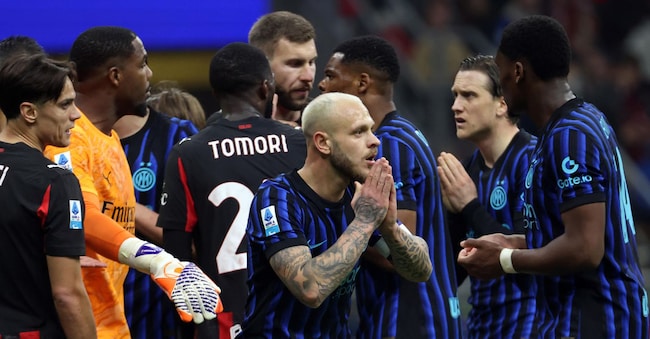
UEFA has published the ratings for the clubs that signed settlement agreements in 2022 to get back on track following the financial difficulties caused by the Covid-19 pandemic. As for the Italian teams (Juventus subsequently took a different path following its disqualification and exclusion from European competitions due to the capital gains and salary cuts cases), Inter and Milan have passed with flying colours, whilst Roma has been held back (and fined 6 million).
From Covid to the new financial fair play
To understand UEFA’s decisions, we need to go back to the summer of 2022, when European football was emerging from one of the most challenging periods in its history. The pandemic had caused widespread financial losses and forced many clubs – including Italian ones – to enter into settlement agreements with Nyon.
Inter, Milan and Roma had accumulated very significant deficits over the three-year period 2019–2022 (with losses of close to 500 million for Inter and over 350 million for Milan and Roma). Meanwhile, UEFA has introduced a new financial fair play regime based on the ‘football earnings rule’, which imposes a maximum loss of 60 million over the three-year period, net of eligible investments (youth development, infrastructure, women’s football), and on the ‘squad cost rule’, which stipulates that the ratio of squad costs (salaries, amortisation, agents’ fees) to revenue must not exceed 70 per cent. The settlement agreements had a dual purpose: to bring the clubs back onto a path of financial sustainability and to guide them gradually into the new regime.
Inter and Milan: a return to parity
After three years of monitoring, Inter and Milan have officially exited the settlement agreement. The most significant figure relates to the evolution of their accounts. Inter have embarked on a gradual but determined path: -85 million in 2022–23; -36 million in 2023–24; +35 million in 2024–25 – a historic milestone, as it marks the club’s first profit in recent history, thanks in part to reaching the Champions League final and the Club World Cup final.
Milan, for its part, has followed an even more consistent trajectory, with three consecutive years of profit: +6 million in 2022–23; +4 million in 2023–24; +3 million in 2025–26.


