
Financing synthetic organs and robot subs
Among the companies benefiting from Filse's tenders are React4life, which recreates human organs and tissues in the laboratory, and Drafinsub, which operates underwater

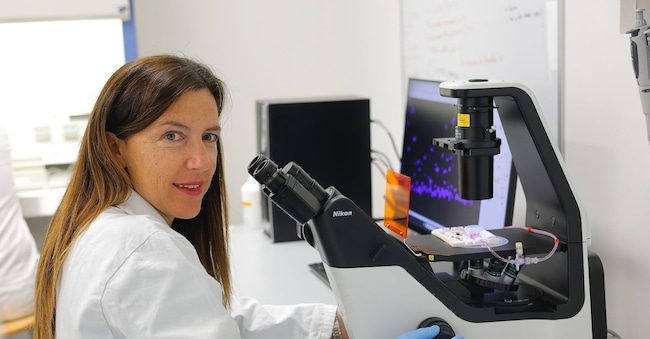
From high-tech research applied to pharmaceuticals, to a diving company working on submarine cables and pipelines (and more). Over the years, Filse has provided funds to very different companies. And for some it has also acted as an incubator. This is the case of React4life, founded in 2017 by CNR researchers Maurizio Aiello and Silvia Scaglione.
"To form the company,' she explains, 'we took part in Filse's Smart cup competition and, as part of that, we won the prize from the University of Genoa, which gave us access to the services of the Bic (Filse's business incubator, ed) for a year. In that year the company was formed, we filed the patent, and there our journey began'.
The company, continues Scaglione, 'operates in a completely new market category, where the needs are already clear but the solutions are emerging today: our technology, the organ-on-chip, makes it possible to recreate, in the laboratory, interconnected human organs and tissues that behave as in the real body. In practice, it makes it possible to observe and predict complex biological responses, without using animals, saving time, costs and experimental uncertainty. The applications are transversal: in pharmaceuticals, with faster and more predictive tests and savings of up to hundreds of millions in r&d; in research, with realistic disease models, to discover new therapeutic targets; in hospitals, with personalised treatment for each patient, more effective and timely'.
React4life already works, he adds, with 'hundreds of clients, from big pharma to biotech companies, from clinical centres to universities, in a network stretching from California to Japan'. Among these customers, there are also giants such as Roche and large hospitals such as the Bambin Gesù in Rome and the Gaslini in Genoa. The company started out with a 10,000 euro prize from Filse, then garnered interest from private investors and won a number of EU projects.
"The sum of all the funding we have received from Europe is around 1.2 million and we have also collected, from 2018 onwards, from private individuals'. Now React4life, which employs 10 people (including three PhD students from abroad) and operates within the Bic (which provides laboratory and office space), 'is opening,' Scaglione concludes, 'a new investment round, of 7 million, to accelerate growth. The due diligence has already been completed; the lead investor, an Italian venture capitalist, is willing to cover 70% of the round; the subscription of the remaining 30% is then open, with indicative fees of one to two million'.


