
Finnish melodies give a hand to Punchinello
Chailly explores an eccentric side of the 20th century, juxtaposing Hindemith and Gershwin, and passes the baton to Chung, who performs at the piano. Many excellent presences, from Salonen to Bychkov

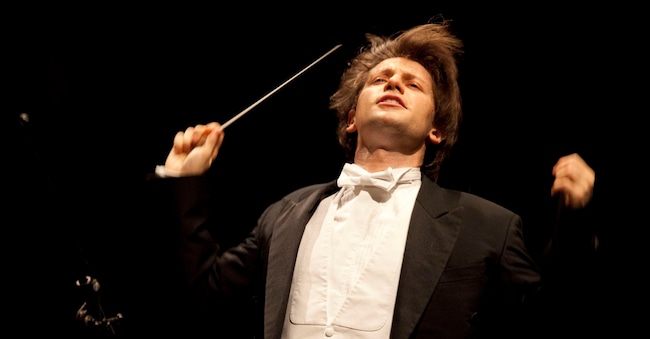
There is no lack of variety or dialectic of perspectives in the new season of symphonic concerts scheduled at the Teatro alla Scala - thirteen appointments for a total of twenty-eight evenings between the Symphonic Season, Guest Orchestras and Special Concerts - entrusted to a trio and a double quartet of conductors. A total of eleven batons, which will place three of the Piermarini's music directors (past, present and future) alongside eight guest musicians, half at the head of the La Scala orchestra, the other half at the head of guest ensembles.
Busy on many different fronts in the final year of his ten-year tenure as music director, Riccardo Chailly debuts in January with a concert exploring an eccentric side of the historical 20th century. An evening that sets out to disprove inveterate prejudices and exhibit the extraordinary variety and vitality of the production, in a brief tour of the years between the two wars, on both sides of the Atlantic, juxtaposing Hindemith - the rare Rag Time (Wohltemperiert) and the viola concerto, soloist Simonide Braconi, which will not be the only premiere at La Scala in the Season - and Gershwin, with the popular An American in Paris accompanied by the lesser-known Cuban Overture.
The season will close with Bruckner's Ninth, featuring the eagerly awaited Italian premiere, originally planned for last year, of the reconstruction by several hands of the Finale from Bruckner's unfinished work, which has been surrounded by an aura of legend since the composer's death in 1896. The autumn of 2026 will see Chailly once again on the podium for such an inescapable classic as Verdi's Requiem Mass, which returns to the bill, with a quartet of soloists led by Anna Netrebko, after the memorable performance on its 150th anniversary in San Marco, mobilising that fundamental resource of La Scala's Seasons, symphonic and operatic, which is the Chorus prepared by Alberto Malazzi. Choir that will be appreciated already in a month's time, in the Christmas Concert, whose original French programme (Gounod's grandiose Messe solenne de Sainte-Cécile and Poulenc's very modern suite Les Animaux modèles) will be conducted by Lorenzo Viotti.
We will once again hear the Chorus in Brahms's Schicksalslied, juxtaposed by Daniele Rustioni with Brahms's Akademische Fest-Ouverture and Berlioz's exuberant Symphonie fantastique, in a concert in which severity and excess will confront each other not without (inevitable) sparks. It fell to Chailly's predecessor, Daniel Barenboim, to inaugurate the symphonic season with a Beethovenian programme built on two antithetical pages, the Fifth Symphony in C minor and the Violin Concerto in D major, guesting a star like Georgian violinist Lisa Batiashvili. No less classical is the programme conceived by the theatre's new music director, Myung-Whun Chung, who focuses on the uterine link between Brahms (Fourth Symphony) and Beethoven, giving himself a double role, as he will sit at the keyboard as soloist, together with La Scala's Francesco Manara and Massimo Polidori, in the Beethovenian Triple Concerto, almost an echo, seven months later, of the Violin Concerto proposed by Barenboim.
Alongside the conductors already mentioned in connection with the Chorus, two other illustrious batons will perform with the La Scala Orchestra. First of all, Esa-Pekka Salonen, the highly sought-after Finnish conductor freshly appointed to head the Orchestre de Paris, who will introduce with the dazzling portal of the Ravelian Tombeau de Couperin a concert that is otherwise all Finnish, combining Sibelius's Fifth, of which Salonen is an excellent interpreter, with a page fresh from the ink: his own Horn Concerto, co-commissioned by La Scala and six other international institutions, from Lucerne to Boston to Hong Kong, in its Italian premiere performance, soloist Stefan Dohr. He responds two months later with an all-Romantic programme by Michele Mariotti, who will highlight the qualities of the La Scala Orchestra in two popular cornerstones of 19th-century symphonism, selected from expressive worlds as remote as day and night: Mendelssohn's tenebrous Scozzese and Dvořák's sunny Octave.

