
Finocchi, Italy world leader. But still with great potential for development
Organising production for export and extending the season beyond winter are the two keys to growth

2' min read
2' min read
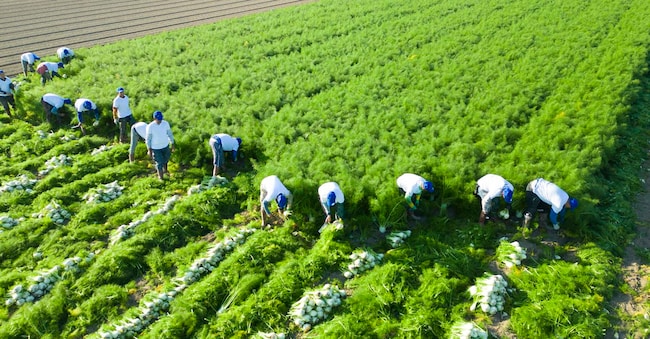
It took Lady Gaga, who, in honour of the habits of her grandparents from Messina, said that she loved pasta with fennel sauce and considered them "the most Italian vegetable there is", to bring to everyone's attention a little-known record of our country: leading world production of fennel, thanks to around 500 thousand tonnes per year obtained on 19 thousand hectares, 75% of which are concentrated in Puglia, Calabria, Campania and Abruzzo (source: Ismea). Foeniculum vulgare is also an important product for the national fruit and vegetable trade balance, given that it is the seventh most exported vegetable, with more than 10% of production sold abroad for a countervalue of more than 67 million euros. But it could do much more.
"Fennel has excellent potential for growth in foreign markets because it is a popular product, versatile in consumption and with a relatively low cost compared to other vegetables," says Mario Schiano Lo Moriello, Ismea's market analyst. "This is why exports could increase, at least by 100%, consolidating historical markets (Germany, France and Switzerland concentrate 75% of Italian exports, ed.) and conquering new ones with high development potential.
To seize these opportunities, it is not enough to do promotion and communication to make this vegetable and its uses better known. "Only by aggregating supply and planning investments in the field can we avoid the imbalances between supply and demand and mitigate the excessive fluctuations in prices at origin that today represent the sector's real weak point," adds Lo Schiano Moriello.
Therefore, the challenge is to organise production to get the right product to each market (generally preference goes to smaller sizes and varieties with a longer shelf-life), in the required quantities and with a standard quality, also because abroad fennel is bought by the piece and not by weight. And it is necessary to extend the season, as fennel is no longer just a winter vegetable.
"We are able to plan the harvest and work 12 months a year because we have selected new varieties and diversified the production areas, forging a partnership with around 30 farms in six regions, to which we supply seeds, plants and agronomic assistance," explains Sabato Paolillo, director of the Eboli-based group of the same name, leader in the sector with and 15 thousand tonnes of cleaned fennel placed on the market and a 2024 turnover of 17 million euros. In its 65 years of activity, all centred on fennel, this family group has exploited it in every way, even turning it into chips or extracts for cocktails and even obtaining a cosmetic line with the Foen brand.

