News

Before commissioning the boiler: rules for an efficient system

Maintenance is done in summer. When the systems are switched off, burner cleaning and calibration ensure that everything works when switched back on.

4' min read

4' min read

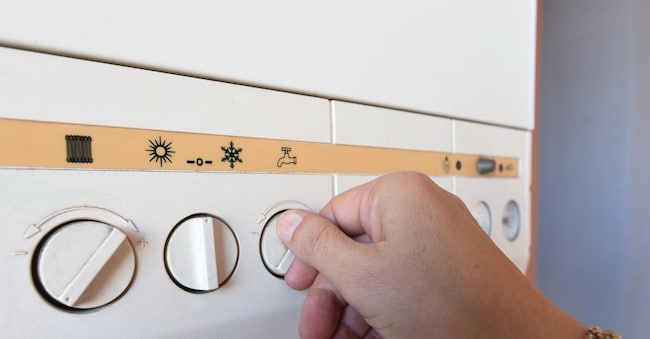
With the approaching start of the heating season, i.e. the ignition of heating systems, the choice of the company to be entrusted with the operation and maintenance of the system comes up again in individual homes and in apartment buildings where the system is centralised. In order to keep the boiler in top condition and ensure its efficiency over time, periodic maintenance must be carried out, in particular routine maintenance and flue gas testing.

Common maintenance

.

It concerns the cleaning of the burner and heat exchanger. The check is usually annual (there is no regulatory obligation to do so, however, as there is for flue gases) and at the end of the maintenance work a system tightness test must be carried out to verify the absolute absence of fuel leaks. Presidential Decree 74/2013 has made boiler maintenance compulsory by law. It must be performed at periodic intervals, according to the technical operating and maintenance instructions issued by the installer or supplied by the manufacturer itself. Whenever a specialised technician carries out one or more checks on a heating system, he is obliged to certify that the appliance examined is up to standard and functions correctly. To do this, he uses a sticker, blue or green depending on the system's output, which is affixed to the boiler's documentation.

Loading...

Fume control

.

There is a legal obligation to carry out checks according to a precise cadence in the case of smoke control. In fact, Annex A of Presidential Decree 74/2013 establishes the periodicity:

- thermal plants using liquid or solid fuel less than or equal to 100 kW: every 2 years

- natural gas or LPG systems less than or equal to 100 kW - every 4 years

- thermal plants using liquid or solid fuels exceeding 100 kW - each year

- natural gas or LPG installations above 100 kW every 2 years

The rules for not making mistakes

.

Maintenance is done in summer: the maintenance contract covers this. When the systems are switched off, boiler cleaning and burner calibration ensure that everything works when switched on. In the rooms, calibration at 18 degrees is more than sufficient.

Efficient heat exchanger. Equal attention must be paid to the heat exchanger that allows the thermal energy of the heating water to be transmitted to the system so that residues from the distribution system and radiators do not clog the boilers.

Functional defencer. Prevents metal residues in the heating water from blocking the operation of thermostatic valves, preventing the radiators from functioning properly.

Loading...

Thermostatic valves always open in summer. In April, when the systems are switched off, the valves should be opened by a maximum of 5 or 6 numbers. If this does not happen, it is very likely that the valve's locking pin will get stuck when the ignition is switched on. If this happens it is necessary to remove the thermostatic head and use pliers to restore the function of the closing pin.

Thermostats on number 3. It corresponds to 20 degrees and is the best setting for the most lived-in areas of the house. In rooms, a setting of 18 degrees is more than sufficient. This setting should be implemented in all flats to avoid warmer and colder rooms.

No on/off. Every switching on and off involves energy use and worse comfort, which is all the more noticeable in the most exposed and poorly insulated flats, precisely those which will tend to leave thermostatic valves more open to compensate for dispersion.

More hours, more savings. The systems are equipped with efficient thermoregulations that allow both regulation of the distributed heat with thermostatic valves and adjustment of the boiler setting to climatic variations. If the control unit can be calibrated to two temperature levels, it is possible to adopt continuous ignition, which produces the greatest savings (from a minimum of 10% to as much as 25%).

The periodic reading of the radiator heat meter

.

Knowing how much you spend. After the first switch-on period, when the plant building system has reached equilibrium, it is certainly useful to know the periodic reading of the calorie counter and the corresponding gas meter. In this way, it is possible to become aware of the actual performance of the system. The information is also very useful in apartment buildings, for the administrator, who with the cooperation of the maintenance technician can adjust the system settings.

Saving data: it is important that consumption data form the memory of the building. Together with climatic temperatures, they make it possible to evaluate month by month, year by year, appropriate adjustments and maintenance for comfort and savings. For systems equipped with hour meters at the entrance, it is possible to know the level of consumption immediately because it is enough to multiply the cost of production of the energy yielded to adequately estimate the expense. For systems with allocators this is not possible until the end of the season when the total costs to be apportioned but above all the apportionment units to be attributed to the individual flats will be known. The historical comparison of the units measured by the individual allocators can however provide a rough figure.

Compulsory remote reading. Newly installed allocators must already allow remote reading, which is compulsory from 1 January 2026 according to the European Eed2.0 directive. And there are those who promise that control can take place with the data collected monthly directly on the mobile phone.

Copyright reserved ©
Loading...

Brand connect

Loading...

Newsletter

Notizie e approfondimenti sugli avvenimenti politici, economici e finanziari.

Iscriviti