
Tax authorities, Carbone: 9 billion in building bonus credits frozen. POS receipts up by 4 per cent
Driven by compliance: between 2021 and 2025, over 9 million letters were sent, resulting in voluntary payments totalling 13.5 billion euros

Key points
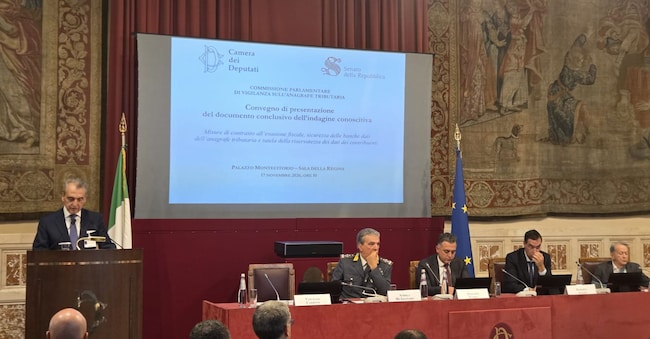
Since 2021, the year in which the preventive checks came into force, ‘we have managed, as part of these preventive checks, to scrutinise over 12 million notifications of the transfer of construction receivables and to block, following 294,000 detailed investigations carried out by our officials, over 9 billion in illegitimate claims. As one can easily imagine, analysing 12 million notifications without the use of IT tools would have required the Agency’s entire workforce to be dedicated to the task for many years’. Vincenzo Carbone, Director of Revenue, presented an overview of the preventive control activities regarding building bonuses to the Chamber of Deputies during the presentation of the final report of the parliamentary oversight committee on the Tax Register, chaired by Maurizio Casasco (Forza Italia). The event was moderated by Fabio Tamburini, editor-in-chief of *Il Sole 24 Ore*.
A halt to 1.4 billion in false VAT thresholds
Carbone also provided an update on preventive checks on letters of intent and horizontal offsetting. “Thanks to the development of automated procedures used during the preventive checks,” emphasised the Director of Revenue, “we have managed, from 2021 to the present, to block the use of false VAT limits totalling 1.4 billion euros.” Not only that, but also since 2021, “over €12 billion in at-risk claims have been identified, and, following detailed investigations, approximately 430,000 payment authorisations have subsequently been rejected”.
Receipts up by 4 per cent with POS connection
During the event, Carbone also provided an update on the figures relating to the connection between electronic cash registers and POS terminals since the start of the year. ‘The online service made available by the Agency following in-depth consultation with trade associations has enabled around 1.5 million small, medium and large enterprises to comply with the requirement easily and without incurring any additional costs. At the same time, the volume of payments transmitted by merchants recorded, in the first 10 months of the year, an increase of over 4 per cent compared with those recorded in the same period of 2025.”
The drive for compliance: voluntary payments totalling 13.5 billion from 2021
The Agency’s compliance strategy has also contributed to its results in recent years: ‘Over the five-year period 2021–2025, thanks to the dispatch of over 14 million letters, taxpayers have voluntarily paid almost 13.5 billion euros to the Treasury.’
The Tax Authority’s digital ecosystem
As was also emphasised during the speech, ‘Over the last decade, the Agency has pursued a course of action aimed at creating a digital ecosystem consisting of fully interoperable databases – that is, databases capable of “communicating” with one another. The ‘silo’ mentality, sometimes cited as a critical factor in the functioning of the public administration, has therefore been definitively abandoned’. Carbone also highlighted the impact in numerical terms: ‘Last year, over 189 million forms were processed via the F24 system, and for pre-filled tax returns alone we used 1.3 billion data records. The same applies to electronic invoicing, the introduction of which has proved crucial in reducing tax evasion, particularly in relation to VAT: on average, our systems process data from 2.5 billion invoices per year and data relating to approximately 600 million payments.”


