
Taxation, pensions, healthcare: here are all the pitfalls to avoid in the amendments to the budget bill
The Chamber’s guide on the admissibility of amendments, setting out all the rules to be followed: a ban on unfunded measures and on measures of a local or micro-sectoral nature. Once again this year, a final green light looks set to be given on New Year’s Eve

Key points
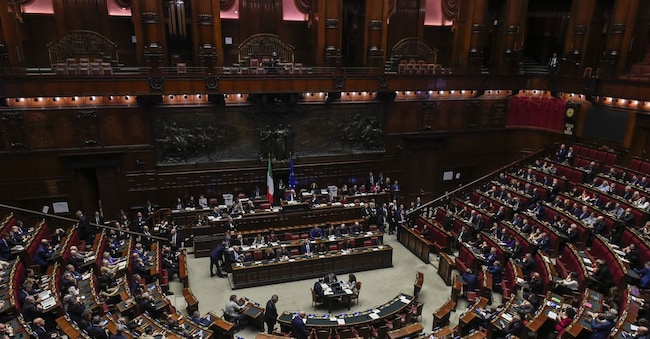
Taxation, pensions, education and healthcare: the debate over amendments to the budget is really heating up. But there will be no free rein for MPs’ imagination. Any changes must be fully justified. No to delegated legislation or provisions of a regulatory nature. But a stop must also be put to local or micro-sectoral interventions. The door is shut to any amendments that would affect the maximum level of recourse to the financial markets or the net balance to be financed on an accrual and cash basis. The Chamber of Deputies has summarised the ‘golden rules’ for MPs on tabling amendments to the 2027 Budget Bill in a 34-page guide.
The stages in Parliament
A guide published just in the run-up to the deadline for tabling amendments, set for 6.00 pm on Tuesday 17 November. In a timetable where admissibility checks and subsequent appeals will lead straight to the crucial stage on 26 November, when, by 2.00 pm, the parliamentary groups must indicate the ‘flagged’ amendments – that is, the changes they genuinely wish to see passed, subject to the Ministry of Economy and Finance’s approval. A deadline that significantly extends the scrutiny of the bill and which, given the timetable – with Christmas in between – could allow MPs to return the favour to the senators, who last year were forced, due to the protracted scrutiny at Palazzo Madama, to enter Montecitorio immediately after Christmas to ratify the 2026 Budget Law just a few hours before New Year’s Eve.
The blocked road
The Chamber’s Committee on Rules of Procedure sets out the general rules which may result in amendments to the Budget Bill being deemed inadmissible. Amendments must not, in fact, relate to matters outside the scope of the Budget Bill, nor must they conflict with the balancing criteria imposed by compliance with accounting rules and public finance balances defined in accordance with the resolutions approved by the Houses on the Public Finance Policy Document (DPFP) 2026.
The two parts of the manoeuvre
There is also another aspect to consider when determining the scope and manner of drafting the amendments. The Budget Bill is structured in two sections. The first contains provisions on revenue and expenditure relating to quantitative measures designed to achieve public finance objectives. The second section sets out the revenue and expenditure forecasts, expressed on an accrual and cash basis, drawn up in accordance with current legislation, with adjustments made to these forecasts to reflect the provisions of the first section, for which separate accounting records are maintained.
A guide to writing
These guidelines form the basis for the instructions on how to make amendments, complete with examples of how to draft them depending on whether they relate to the first part, the second part, or affect both the first and second parts simultaneously.


