Products

Fitbit Air with Gemini uses Ai to power a body operating system

No longer simply a chatbot answering questions, but an artificial intelligence that observes the body in real time and tries to suggest behaviour, rhythms, recovery, sleep, nutrition.

by Luca Tremolada

3' min read

Translated by AI
Versione italiana

3' min read

Translated by AI
Versione italiana

For years, Google has chased Apple on the smartwatch terrain. Now it seems to want to change the game. With the new Fitbit Air, the Mountain View group is not so much trying to build a better watch. It tries to build a personal health infrastructure based on artificial intelligence.

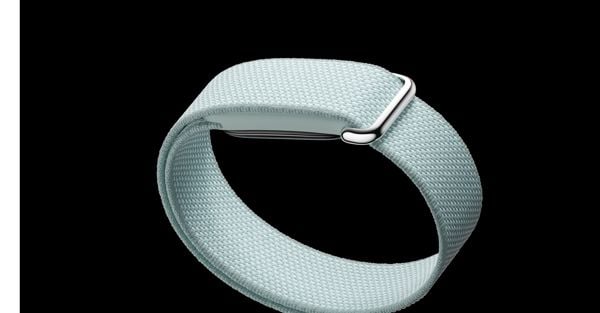
The device is almost provocative in its simplicity: no screen, no continuous notifications, no wrist apps. A 99 euro band that weighs 12 grams and collects biometric data in the background. Heart rate, sleep, skin temperature, cardiac variability, oxygenation. The point, however, is not the wristband. The point is the health operating system that Google is building on top of that data.
Loading...

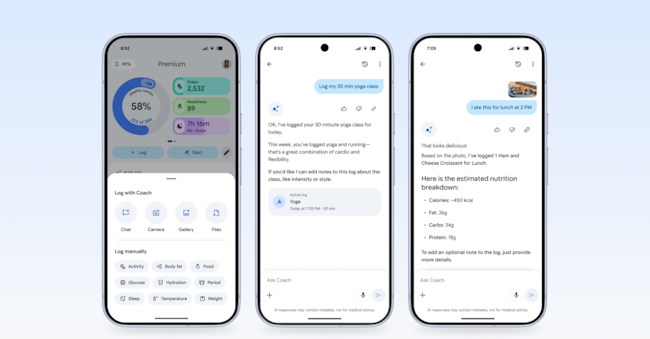
The real novelty is in fact Google Health Coach, the new Gemini-based assistant that gradually replaces the Fitbit Premium universe. Google is no longer talking about fitness tracking. It speaks of 'coach'. A word that in the lexicon of Big Tech means a precise thing: transforming an occasional service into an ongoing relationship. The AI analyses sleep, recovery, physical activity, nutrition and even medical records or photos of meals to generate personalised recommendations.

This is where you see the strategy. Apple uses the Apple Watch as an extension of the iPhone. Google, on the other hand, seems to want to use the Fitbit Air as a data collection terminal to power a cross-platform health ecosystem. It is no coincidence that Google is unifying Fitbit, Health Connect and Google Health into a single platform. And above all, it promises future compatibility also with competing devices such as Garmin or Whoop.

Clearly, on the privacy side, Google is keen to emphasise that Fitbit users' health and wellness data are not used for Google Ads.
In practice, Google is making a different bet. A cheap, almost invisible wearable that functions as a gateway to a health AI subscription.

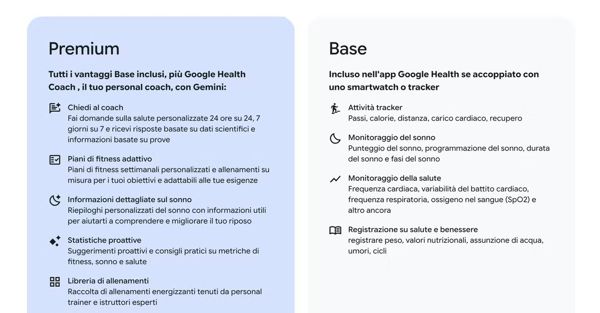
The first convincing thing is this simplicity. The tracker disappears. The data remains. It is a choice consistent with the future of AI agents: fewer interfaces, more continuous collection of context. The second interesting thing is the price. At $99, Google can turn the Fitbit Air into a widespread health sensor, almost a commodity to feed its Health ecosystem. The sense is to push towards subscription, which, however, is not mandatory to use the wristband. There is also a Basic plan, included in the Google Health app that includes steps, calories, distance, heart rate, recovery, sleep monitoring, heart rate, SpO2 and manual records such as weight, nutrition, water, mood and cycle. The advantage then over the indicators measured by smartwatches on the market is all in the premium subscription.

However, there are also less convincing elements. Google insists that Health Coach does not replace a doctor and does not make diagnoses. But the more the system enters into daily health management, the more ambiguous the boundary becomes. And in recent years, the wearable sector has shown major limitations in the accuracy of certain biometric metrics. The second critical issue is trust. Google is asking users for something huge: to centralise sleep, heart rate, nutrition, physical activity and maybe tomorrow even clinical data within a single AI ecosystem.

Fitbit Air then is not just a wristband. It is probably Google's first real attempt to put Gemini at the centre of a personal health operating system. No longer simply a chatbot that answers questions, but an artificial intelligence that observes the body in real time and tries to suggest behaviours, rhythms, recovery, sleep, nutrition.

It is also a sign that the AI war is moving from prompts to sensors. Because generative models have already read the internet. Now they want to read us.

Copyright reserved ©
  • Luca Tremolada

    Luca TremoladaGiornalista

    Luogo: Milano via Monte Rosa 91

    Lingue parlate: Inglese, Francese

    Argomenti: Tecnologia, scienza, finanza, startup, dati

    Premi: Premio Gabriele Lanfredini sull’informazione; Premio giornalistico State Street, categoria "Innovation"; DStars 2019, categoria journalism

Loading...

Brand connect

Loading...

Newsletter

Notizie e approfondimenti sugli avvenimenti politici, economici e finanziari.

Iscriviti