Flashback celebrates the past and contemporary forms of expression
At the stands of the 35 galleries taking part in the 14th edition of the fair, prices were, in most cases, below 100,000 euros

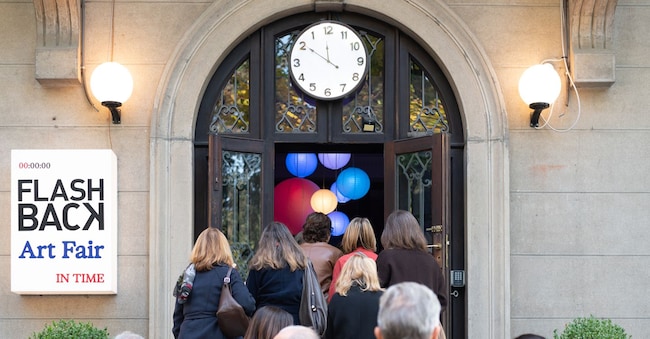
Art Week in Turin has drawn to a close, and we’ve gathered a few thoughts for the next edition. Protests on the streets remain as fierce as ever, whilst, inside the exhibition centres, the art world would prefer to remain in a bubble but is suffering from sluggish sales and the internal dilemmas of collectors and dealers. Flashback is certainly a fair in a league of its own; it cannot be compared with Artissima. First and foremost, the numbers speak for themselves — 35 galleries compared to over 180 — and the atmosphere is also different, being decidedly less international: foreign galleries account for just over a fifth. The venue is its strong point, very different from the dazzling Lingotto warehouse: it is the complex at 75 Corso Giovanni Lanza, which since 2022 has become the independent art centre Habitat, thanks to an agreement with the Cassa Depositi e Prestiti Group, in partnership with Turin City Council. It was once a paediatric clinic, later converted into a foundling home – that is, an institution designed to care for and raise abandoned infants – but it is situated in a park and the building is light and airy.
Founded by Ginevra Pucci and Stefania Poddighe , with Alessandro Bulgini as artistic director, the fair does its best to live up to the slogan “Flashback, all art is contemporary”, but it’s hard to believe it, especially when the title of the 14th edition is ‘In Time’. This year’s key image is of the astronaut Paolo Nespoli. The latest edition of Flashback presents a landscape dominated by painting and wall-mounted works. Whilst the dialogue between the ancient and the contemporary – a hallmark of the event – appears less pronounced this year, there is no shortage of opportunities for discovery and a few forays into design and ceramics.
The existence of Roman tunnels
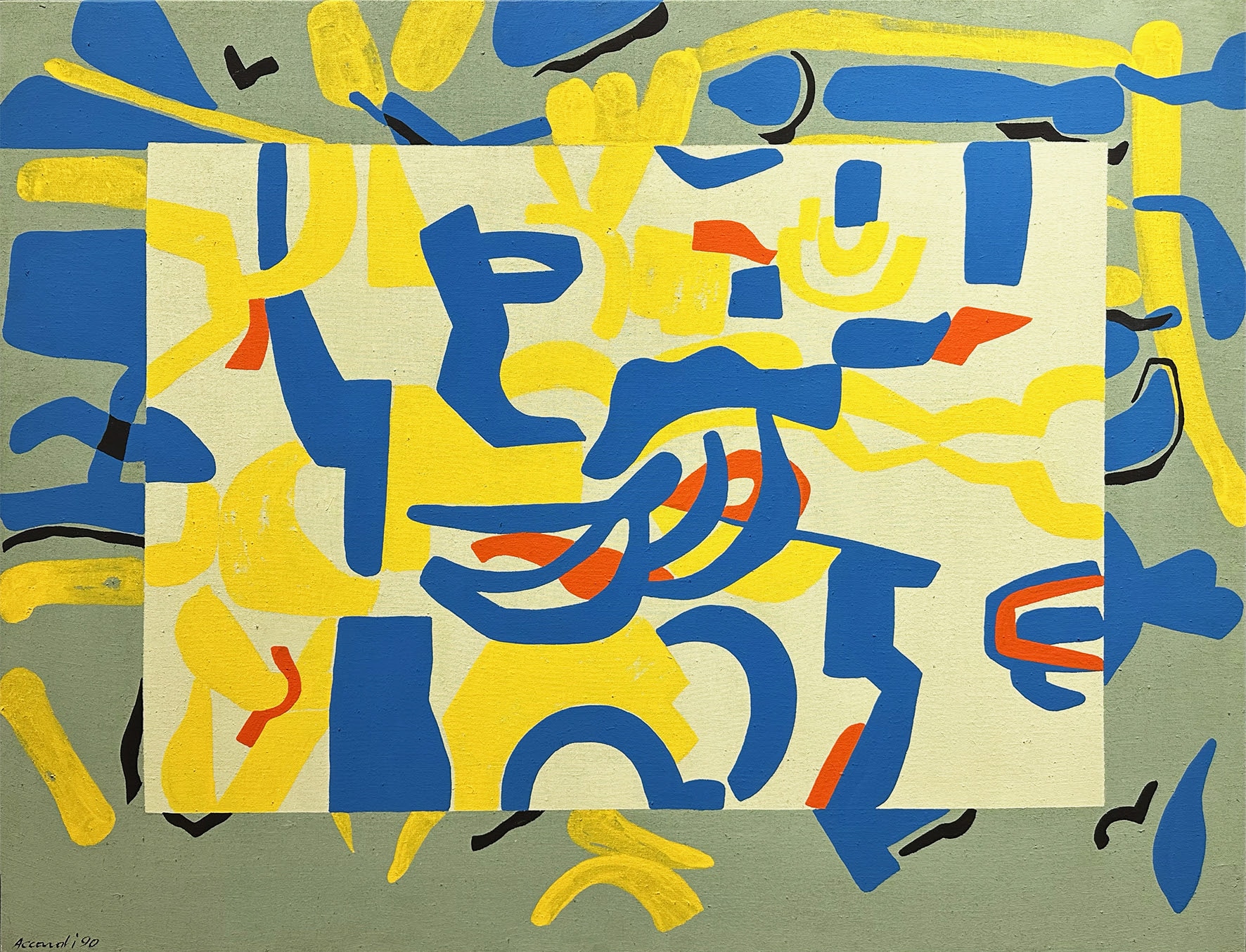
It is above all the core group of Roman artists, alongside those from Turin, that give the fair its substance. At Studio d’Arte Campaiola, the stand is organised around major figures of 20th-century Italian art: Carla Accardi, with a large painting valued at over 100,000 euros, and Antonio Donghi, with a landscape depicting a park, on offer for between 60,000 and 70,000 euros, are flanked by works by Sanfilippo, Capogrossi, Campigli and a work by Emilio Vedova that certainly does not go unnoticed. This selection has met with keen interest from collectors, some of whom are already loyal clients.
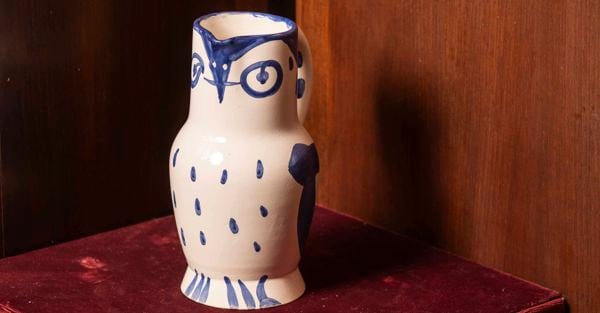
Of a completely different kind, yet particularly striking, is the stand of Antiques par force, which now has two branches in Rome, where antiques, modern pieces and design coexist, thanks in part to the exhibition design conceived by Plasma, a studio founded in 1993. Shelves, pedestals and console tables, characterised by their black colour, create a contrast with the polychrome ceramics by Pietro Melandri, an artist who covers his surfaces with metallic glazes and iridescent enamels. Among the most eye-catching pieces are a €19,000 chandelier, assembled from bottle bottoms and rock crystals, and a table created by several artists: Melandri designed the glazed ceramic base, the tabletop design is by Melchiorre Bega, whilst the églomisé glass panel, decorated with gold leaf, is by Angelo Bragalini. Beneath the glass lies a gilded parchment featuring archaic figures, an integral part of the work. As for ceramics, a plate by Lucio Fontana, bearing the artist’s signature and fingerprints, is currently under negotiation, with an asking price of 35,500 euros. The vases by Galileo Chini from the Fornaci di Mugello are priced at 2,500 euros each. Also attracting attention are four French plates that once belonged to Cardinal Alessandro Farnese’s table service, one of which features a decoration in pseudo-Kufic script, as well as a plate and two vases by Pablo Picasso and five vases by Guido and Bruno Gambone.
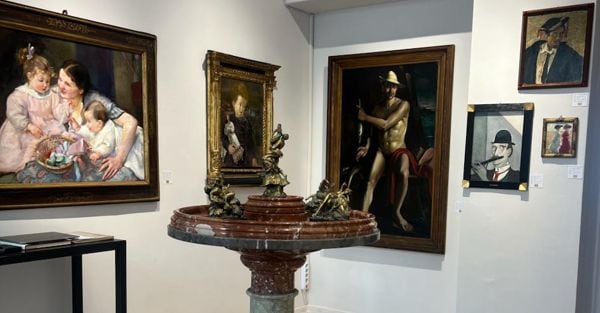
Also based in Rome, the Galleria d’Arte Ponti presents an exhibition exploring painting and sculpture. Among the most important works is the sculpture ‘Sicilian Landscape’ by Leoncillo Leonardi (1958), dating from the period when the artist moved away from Cubism towards Informal art and abstraction. The estimated value is between 100,000 and 140,000 euros. A unique item on offer is a scale model of the Fountain of the Naiads in Piazza della Repubblica in Rome, created by the Sicilian sculptor Mario Rutelli and preserved by his family, on sale for around 20,000 euros. Among the paintings is *Il cestino di nastri* by Armando Spadini, a lyrical tribute to maternal love, in the Post-Impressionist style and reminiscent of Renoir, exhibited at the first Rome Quadriennale, and an official portrait of a child in 16th-century costume, executed in 1924 by Pietro Gaudenzi in pastel and tempera. A Ligurian painter who is once again attracting attention, partly thanks to the exhibition organised by the Mart in Rovereto. The 20th-century section continues with rare poster backings by Mimmo Rotella from 1960, valued at between 60,000 and 90,000 euros, and a 1964 work by Sergio Lombardo, valued at under 20,000 euros, which depicts a tomato, marking a departure from his more customary black-and-white work and, in terms of subject matter, recalling Andy Warhol’s ‘Tomato Soup’. Rounding off the exhibition is a 1985 work by Alighiero Boetti, valued at around 17,000 euros: a cover of ‘The Man of the Year’ featuring Peter Ueberroth, president of the Olympic Committee, which offers a more pop-art than conceptual interpretation of the Turin-based artist’s work, in keeping with the gallery’s contemporary selection for this edition.